The question “hire someone or automate?” has one flaw. You can’t answer it, because it asks about a whole job at once. And a single job is really twenty different tasks, each with its own answer. Some are decided in ten seconds; others can’t be decided at all.
I get asked this in consultations all the time. An owner has work in front of them that someone has to do, and two ways to get it done. But you can’t decide about the whole bundle, so they put it off until next month. In the meantime, they finish that work themselves in the evenings.
The question sits one level above where it can be answered
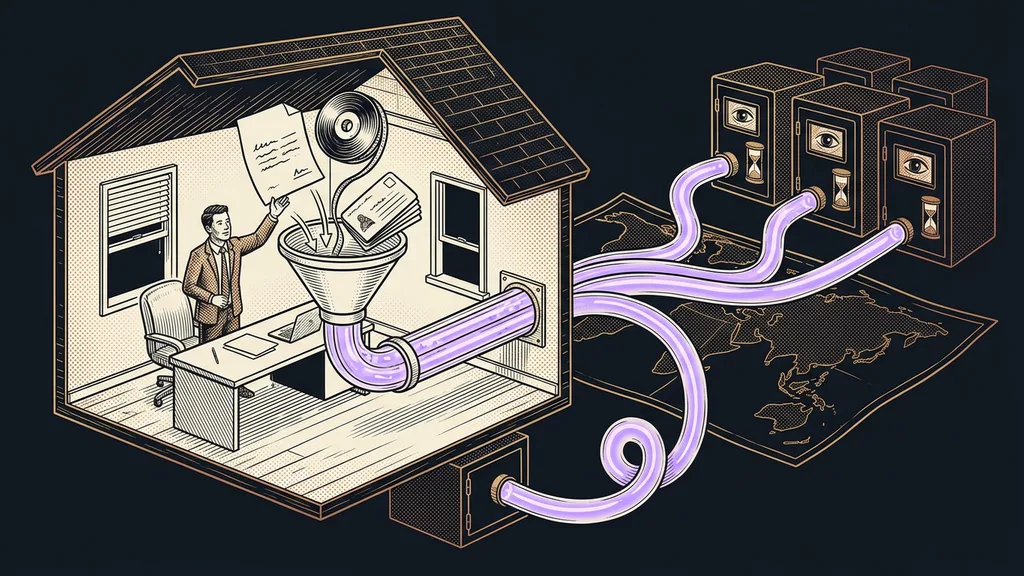
You can decide about a specific piece of work, not about a whole job. Once you break the workload down into individual tasks, the answer shows up almost on its own, and it’s usually different for each task. Sometimes it’s a system, sometimes a person, and quite often half and half.
An assistant’s job shows this fastest. Part of the work is copying data over and keeping track of deadlines, and part is arranging things with people who want to hear a human. The first part can be described in rules. The second can’t, and never will be.
Workload breakdown
Taking one job role apart into its individual recurring tasks. Then you ask about each one separately: should a person do it, or a system? Without that, you’re deciding about a bundle where routine is mixed up with work nobody else can do.
Forget person versus machine. Decide which work you give the person.
Six questions for one task
Take one task and go through the questions in order. For the first five, count your yeses. Careful with the sixth: it reads the other way around. The whole thing takes five minutes, and you don’t need anyone else for it.
1. Does it repeat? Daily, weekly, or once a quarter? A system only pays off with regularity, because the setup is a one-time job and its cost has to spread across all those repetitions.
2. Can you explain it over the phone? Explain the task to someone who’s never done it, and give yourself two minutes. If you get tangled up in exceptions, what you have is judgment, not rules.
3. Does it come in the same way every time? A consistent input decides success more than how clever the tool is. If requests arrive by email one time, by phone the next, and on a scrap of paper the time after that, unify the input first. Without that, even a person won’t succeed.
4. What does one mistake cost? For an overview you keep for yourself, almost nothing; for a price quoted to a customer, a lot. The more expensive the mistake, the more likely the system only prepares the draft and a person sends it. That’s exactly how AI works when it does round-the-clock work in a company, but under supervision.
5. Can it be measured? Hours, units, number of messages, anything countable. Without a number, you won’t know whether it helped, and the decision will hang on a gut feeling.
6. Does the other side want to talk to a human? This one is answered the other way around. If the answer is yes, that doesn’t rule out a system, it just shifts its role: it prepares the groundwork, and people keep the conversation.
One-minute self-test
Take the task that annoyed you most this week and go through the six questions out loud. Four or more yeses on the first five means a good candidate for a system. Three or fewer means it belongs with a person for now.
How to read the result
The result is a ranking rather than a verdict. Out of ten tasks, two or three usually come out clear, and that’s exactly where you start. The rest come back into play once the first ones run reliably.
The most common mistake is doing it the other way around. People pick the most complex task, because it would save the most, but that’s exactly the one with the most exceptions. The setup drags on, and the enthusiasm to see it through runs out even before the patience does. That’s why you bring AI into a company one measurable step at a time, starting with the most annoying task, not the hardest one.
For a small business, that means starting with a cheap first step, not rebuilding an entire role. One task, one number, and a month to show whether it makes sense. If it works, the second task almost takes care of itself.
Where the line is, past which a person takes over
You set the line in advance, not the system, and it usually runs along money. Pricing, returns, complaints, anything sensitive: that’s where the automation stops and a live colleague takes over. Far from being a weakness, it’s the system’s most important setting.
Escalation to a human
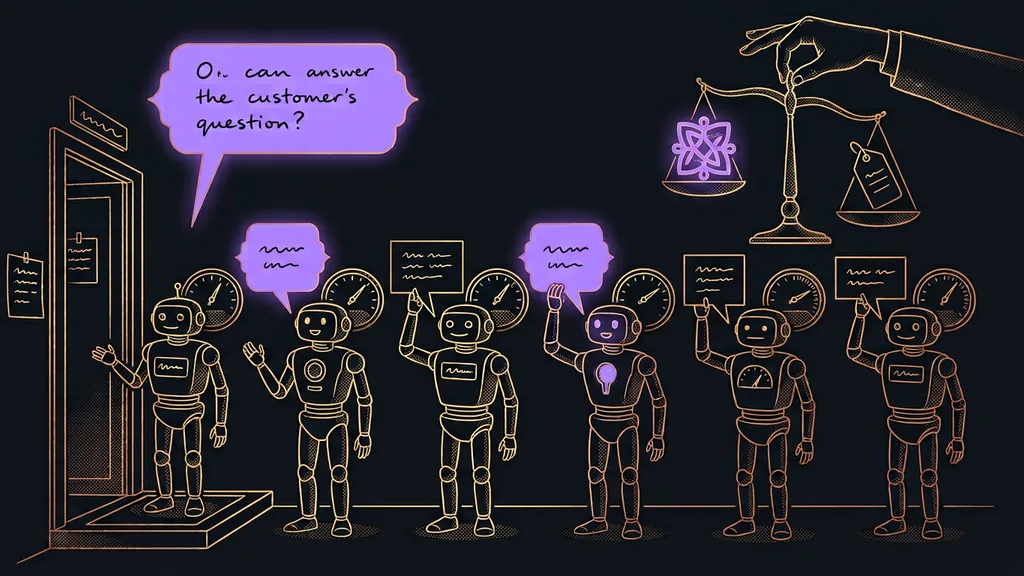
A rule that says in advance when the system should stop and hand things over to a colleague. You define it up front, including who it goes to and how quickly it has to be handled. Without it, you only find out about a mistake from an angry customer’s email.
Customer support shows it best. One chatbot brain answers, across every channel, the questions every other customer asks, and the moment someone asks about pricing or a return, it hands the conversation to a person with the full history attached.
The second safeguard works the other way around. A system that checks its own work would rather admit it doesn’t know what to do. An automation that knows how to ask saves more work than one that answers no matter what.
Who ends up with “a person” as the answer
So who gets “a person” as the answer? Anyone whose work is different every time and rests on judgment. A tradesperson on a job, a consultant on a proposal, a salesperson in a complicated negotiation. Describing that kind of work in rules is more expensive and slower than simply hiring someone for it. So the six questions sometimes end with a recommendation to hire, and that’s the right result.
The whole decision in a nutshell
- Don’t decide about a whole job. Break the workload down into individual recurring tasks.
- Go through the six questions for each task and note the number of yeses.
- Pick the two or three with the highest count and leave the rest alone for now.
- For the ones you picked, decide in advance where the line is beyond which a person is responsible.
- Put the first one live and look at the numbers after a month.
- Where the answer was a person, go ahead and hire one. It’s an honest answer.
Back to the question from the beginning: hire someone, or automate? The right answer is both, just for different tasks. A system takes the part of the work that repeats the same way every time and bores everyone. What stays with the person is what customers like them for: decisions, reading the situation, and conversations nobody else can have for them.