Almost every business “tries” AI these days: someone subscribes to ChatGPT, the team is told to play around with it, and for a few weeks people generate text and transcribe meetings. Then it fizzles out. The subscription keeps showing up on the invoice, but AI hasn’t left behind a single thing in the business that runs on its own. The technology is rarely to blame. What’s missing is a process.
I know this from first consultations. When I ask what AI actually brought them, most people just shrug awkwardly:
“We tried AI. Honestly, I don’t even know where it went. We paid for something, something happened, and then it kind of fizzled out.”
I hear this over and over. Yet AI doesn’t have to fizzle out at all. Rolling it out so it lasts means putting it on one specific, measurable task, and only then adding the next one.
Why “let’s try AI” almost always ends up nowhere
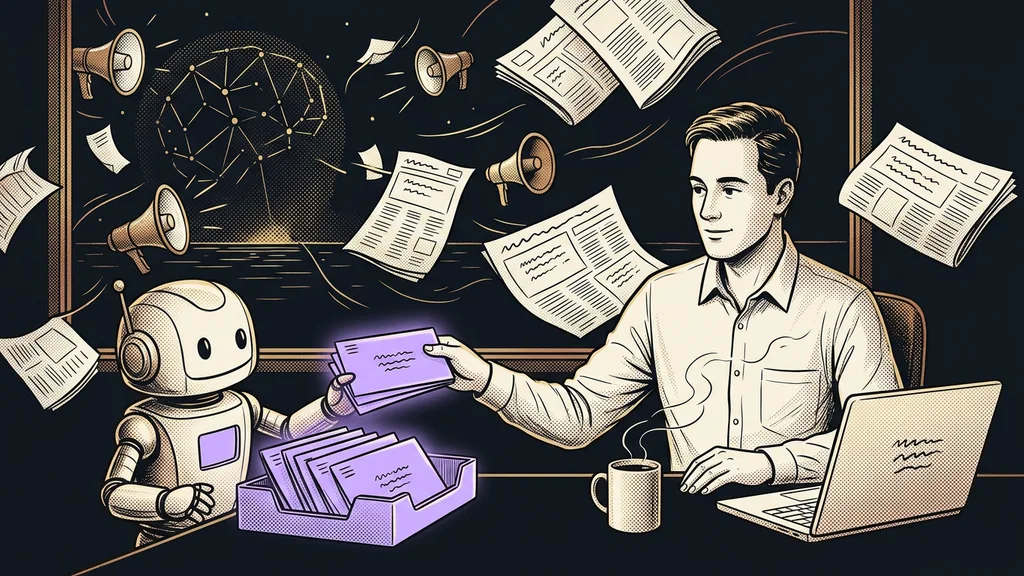
AI is capable enough. The trouble is that it gets brought in as a toy rather than a process, and sooner or later every toy gets put away.
Most often it ends up in the hands of one enthusiast who plays with it between their actual work. It never gets anchored anywhere, nobody knows exactly how they use it, and the moment that person has a busy week or goes on vacation, that’s the end of AI in the small business. What’s left is an invoice and a feeling that “we tried it and it wasn’t much.”
The second trap is the opposite one, and it costs even more: the big bang. The business decides to bring AI into marketing, sales, and operations all at once, buys three tools, runs a training session, and a month later doesn’t know whether it paid off. It’s missing the one number that would say yes or no. And when nobody can see the payback, interest fades before the free trial even runs out.
In both cases, the same things disappear: the time of people who learned for nothing, and money for subscriptions nobody really used. AI fizzles out because it was brought in without a process and without a yardstick, not because it’s weak.
I do it the other way around: one step you can measure
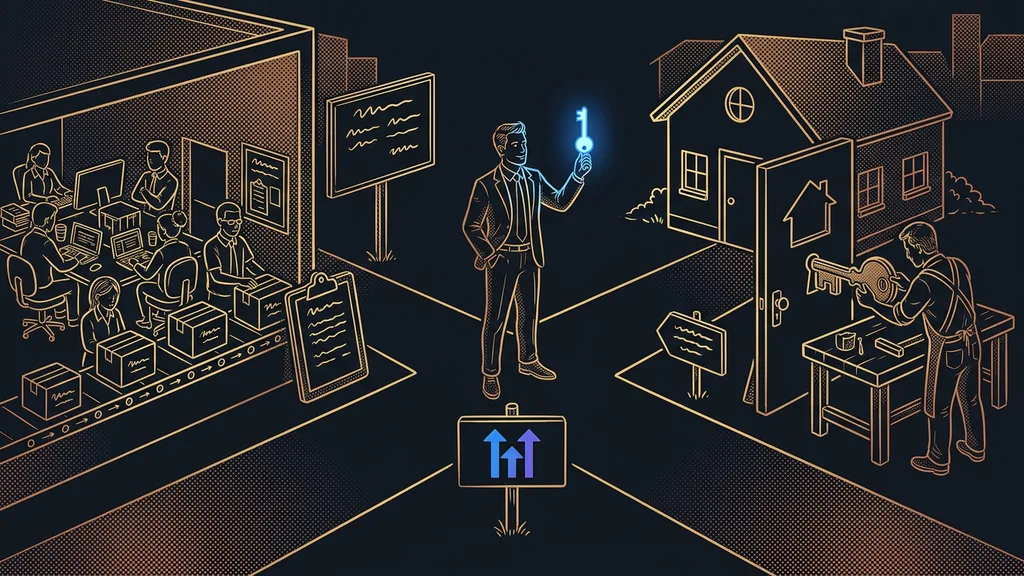
I come at it from the other end. The question “how should we use AI in the business” doesn’t have one answer for the whole operation; it has a hundred small ones, and each needs to be tested separately. So instead of “let’s put AI everywhere,” I look for one single task with the client: specific, recurring, tedious, and above all measurable.
Once we find the right one, the whole logic of the rollout changes. The risk is tiny, because you’re betting on one thing, not on a revolution. You see the payback within weeks, not a year. And above all, the enthusiasm rests on a number instead of a feeling. Either the task now takes significantly less time or it doesn’t. Any owner can work that out on their own.
Pilot, process, team: in that order, not the reverse
A rollout has three levels that have to come one after another. You can’t skip any of them.
Pilot
One narrow, recurring task that you hand to AI first, measuring time or a count both before and after. It’s a low-risk test of one specific thing rather than a trial run of “AI as a whole.” If it works, you have proof. If it doesn’t, you’ve lost a few days, not a budget.
1. Pilot. Together with the client, I pick one painful, recurring task and hand it to AI. Typically the first reply to an inquiry, a nudge to customers who’ve gone quiet, or turning a meeting transcript into concrete tasks. Before I start, I teach the AI to do the task our way and note how much time it costs today. Let’s say following up with leads who’ve gone silent takes a salesperson a few hours a week, and half of them never reply anyway. A task like that is a pilot made to order: narrow, tedious, and countable.
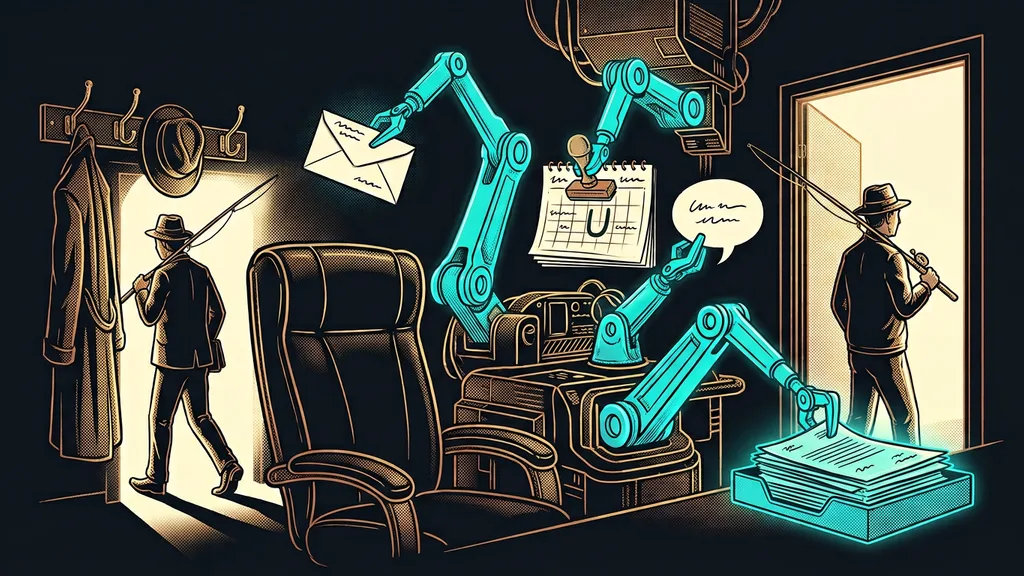
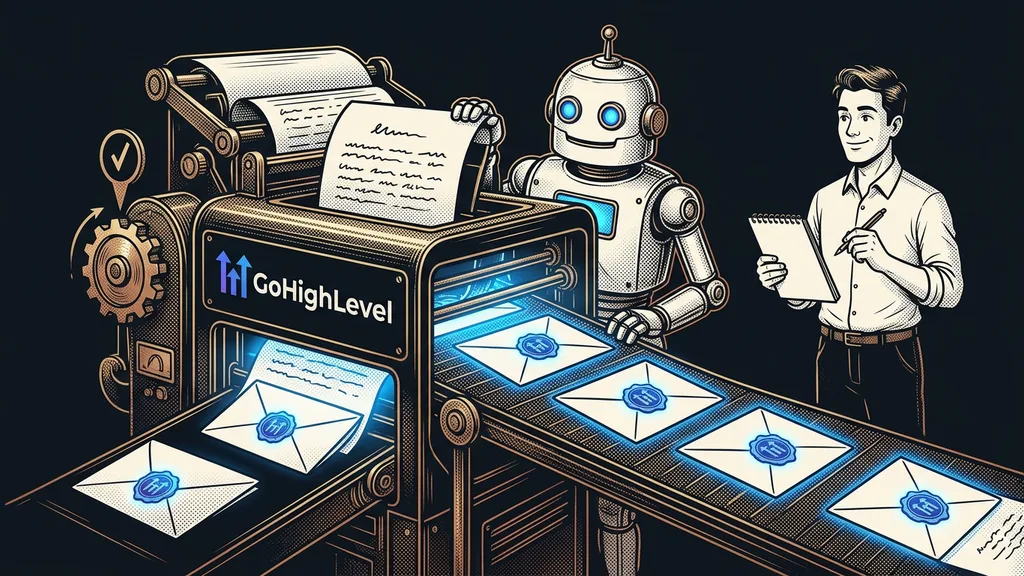
2. Process. Once the pilot works, it stops being an experiment and becomes a process. I write down exactly how it runs and anchor it in the system so it doesn’t depend on one enthusiast. This is where the platform the business runs on comes in. Automations and AI features, in GoHighLevel for example, keep that process on top of the whole company’s data, not in one person’s head. AI then does its job even while you’re on vacation.
3. Team. Only when one process runs reliably and pays off do I add a second and a third. Step by step, the individual pieces turn into something like a team of AI agents that hands work off on its own. But that’s a destination you reach, not a starting point. The vision of five directors for a small business only makes sense once your first step is proven and you know AI is really taking work off your plate rather than adding one more window to babysit.
Most businesses want to start right at the third level. But they’re missing the first two, so the whole thing collapses.
How to tell which task to give AI first
I promised a technique, so here it is, and it’s simple. On a sheet of paper, write down the tasks that meet three conditions at once: you do them often, they mostly bore you, and you can measure the time or a count. Where those three conditions overlap is your pilot. Look for the most tedious thing you do over and over, not the most complex thing AI could handle.
One-minute self-test
Grab a pencil and, in one minute, write down three tasks you’ll do more than three times this week and that you catch yourself dreading. The one where you can say how many hours a week it eats up is your first candidate for AI.
And before you let AI loose on the task, write down three numbers about where things stand today, then compare them with reality a month later. Only then will you know in black and white, rather than by eye.
ROI (return on investment)
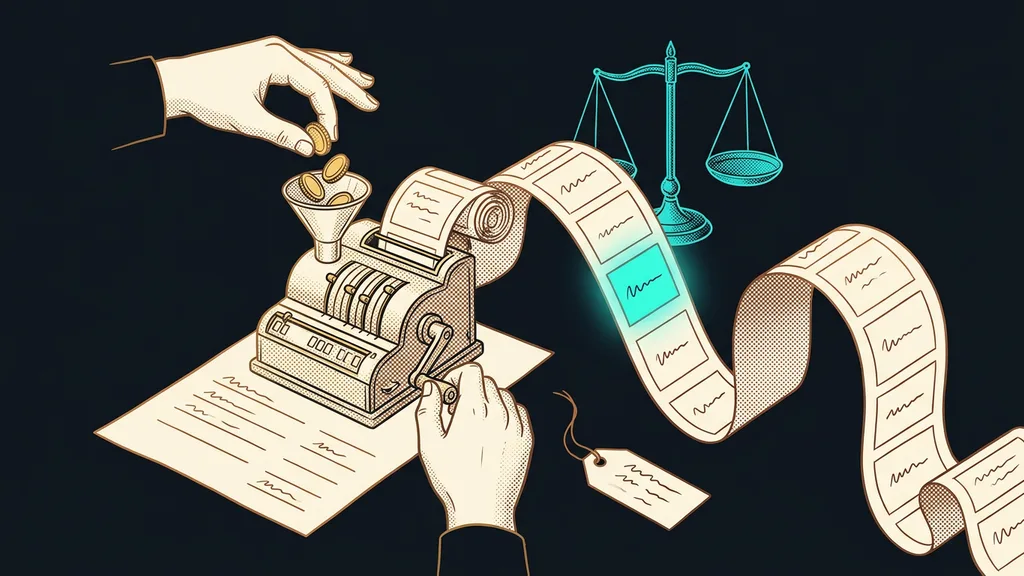
A simple comparison: what a solution costs me versus what it saves or earns me. With AI, you can only calculate it if you write down beforehand how much time or money the task costs today. Without that baseline number, ROI stays a feeling, and a feeling is exactly what AI rollouts most often fall apart on.
When it doesn’t pay off yet
This approach won’t serve every business. If you don’t have a single task that repeats often enough and can be measured, there’s nothing to pilot, and you’ll never get the number that would decide it. Likewise, with work that’s different every time, the first step is hard to find. There, it makes sense to wait until the first routine that actually repeats shows up, and start with that.
The whole approach in a nutshell
- Find one task you do often, that bores you, and where you can measure time or a count.
- Write down three numbers about it: how many hours a week it eats up, how often it repeats, and what neglecting it costs.
- Hand that task to AI as a pilot, narrowly and at low risk.
- After a month, compare the numbers with reality and decide whether the pilot paid off.
- If it did, anchor it in the system as a process so it doesn’t depend on one person.
- Only then add a second step. And then a third.
Let’s go back to the business from the beginning that doesn’t know where its AI went. It disappeared because they brought it in as a toy, without a process and without a single number to lean on, not because it couldn’t do the job. A business that “tries” AI keeps asking whether it actually worked. A business that rolls it out one measurable step at a time knows, because it has it in black and white. And from then on, instead of adding more enthusiasm, it adds the next step.