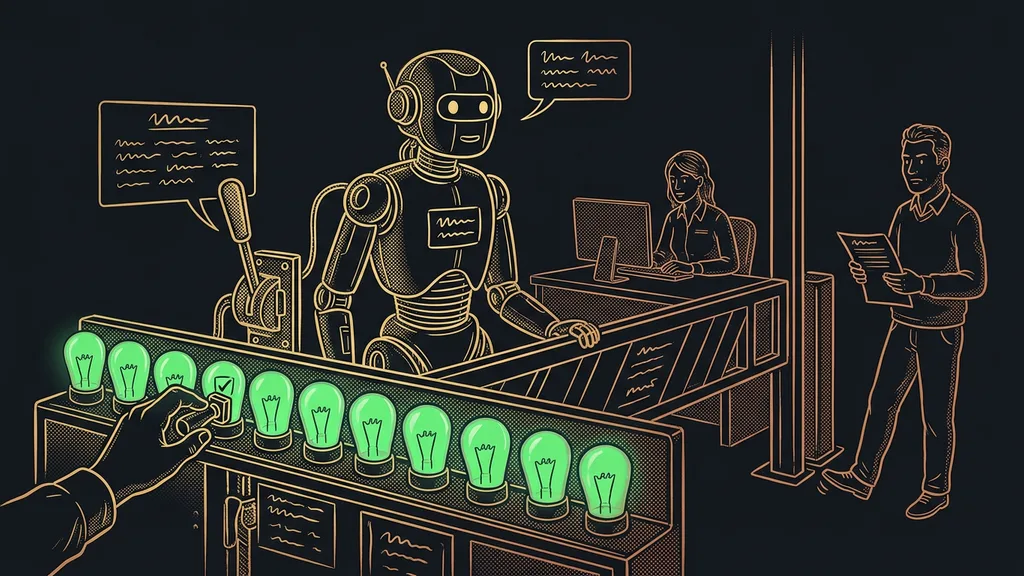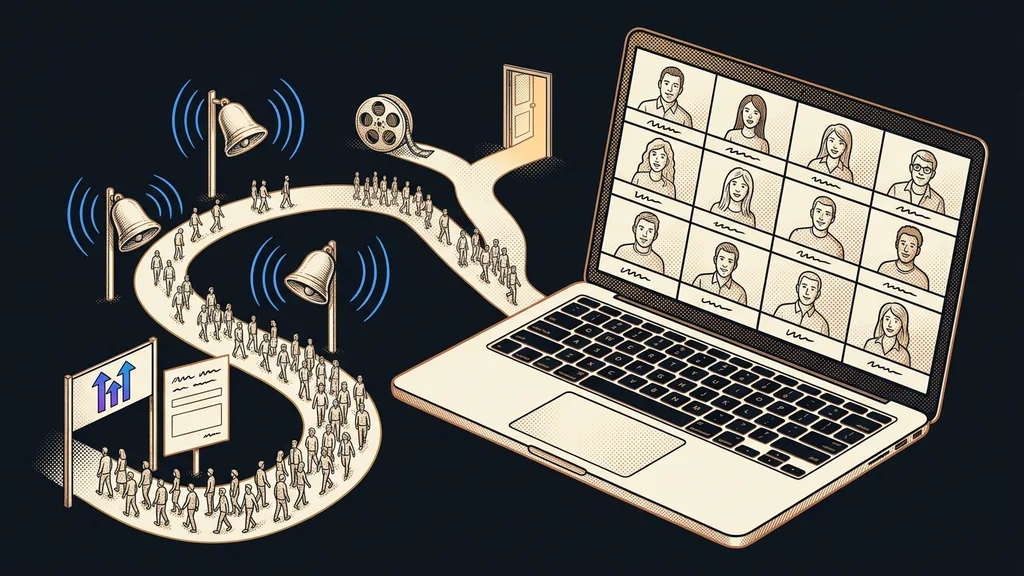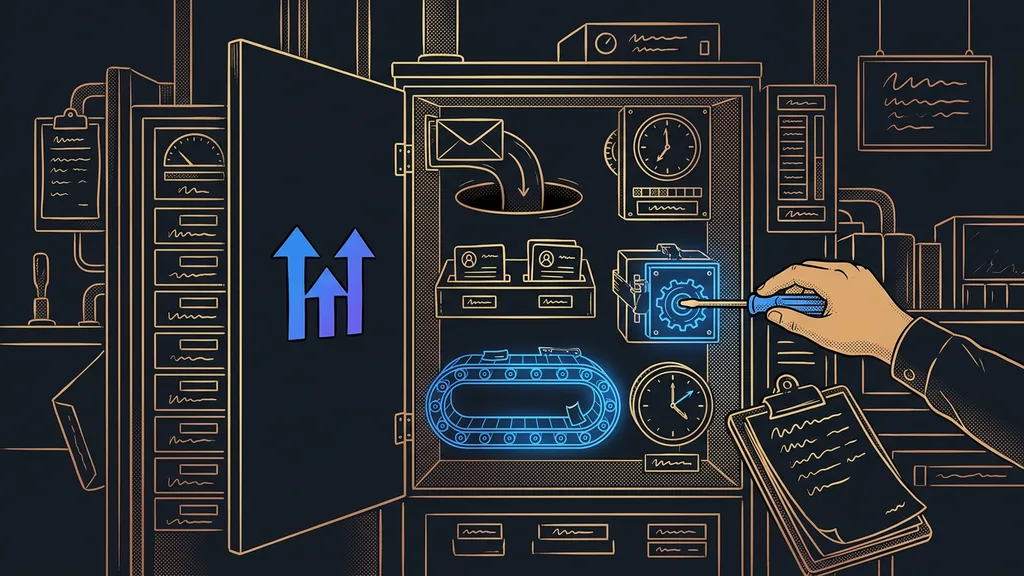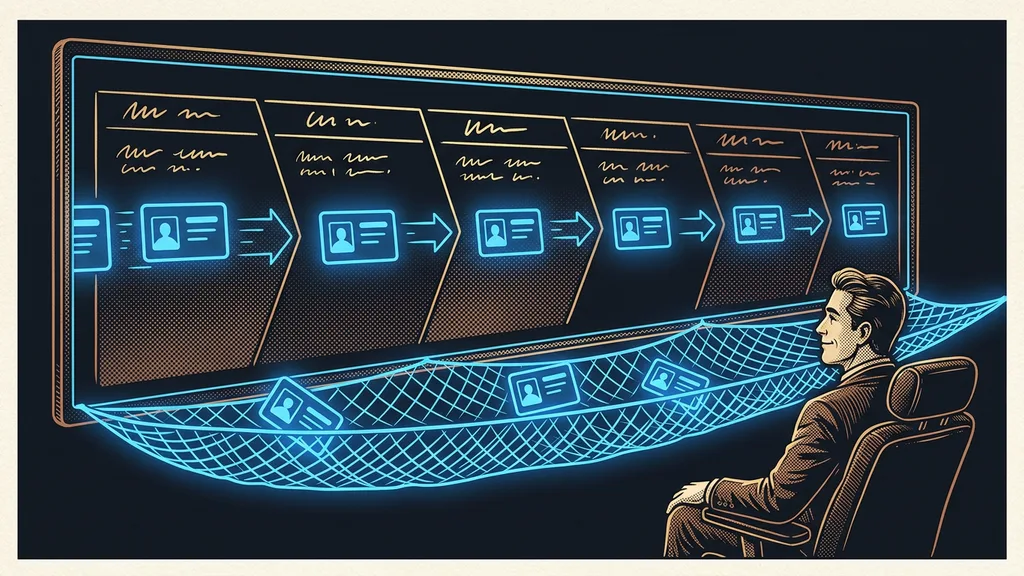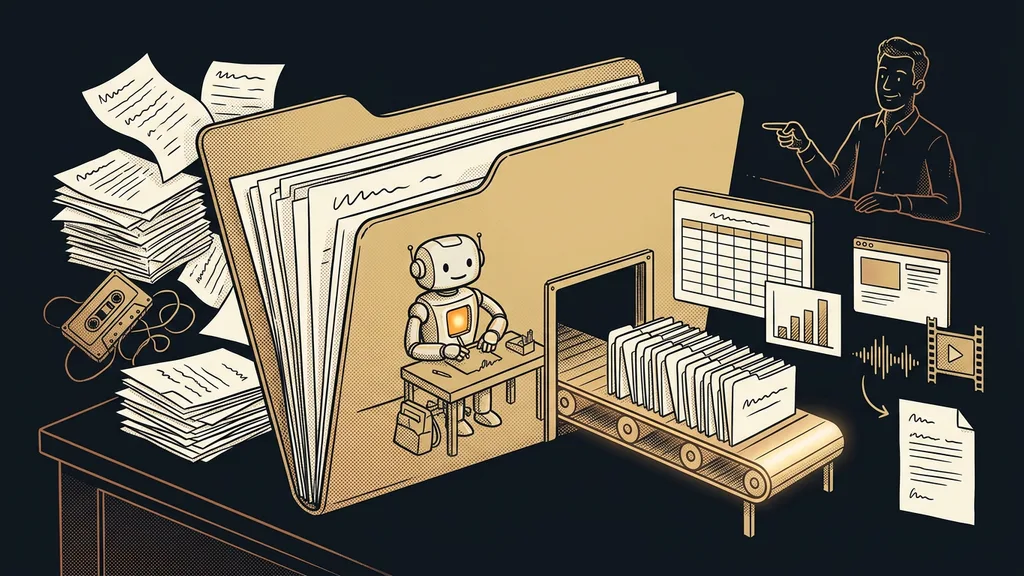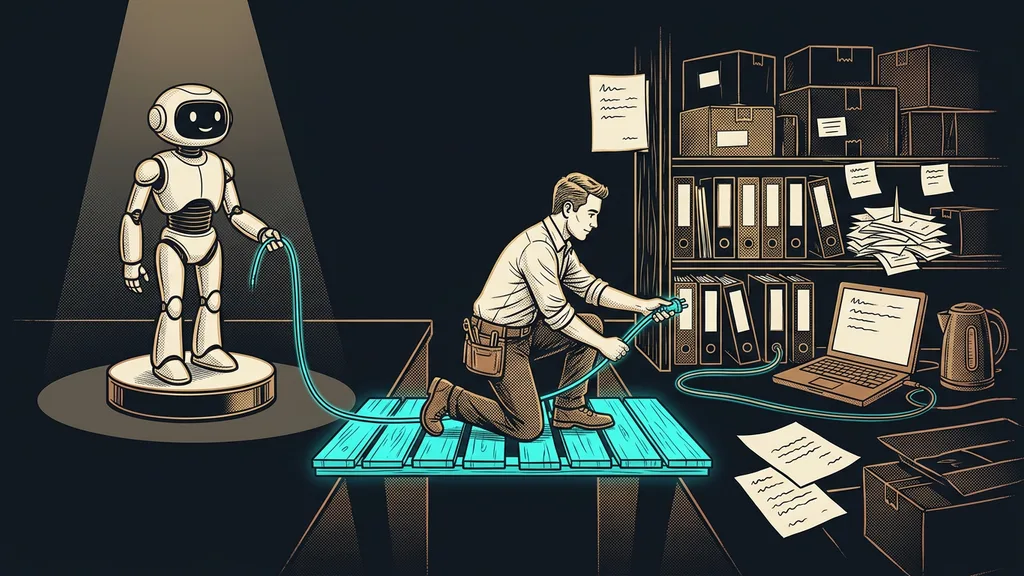
Forward Deployed Engineer is a job title that AI companies themselves are now hiring for. In plain terms, it’s an engineer deployed right at the customer. Instead of building AI from a desk at the vendor, they build it inside the company that will use it, on that company’s data. The reason is simple. A demo in a presentation usually runs smoothly. In real operation, though, AI gets stuck on exceptions, old spreadsheets, and tools that don’t talk to each other.
You may know the situation. In a webinar, you see a chatbot answering from company documents without missing a beat. Back at the office, you point it at your own price list, and the first question about free shipping throws it. Only your colleague who packs the orders knows when shipping is free. The model isn’t to blame. What’s missing is someone to introduce it to your business.
What does a Forward Deployed Engineer do?
An FDE, as the role is usually shortened, builds AI in the customer’s systems and stays until the result works in everyday work. They write code, but they also spend a lot of time figuring out what the company really needs.
Alexey Grigorev summed up the role well in a guide to AI engineering he published in July 2026. According to him, employers expect an FDE to identify the problem themselves, connect the customer’s systems, write production code, and take responsibility for the result working. I consider the last of those four the most important: delivery doesn’t end with a demo.
Forward Deployed Engineer (FDE)
An engineer that an AI company or software vendor sends straight to the customer. They build, connect, and fine-tune the system inside the customer’s company until it becomes a normal part of the work. According to MarkTechPost, the role was introduced by the software company Palantir, where the first such engineers were called Deltas.
Today you can subscribe to a model with one click. The person who connects it to your business isn’t in any price list.
FDE job ads more than quadrupled in under six months
According to Grigorev’s guide, there were only 28 positions with FDE in the title on February 4, 2026. By July 22, the number had jumped to 118. That’s 4.2 times as many. Over that period, the author pulled AI engineer job ads seven times, and the whole sample grew 2.3x. In his data, that puts FDE among the fastest-growing roles.
Read these numbers with some common sense, though. They come from one job board and six locations in the United States, Europe, and India. There’s no Czech data in them. And the absolute numbers are small: in July, FDE positions made up 3.6% of all ads in the sample. The author himself writes that this is a lower bound, because companies also advertise the same work under other titles.
More interesting than the growth is what the ads ask for. The guide analyzed 146 different positions at 94 companies. The most common requirements were building or deploying production systems (90%) and working directly with customers (88%). Not one job title targets beginners.
Why AI companies themselves want FDEs
AI companies have models that can do more than customers manage to put into production. The bottleneck is people who know how to roll AI out.
You can see it at Anthropic, the company behind Claude, too. As of October 10, 2026, its careers page listed six open positions with FDE in the title, from London to San Francisco. The London posting is looking for an engineer who works directly with its most important customers and builds in their systems, traveling a quarter to half of the time.
In early May 2026, Anthropic went a step further. Together with Blackstone, Hellman & Friedman, and Goldman Sachs, it announced a new company meant to help customers get Claude into the core of their operations. Anthropic’s CFO Krishna Rao said that business demand for Claude is significantly greater than any single delivery model can cover. On behalf of Goldman Sachs, the stated goal was to make engineers deployed at the customer available to mid-sized companies as well.
Production
The state in which a system runs on a company’s real data and people rely on it every day. It’s the opposite of a demo, which runs on sample data, where nobody minds if it gets something wrong. According to Grigorev’s guide, AI companies need FDEs precisely to bridge the gap between a working demo and a system inside the customer’s company.
Where the demo gets stuck
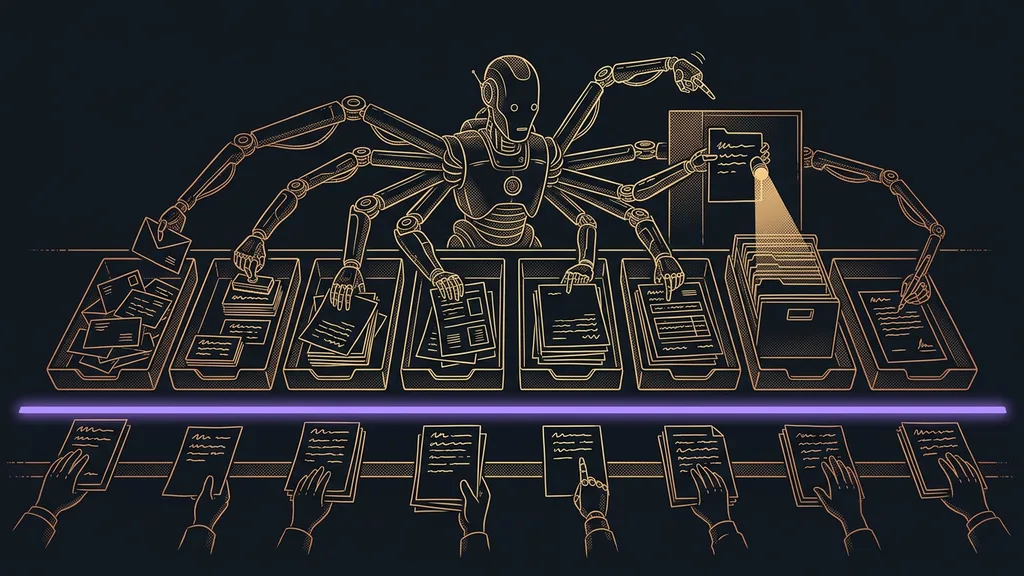
Pick one task you’d like to hand over to AI. Then write down on paper where you get the inputs for it today: a spreadsheet, email, the CRM, invoices, a colleague’s head. Each item is a place where an off-the-shelf demo won’t know what to do. The longer the list, the more of the work lies outside the model itself.
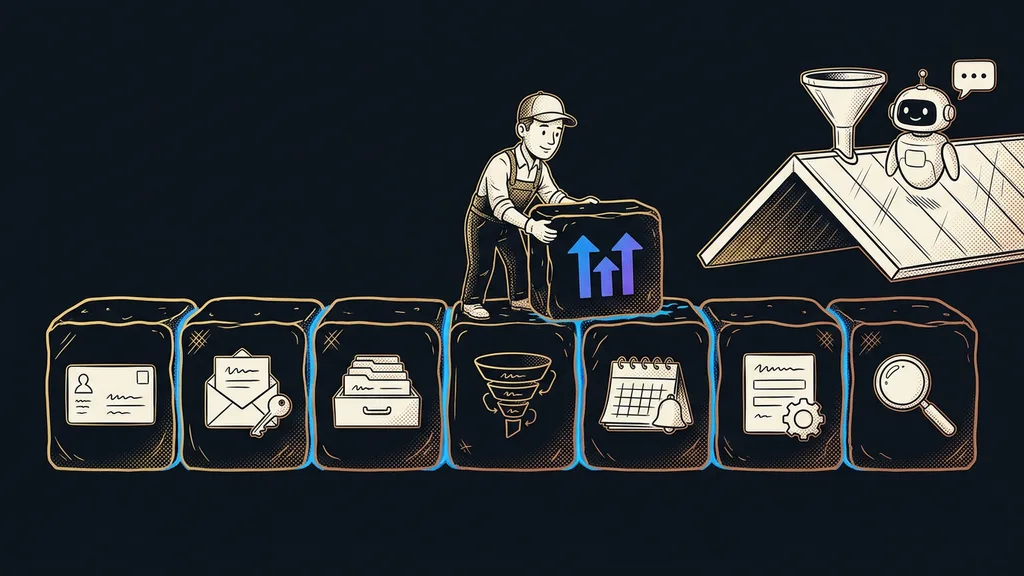
The longest lists usually belong to work that passes through several tools. A job at a service company, for example, travels from the order through the on-site visit all the way to the invoice.
A small business needs an FDE’s approach, not a full-time FDE
A small business won’t hire an engineer like that full time, and there’s no reason it should. But it needs exactly what an FDE brings: someone who builds AI on site, on the company’s data, and is responsible for the result.
The New Stack writes that the FDE model is usually out of reach for smaller companies because of the cost. The way around that is a single project. I do this work for small businesses as an individual. I’m not an FDE, who is usually an employee of a larger company, like Anthropic or Databricks, and works for big customers. My steps, though, come out almost the same.
| What FDE job ads ask for | Share of ads | The step in a small business project |
|---|---|---|
| Identify needs and scope | 52% | a consultation and a written proposal with a price |
| Build and connect a production system | 90% and 64% | a build on your real data |
| Test and monitor the result | 49% | a test on live data |
| Vouch that it works | part of the role definition | handover, training, and documentation |
After the handover, the system is yours, and you don’t depend on me. What a rollout like that looks like week by week is shown in the first month of a done-for-you GoHighLevel setup. I’ve broken down what goes into the implementation cost separately. The result should be work nobody in the company does by hand anymore, and a system your people understand.
When you don’t need anyone from outside
You don’t need an engineer on site if you want to automate one simple thing in one tool and you’re keen to learn how. A good tutorial and a bit of patience will do.
Likewise, a business with its own developer who knows its data can handle the whole process itself. And if you need a team watching the system day and night, one person per project isn’t the right choice. For GoHighLevel, I’ve covered separately when an agency is the better bet. And if you don’t yet know whether you’re looking for a consultant, training, or a vendor, settle that question first.
The whole approach in a nutshell
- Pick one recurring task and write down where you get its inputs.
- In a consultation, go through what’s done by hand today and what slows you down the most.
- Ask for a written proposal: what gets built, how it will work, and what it will cost.
- Insist on building and testing on your real data, not sample data.
- At handover, ask for training, documentation, and accounts registered to your business.
The chatbot thrown off by free shipping gets fixed by a person who asks your colleague from packing when shipping is free and teaches it that. AI companies hire specialized engineers for this, while a small business just needs one project. Got a task you’d like to get running like that? See what AI implementation looks like with me. The consultation is free, with no strings attached, and you’ll get the price in writing in the proposal. And today, write down the inputs for that one task. That’s exactly what an FDE would ask you about first.