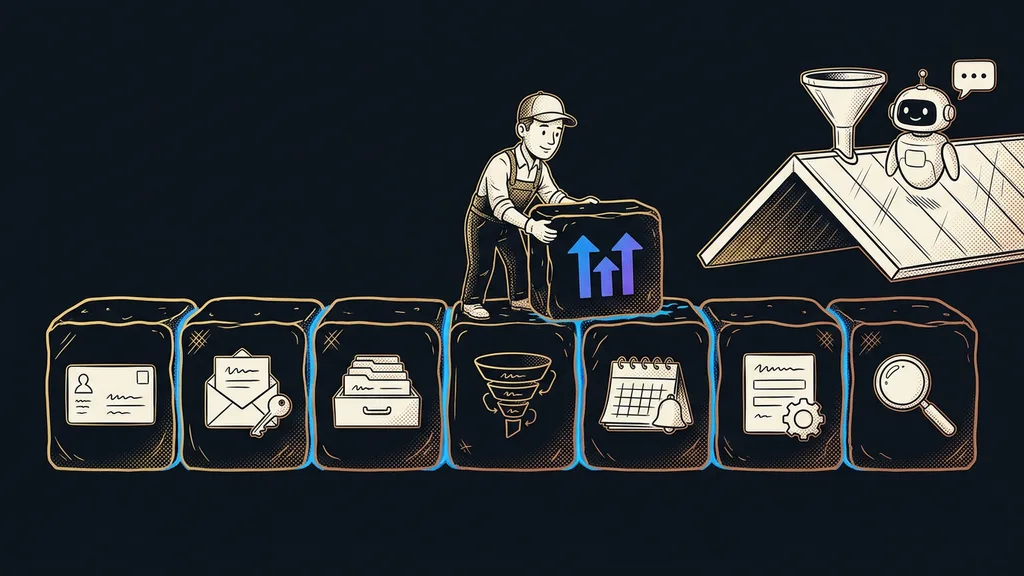
Both agencies and individuals offer help with GoHighLevel, and the screens they set up for you will end up looking almost the same: pipeline, calendars, automations, emails. Where they differ is who talks to you, whose license the account runs on, and who keeps it after the handover. The rule of thumb is simple. Go with an agency when you want someone else to run the system, too, and with one person when you want to own it.
With accounts I take over from agencies, my first question is where the account actually lives. The business owner often doesn’t know. Every month an invoice arrives with the agency’s logo, they log in at the agency’s address, and quite often they only find out from me that GoHighLevel runs underneath. Nothing shady is going on, because the platform is built this way for agencies. It’s just that nobody said it out loud at the start.
How is a GoHighLevel agency different from one person?
Both can set up the same things. The difference is in how the working relationship is built, and a table shows it best:
| Question | Agency | One person |
|---|---|---|
| Who you talk to | often a salesperson, then a project manager and a technician | always the person building your account |
| Whose license the account runs on | often the agency’s, as its sub-account | usually your own license |
| How you pay | a flat monthly fee for the license, usage, and work | you pay for the license yourself, the work separately |
| How it starts | with a proven template, fast | with a design based on how you sell |
| After the handover | the agency keeps running the account | you hold the account, with documentation and training |
| Weak spot | dependence on the vendor | one person’s capacity and backup |
The second row matters most. Hardly anyone checks it at the first meeting.
Rented account
A GoHighLevel account that runs as a sub-account under the vendor’s license instead of on your own. You work in it normally, but you pay the vendor for it, and the vendor holds the master keys. As long as the relationship lasts, you don’t feel the difference. It shows when you want to leave.
Whoever holds the license also holds your contacts, your automations, and your entire deal history. Ask about it before you ask about price.
How an agency makes money on GoHighLevel
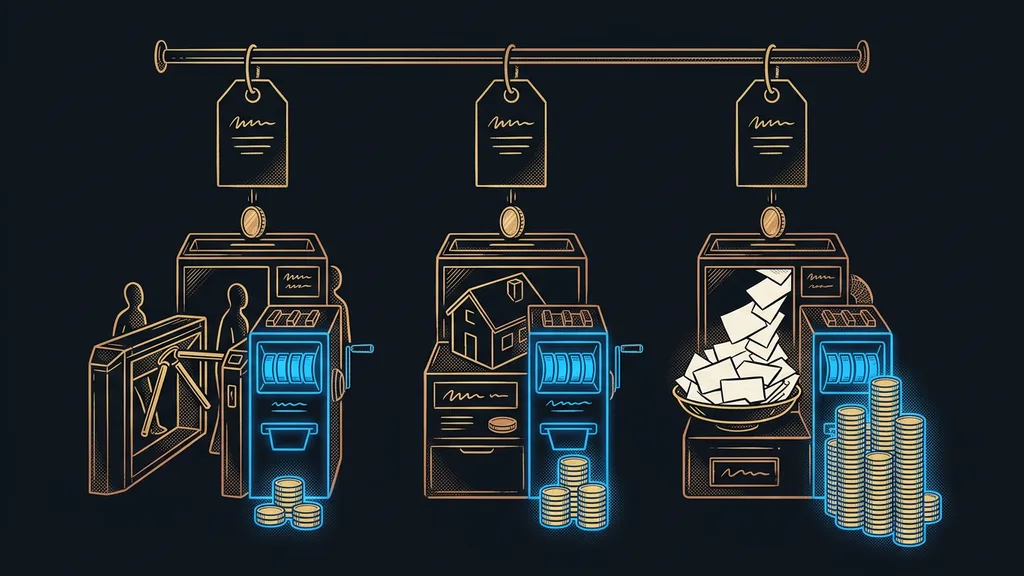
Agency businesses on GoHighLevel usually run on monthly subscriptions. For them, the setup is the ticket in, and the money comes from ongoing management.
The platform is designed for this from the start. An agency can dress it in its own brand. Through white-label and SaaS Mode, it then sells it to you at its own price, including a markup on email and message usage. This mode comes with the top Agency Pro plan, which costs $497 a month as of early October 2026.
There’s nothing wrong with that. Recurring monthly revenue is a healthy model for an agency, and in return you get people who look after the system. The trouble starts only when you don’t know what you’re paying for. License, usage, and work then blur into a single amount.
The second thing is speed. An agency focused on one industry has a ready-made snapshot and can deploy your new account from it in a few minutes. The start is fast and proven. But the template is built for the average client in that industry, so your exceptions get added afterward. And watch out: when the agency later pushes out an update, it also overwrites the inherited elements you’ve customized in the meantime.
Snapshot
A ready-made copy of the whole skeleton of a GoHighLevel account: pipelines, automations, calendars, forms, and email templates. An agency builds it once and deploys it to more clients. Contacts, conversations, and appointments don’t transfer with it, because a snapshot carries structure, not data.
What you pay and what you get with one person
With one person, you pay for the work separately and usually for the license directly yourself. As of early October 2026, GoHighLevel starts at $97 a month for the Starter plan. So the license invoice is in your name, and the account is yours from day one.
My work costs €80–160 an hour, depending on the job. Bigger jobs I price as a whole project, and you get the scope and the amount in writing up front. The main advantage lies somewhere other than price, though. With me, you always talk to the same person who designed and built the account, so nothing from the first meeting gets lost along the way.
This route has a weak spot too, and I’ll say it straight. One person has limited capacity, and no colleague steps in when they’re sick or on vacation. They also won’t write your campaigns, shoot your ads, and watch your numbers every week on top of the setup.
The one-invoice test
Take the last invoice from your GoHighLevel vendor, or the proposal on your desk. Find three separate amounts on it: license, usage, and work. If it shows a single line item called “system management,” ask for a breakdown. Only with that can you compare an agency and one person fairly.
Who’s still with you after the handover
With an agency, the agency stays after the handover. With one person, it’s mainly you. An agency is insurance for continuity: when a technician leaves, another steps in, and the system keeps running. The price is that the account is harder to move without the agency. You can export your contacts, but automations, calendars, and pages won’t simply move over without the vendor’s cooperation.
With one person, continuity has to be built in at the handover. That’s why I do the handover in writing: the main access stays with you, someone in the company is trained, and there’s an automation register where every workflow has its own description and owner. With that, anyone who knows GoHighLevel can take the system over.
Whoever you choose, ask for the same thing: an account in your name, or a written agreement on how you’d move it elsewhere along with your data. I’ve written up separately more questions that help you spot a good GoHighLevel specialist at the very first meeting.
When I’ll recommend an agency myself
I recommend an agency whenever you want more from the system than setup. Even though I work with GoHighLevel on my own, I see three situations where a team is clearly the better choice:
- You also want ongoing monthly management. That includes campaigns, content, ads, and regular reporting, and you have nobody in-house for it. Work like that needs more hands.
- You can’t afford downtime. When the system carries the whole company’s orders, an agency with several people gives you the certainty that someone will answer even in the middle of the summer holidays.
- You’re in a typical industry and the agency has a proven template for it. You then get a tried-and-tested solution quickly and without experiments.
One person, on the other hand, suits a business that wants to understand the system, hold it itself, and pay for work rather than for ongoing management.
The whole choice in a nutshell
- Decide whether you want to own the system or rent it along with someone to run it.
- For every proposal, find out whose license the account will run on.
- Ask for a breakdown: license, usage, and work separately.
- For ongoing management without your own staff, go with an agency; for a system you’ll hold yourself, go with one person.
- At handover, insist on the main access and a written description of the automations.
The owner with the agency invoice who doesn’t know where their account lives didn’t make a mistake by choosing an agency. One question was missing at the first meeting: whose name will the account be in? If you want an account that’s yours from day one, plus a person who builds it and hands it over to you, see how a done-for-you GoHighLevel setup works with me.