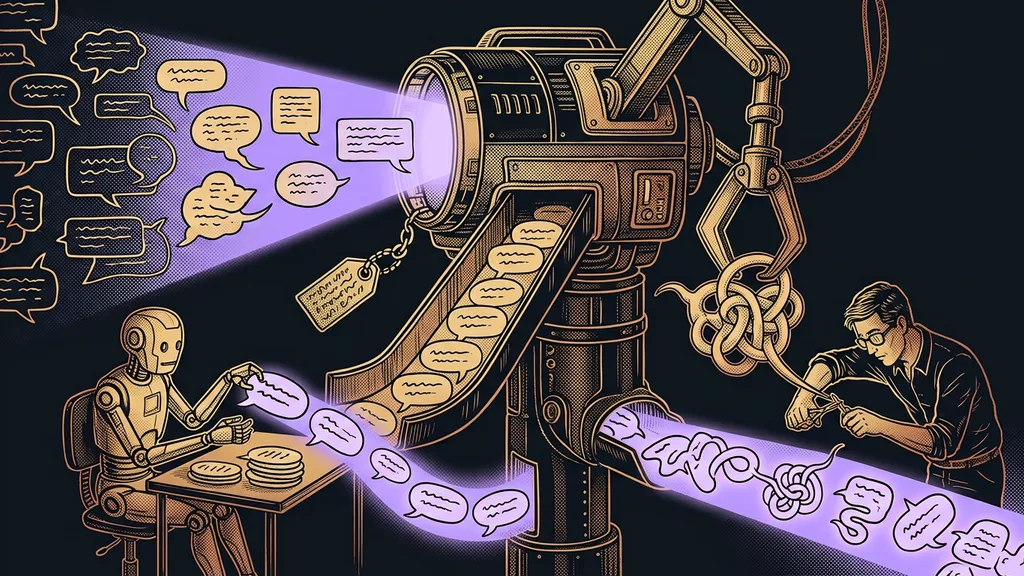
An AI course promises a miracle, the company pays, and then there’s silence. The certificate hangs on the wall, the slide deck sits somewhere in the Downloads folder, and the work looks exactly the same as before. Now and then someone opens ChatGPT, types in whatever comes to mind, and finishes the result their own way anyway. The training money is gone, and nothing in the company has changed.
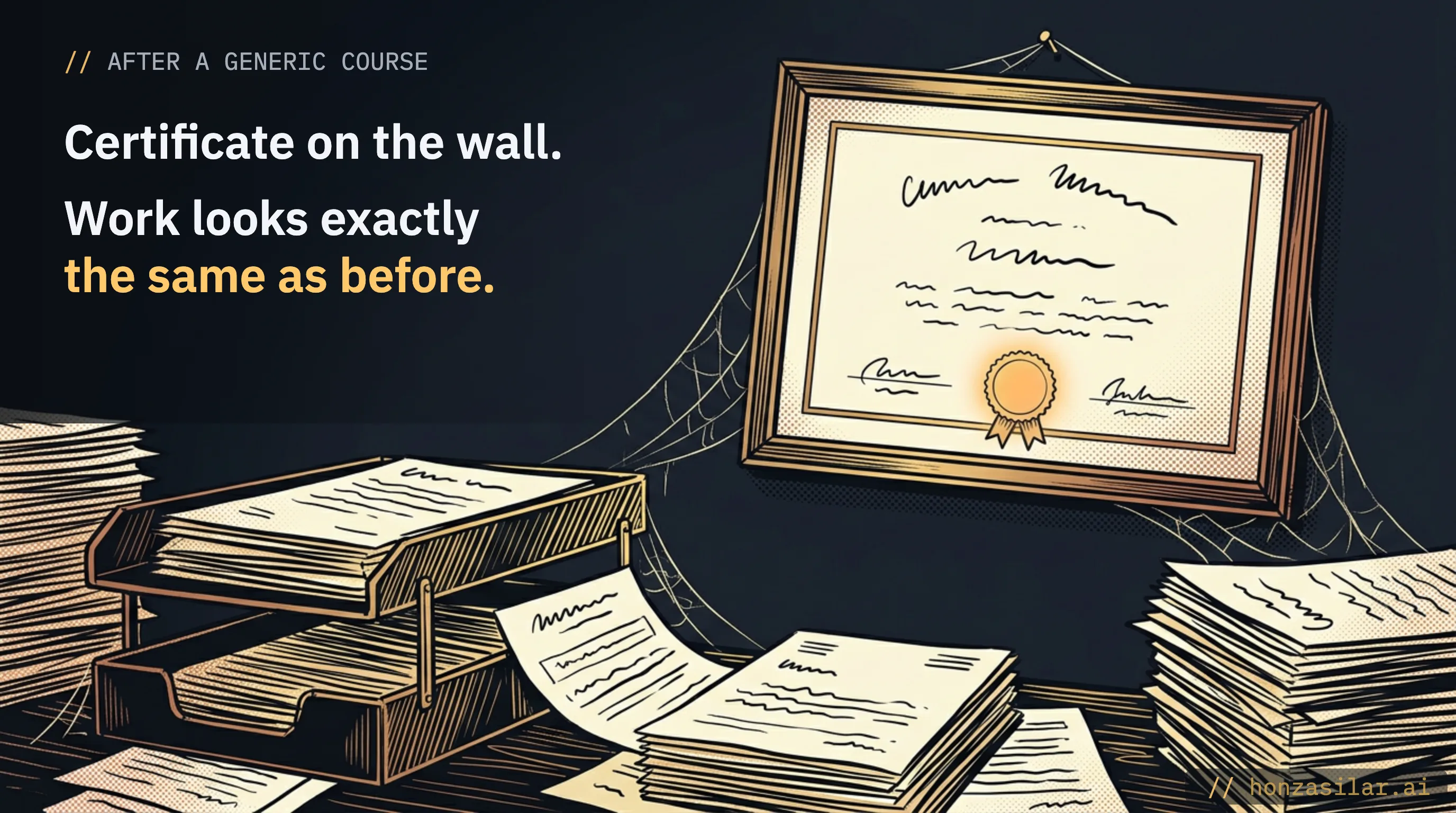
“We sent two people to a prompting course. They came back excited and showed us their certificates. And then? In practice, they used almost none of it.”

A business owner told me this at our first consultation, and that owner wasn’t the first or the last person I’ve heard it from. I bring AI into Czech companies, and I worked as a project manager and AI engineer at the company behind the Czech white-label version of GoHighLevel. I see courses wasted like this all the time. It’s not that they’re badly made. They just miss the mark.
Why generic prompting courses end up in a drawer
Because they teach with practice examples rather than your actual work. An AI course on Seduo or Digiskills (Czech online learning platforms) or in similar catalogs is perfectly fine as a first introduction. You get an overview of what today’s models can do, try out a few ways of asking, and leave smarter. But the practice prompts read “write a poem, summarize an article, come up with ten headlines.” Your business doesn’t have a “write a poem” problem. Its problem is that invoicing eats up your accountant’s entire Tuesday, that replies to clients get written from scratch over and over, and that leads get lost between five tools.
What are you actually paying for?
Generic prompting course
Teaches with practice examples: “write a poem, summarize an article.”
You take away a certificate and an overview.
The next day, nothing about your work changes.
Training on your own work
“You leave with something that works.”
We build on the task that costs you the most time today.
The finished skill works from day two.
A certificate from a course like that proves one single thing: that the person sat there. It doesn’t prove that anything changed in the company. And even what someone learns on a generic example rarely carries over to their own work. In the course, it worked because the exercise was set up in advance. Back at the office, you graft your own exceptions onto it, your own data, that eternal “but we do things differently here,” and the enthusiasm fizzles out at the first real task.
On top of that, prompting as a discipline of its own is slowly losing its point. The real lever is less about how cleverly you write a single prompt or how much the model knows, and more about whether the AI remembers exactly how you work and does it on its own next time. A generic course can’t teach you that, because it doesn’t know you.
I train on your work, not on practice examples
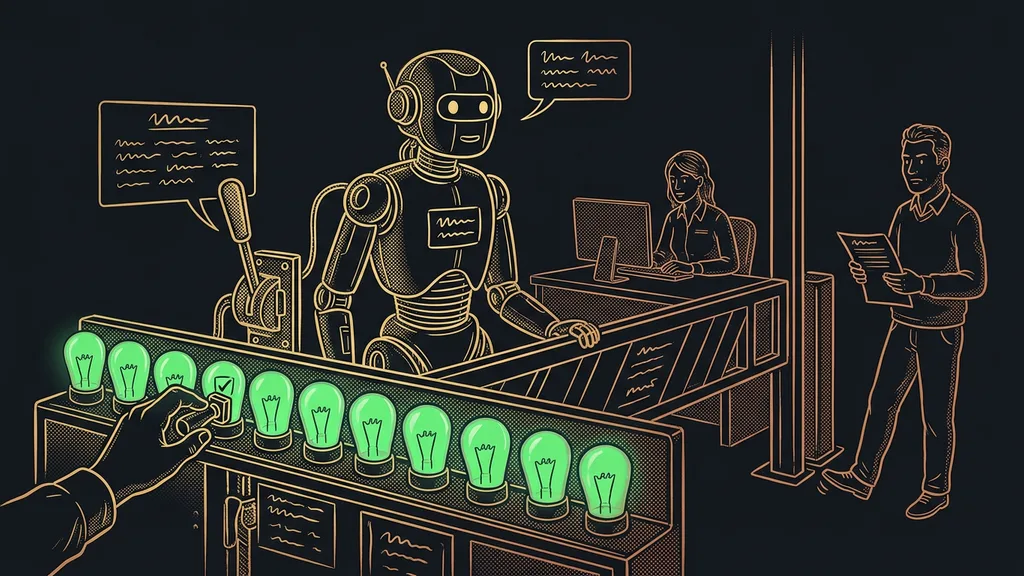
My training does the exact opposite. Instead of a hypothetical example, I sit down with your team over the task that’s costing them the most time right now. I open Claude and Claude Code, and we build the solution live, directly on your data and your exceptions. Your people take part as co-creators rather than as an audience. They see where I got stuck, why I did it this way, and what it looks like when it works on their own work for the first time.
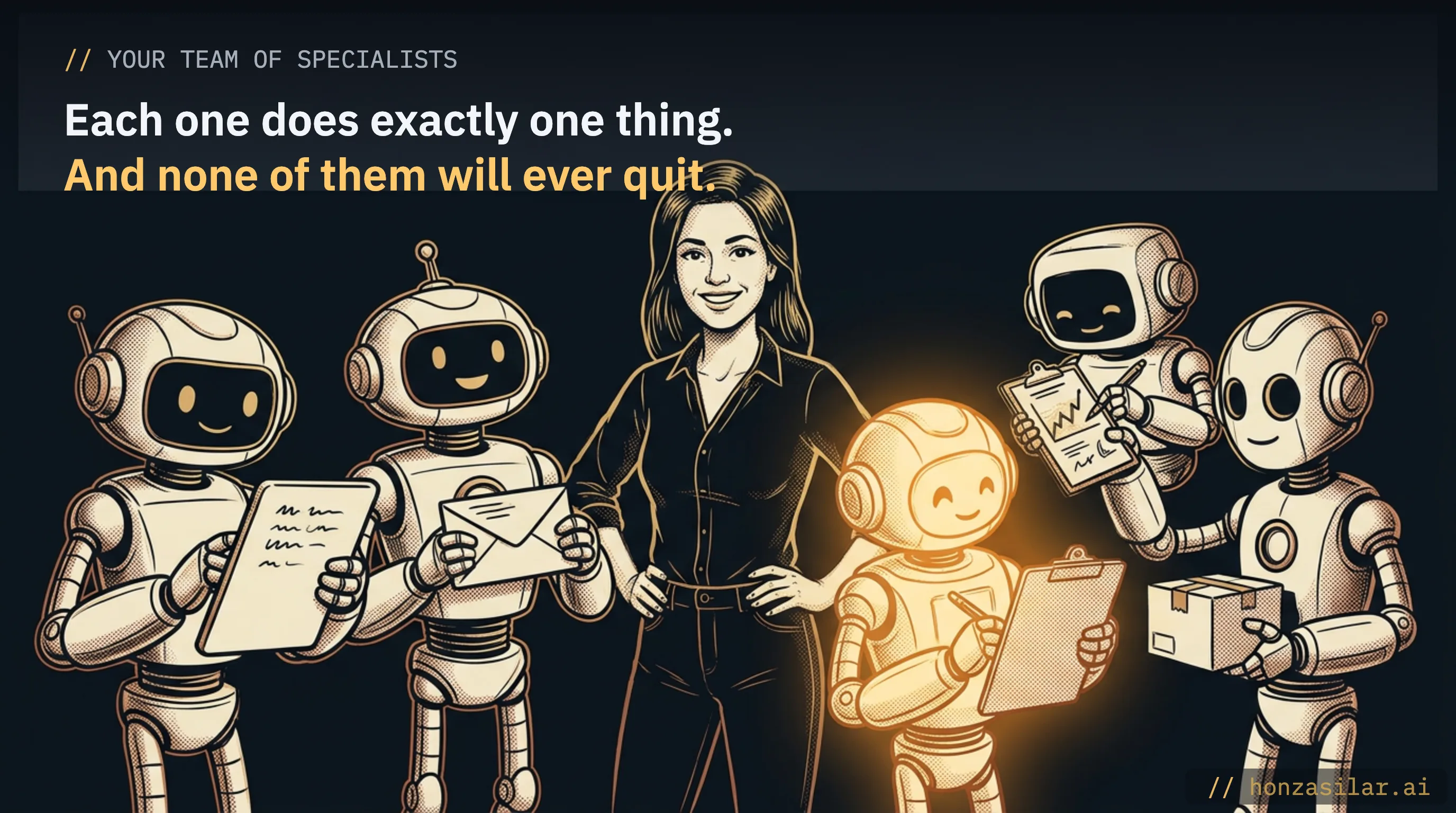
At first glance, Claude Code looks like a tool for programmers. In practice, it’s the place where I build your business its own team of specialists. Each one does exactly one thing, because we sat down and worked through that one thing properly. I explain how to get started with it, even without a technical background, in a separate guide for complete beginners.
Three worries about the training, and how it really is
What the training produces: a skill, not a certificate
From a generic course, you take away knowledge. From me, you take away a finished skill that’s working from day two.
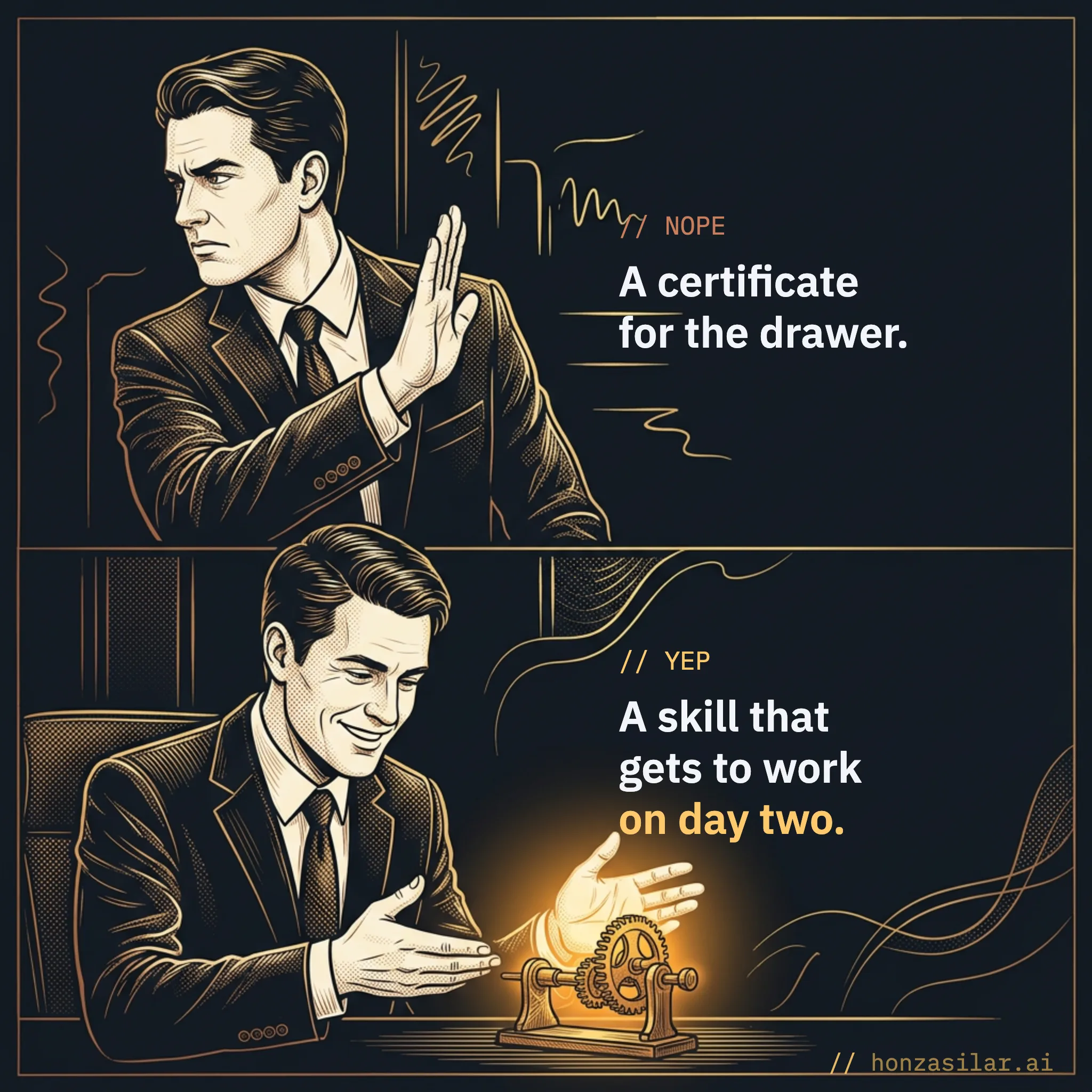
Skill
A self-contained procedure that handles exactly one of your tasks and runs on its own the moment it’s needed. It isn’t a chatbot you have to talk to and re-explain what you want every time. You teach it once: how you phrase things, what it should watch for, where it should be careful, and from then on it does things your way, even when you’re not around.
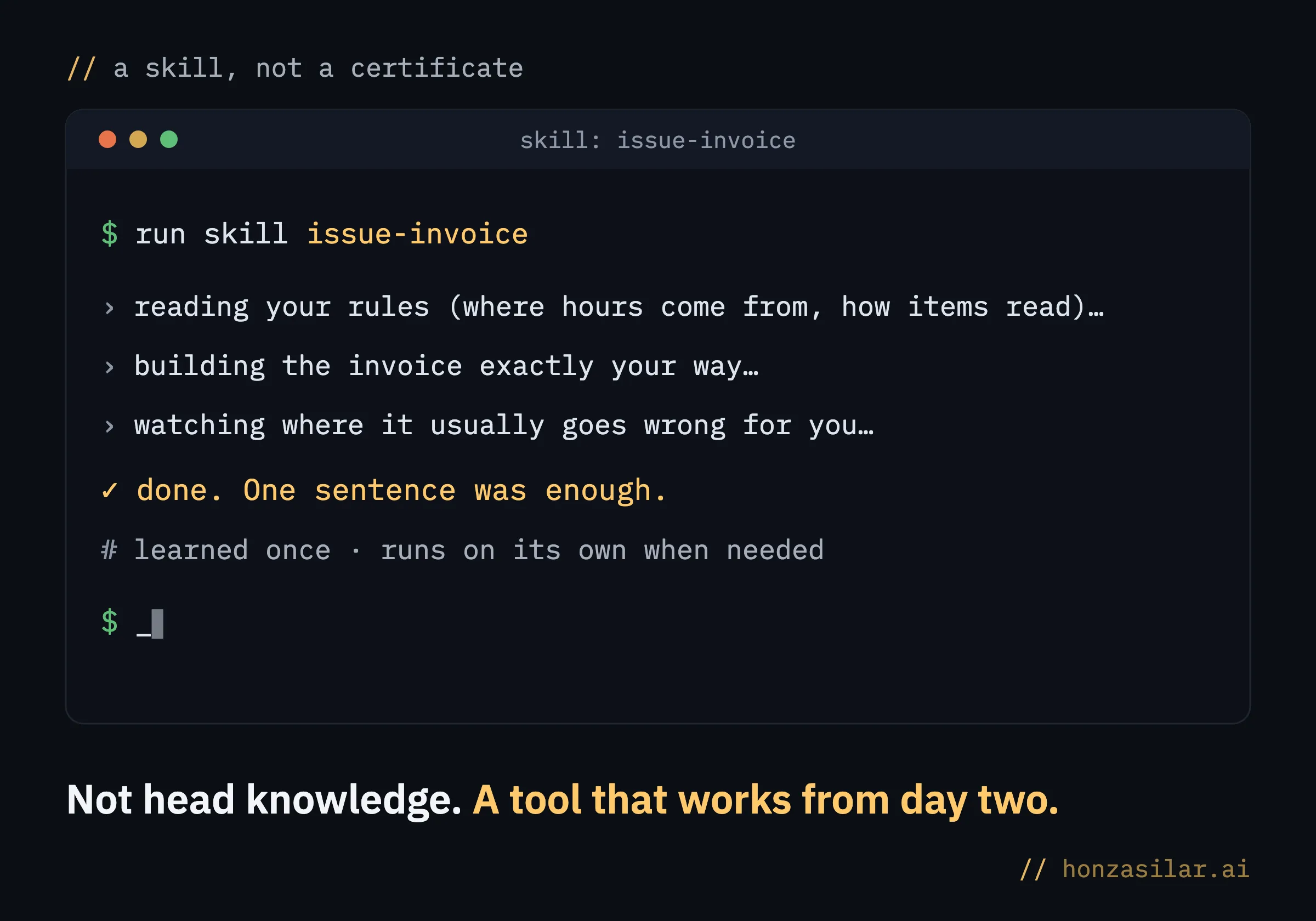
Let me show you with one task from start to finish. Say, issuing an invoice. We sit down with one of your real invoices, and I ask about the things every business does differently: where you get the hours from, how you word the line items, what has to match, where it most often goes wrong. From those answers, right in front of you, a procedure takes shape that puts invoices together exactly your way. I’m not showing you a generic guide to building something like this at home. We build yours directly, on your numbers, so it works from day two. When we’re done, you say one sentence and the invoice is ready, just the way I have it set up for myself.
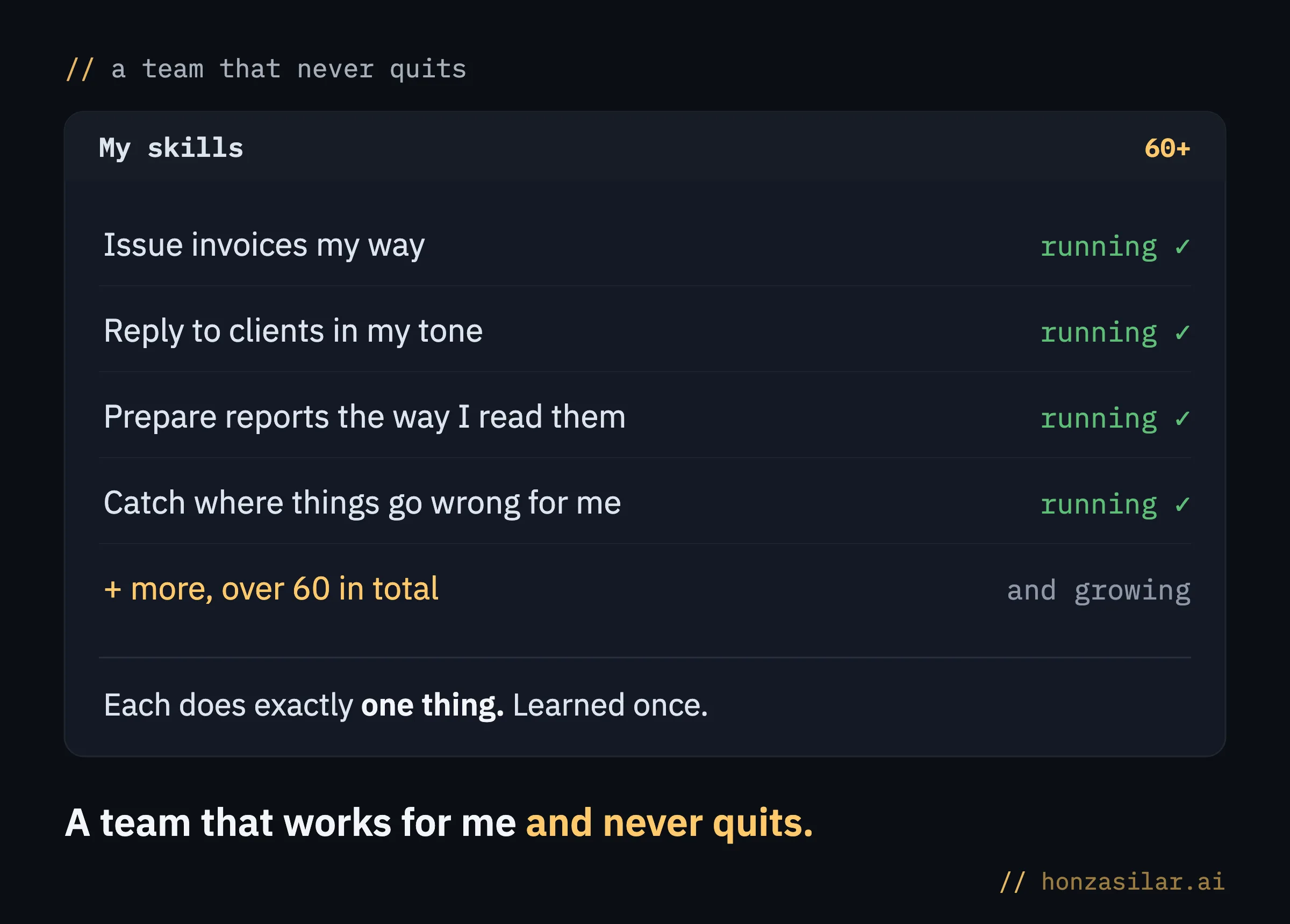
Over time, I’ve built up more than sixty skills like this for myself, and more keep coming. Issue an invoice my way. Reply to a client in my tone of voice. Prepare a report the way I read it. Instead of chatting with one chatbot, I have a team that does the work for me and never quits.
And this is how it differs from a prompting course. You write a prompt, use it once, and forget it. A skill remembers what you taught it once, and next time you don’t have to explain anything. That’s exactly the part no generic course will give you.
Certificate or skill?
| Certificate | Skill | |
|---|---|---|
| What it is | paper and knowledge | a self-contained procedure |
| Built on | a practice example | your task and your data |
| Carries over to your work | rarely | ✓ works from day 2 |
| What it does next | hangs on the wall | does the task for you |
A quick test before you send people anywhere
Before you pay for another AI course, ask yourself one question: what will the business take away from it once the certificates have cooled off? Write down one specific task that costs you hours every week. If the course helps you with exactly that, it makes sense. If all you take away is “an overview and a good feeling,” nothing about your work will change the next day.
Who my training isn’t for
It isn’t worth it for everyone, and I’ll say so up front. If you just want a theoretical overview of what today’s AI can do and where it’s all heading, a generic course for €10 or €20 will serve you better. Likewise, there’s no point in getting in touch with me until you have a specific recurring task that keeps holding you back. My training makes a real difference exactly where there’s something to automate: where the same manual work comes back every week and costs real hours. If you don’t have that yet, start with something cheaper and come back once you know what’s eating your time.
Who is the training worth it for?
Worth it
- You have a specific recurring task that costs you hours every week.
- You want a tangible result on day one.
- You want your people to understand how the solution was built and to be able to develop it further.
Not worth it
- You just want a theoretical overview of what today’s AI can do.
- You don’t have a specific task holding you back yet.
- For a first introduction, a generic course is cheaper.
The whole system in a nutshell
I stick to a simple sequence so the business has something tangible on day one:
- We find the task that hurts the most. A specific activity that eats up hours every week, rather than a vague “we want to do something with AI.”
- We build the solution live, on your data. You ask questions, and I show you why I do it this way and not another.
- You leave with a finished skill. Something that works and that your people watched take shape, rather than a set of notes.
- We add memory and a log. The solution keeps its own journal and backs itself up, so a month later you can pick up exactly where you left off.
Instead of a one-off lecture after which we go our separate ways, you get training that leaves your business with a working tool and people who understand it. That’s exactly how I put together Claude training for teams: we sit down with whatever is holding you back today, and you leave with a tool that solves it. I show how I work with Claude in practice, and everything it lets me do for businesses, through my own solutions.
Back to those two people from the beginning. They can come back with a certificate nobody will be able to find a month later. Or with a skill that does part of their work for them from day two. I know which option my clients choose.