Agencies and independent pros mostly sell one-off jobs: a website, a campaign, a system setup. The work ends, the invoice goes out, and next month you’re hunting for the next job again. But there’s a model that turns one-off work into a monthly subscription for software under your own brand, and you don’t need developers or an app built from scratch. I covered why it’s hard to get off the one-off merry-go-round in a separate article on agency recurring revenue. This one is about the mechanics: how the model actually works.
Your income: one-off jobs vs. software under your brand
One-off jobs
Website, campaign, setup. The work ends, the invoice goes out.
Next month, you’re hunting for work again.
End of project = end of income.
Software under your brand
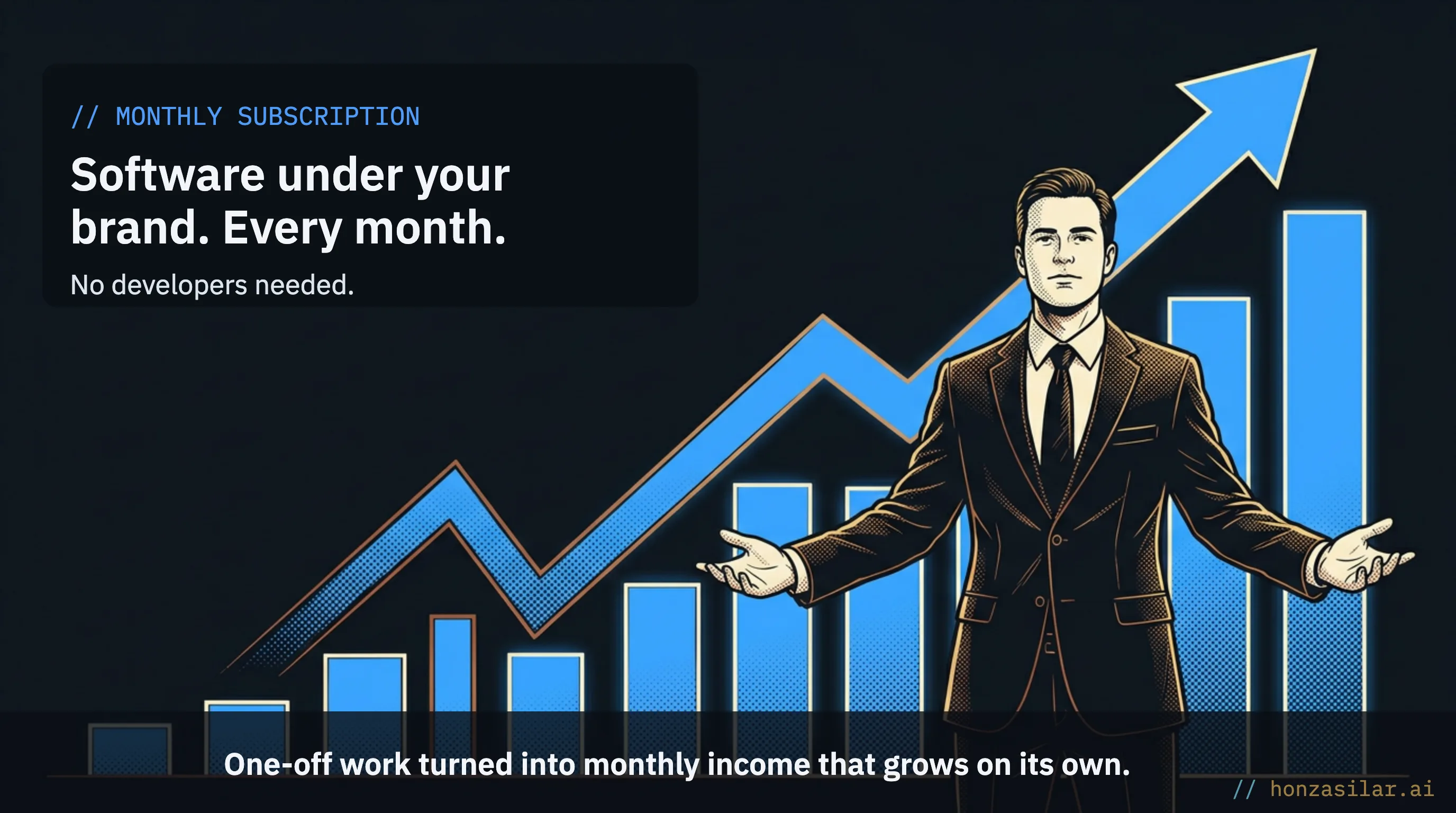
“Same as last month, plus every new subscription.”
The client pays monthly for your software.
The client has become a subscriber who stays.
The key is GoHighLevel, a platform built for agencies from the start and designed on the assumption that they’ll resell it. The mechanism has two parts that work together: white-label dresses the software in your brand, and SaaS Mode handles the money. I’ll take them in order.
“I’d have to get my own app built, wouldn’t I? I don’t have the money or the nerves for that.”
I hear this every time I talk about the model with agency owners. And every time, I answer that they don’t. The platform already supplies the entire infrastructure. You just decide what it should look like and what it should cost.
What white-label is: software in your company’s colors
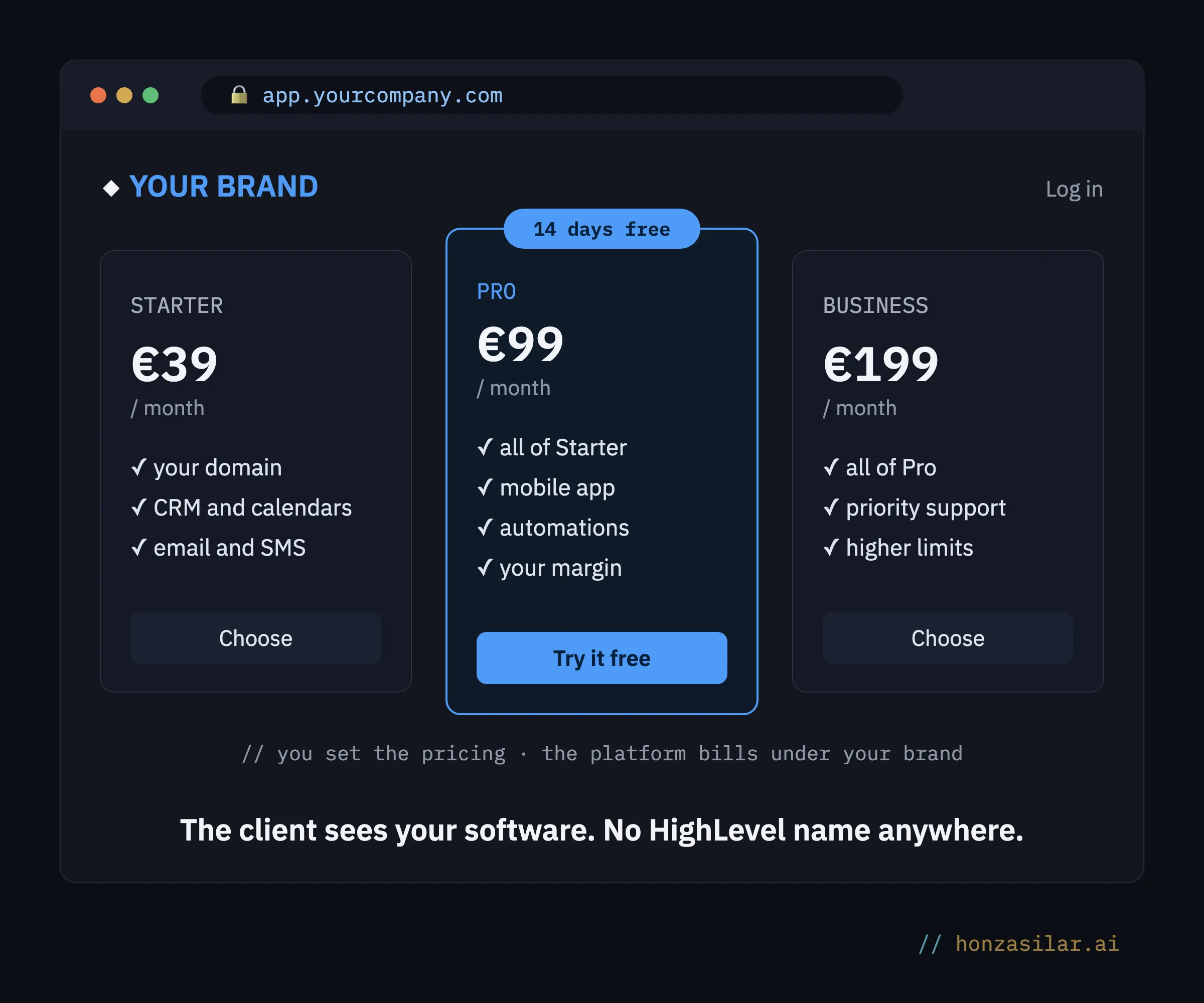
White-label means the platform takes on your brand and hides its own. Your client logs in on your domain, say app.yourcompany.com, sees your logo and your colors, and never runs into the HighLevel name. From their point of view, they’re using your software, not an American tool someone recommended to them.
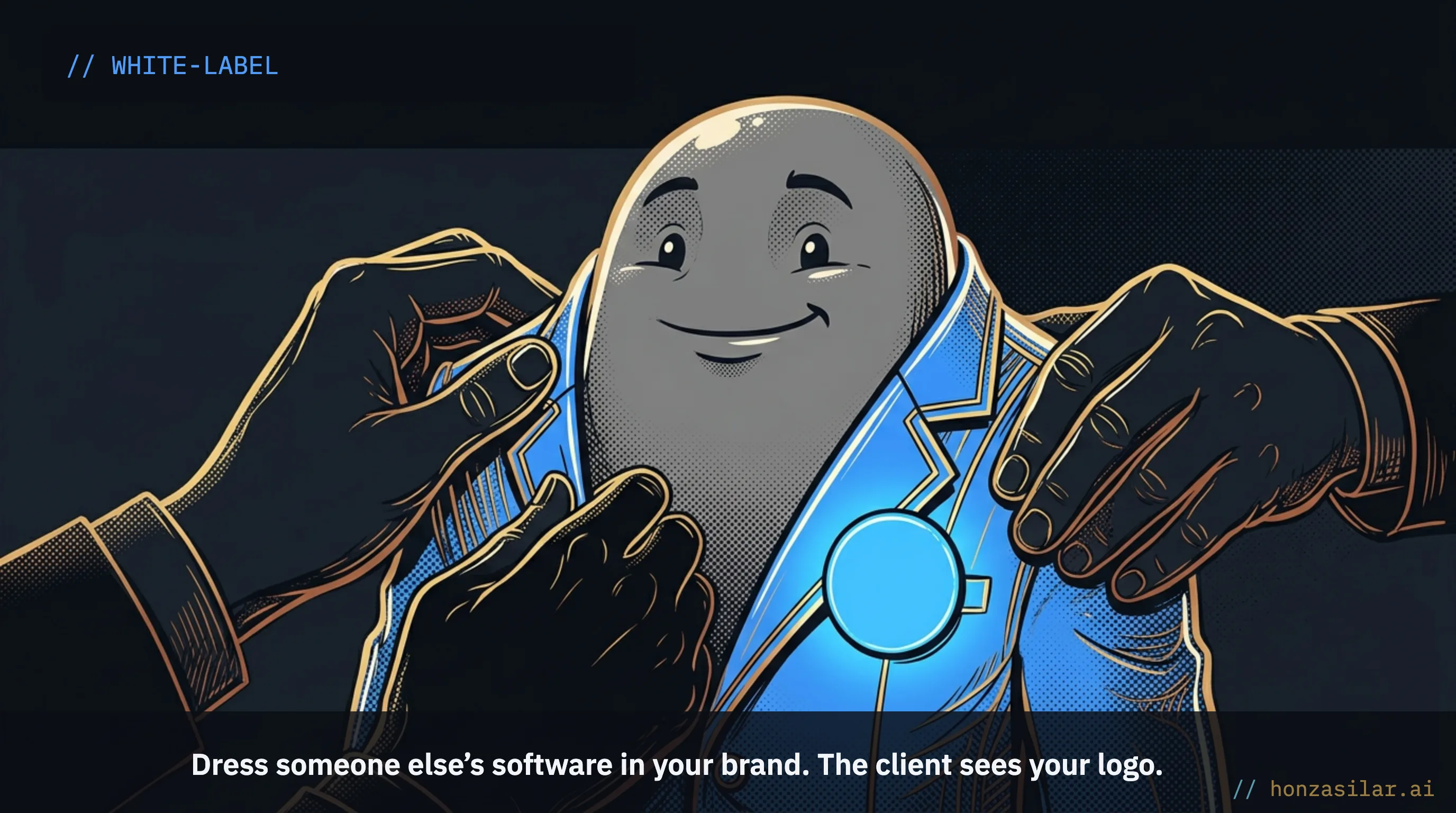
And it doesn’t stop at the web interface. The mobile app can carry your brand too: you get it under your name as a paid add-on, so your client downloads it from the App Store as your company’s app. The platform publishes the app for you, without a developer or a single line of code.
White-label
White-label is software you resell under your own brand as if it were yours. The original maker stays hidden: your client sees your logo, your domain, and your colors, and pays you, not the vendor in the background. With a white-label CRM, you turn someone else’s platform into a product that carries your company’s name.
You may have already come across living proof of this. Some local platforms are built exactly this way: they’re white-label versions of HighLevel that operate as standalone products, with their own pricing, support, and guides.
SaaS Mode: you set the pricing, the platform does the billing
In SaaS Mode, you build your own pricing plans, and from then on the platform sells them and bills for you. SaaS means software sold as a subscription, and GoHighLevel has a built-in tool for it called the SaaS Configurator. There, you set what a plan includes and what it costs, and the system takes care of collecting the money:
- Your own pricing plans. You can build up to about twenty, and you decide both the price and what’s included. The platform enforces a price floor, so you can’t set a price below it.
- Free trial. A new customer gets fourteen days to try it by default, and you can set the length separately for each plan.
- Rebilling with a markup. The platform rebills your client for SMS, email, and AI usage, and on the top plan you can add your own markup, say 2.5 times the cost. The client only sees their price, and the margin stays with you.
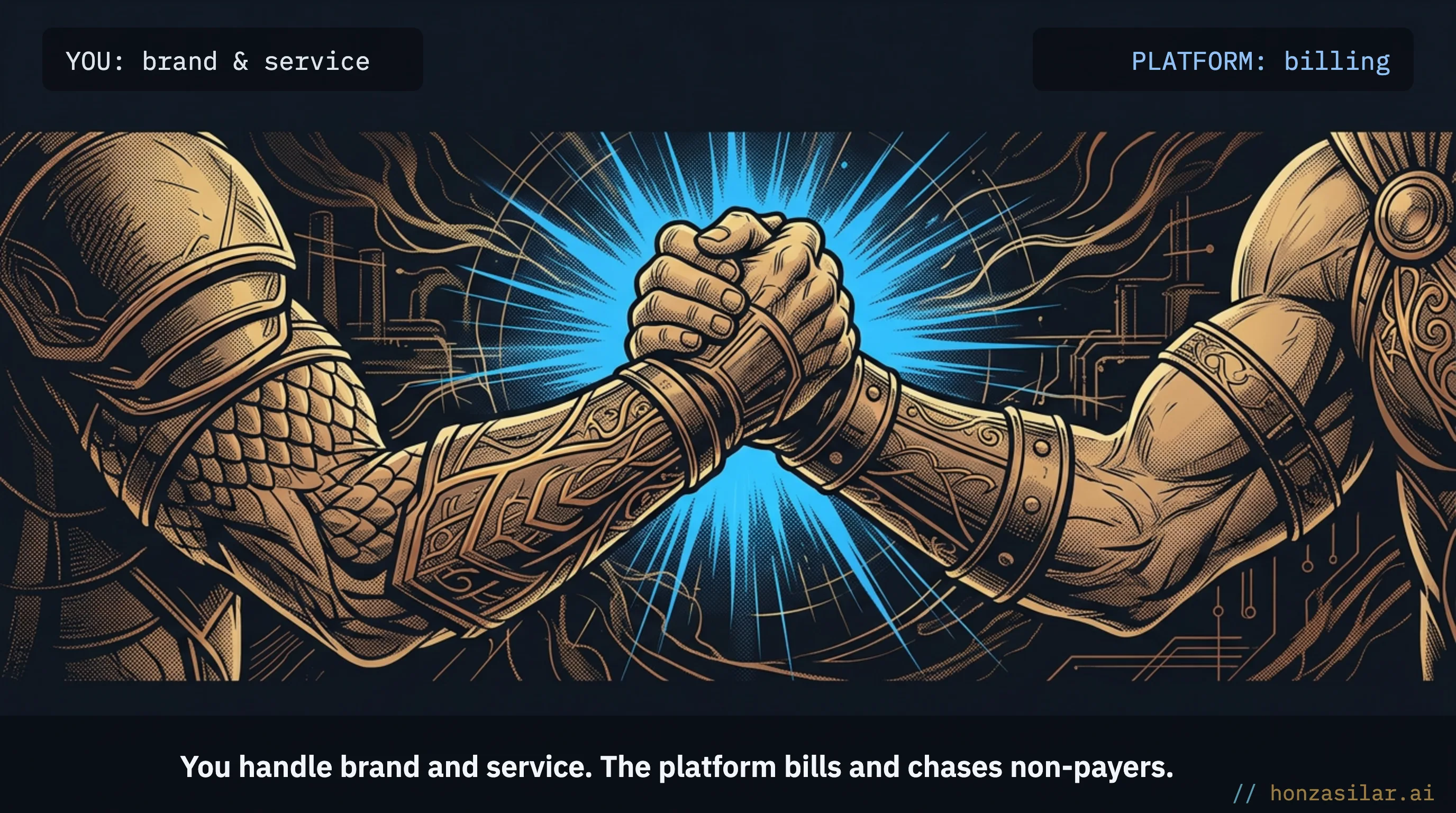
- Automatic handling of non-payers. When a payment fails, the platform retries it several times, then pauses the account on its own and finally cancels it. You don’t write the reminders.
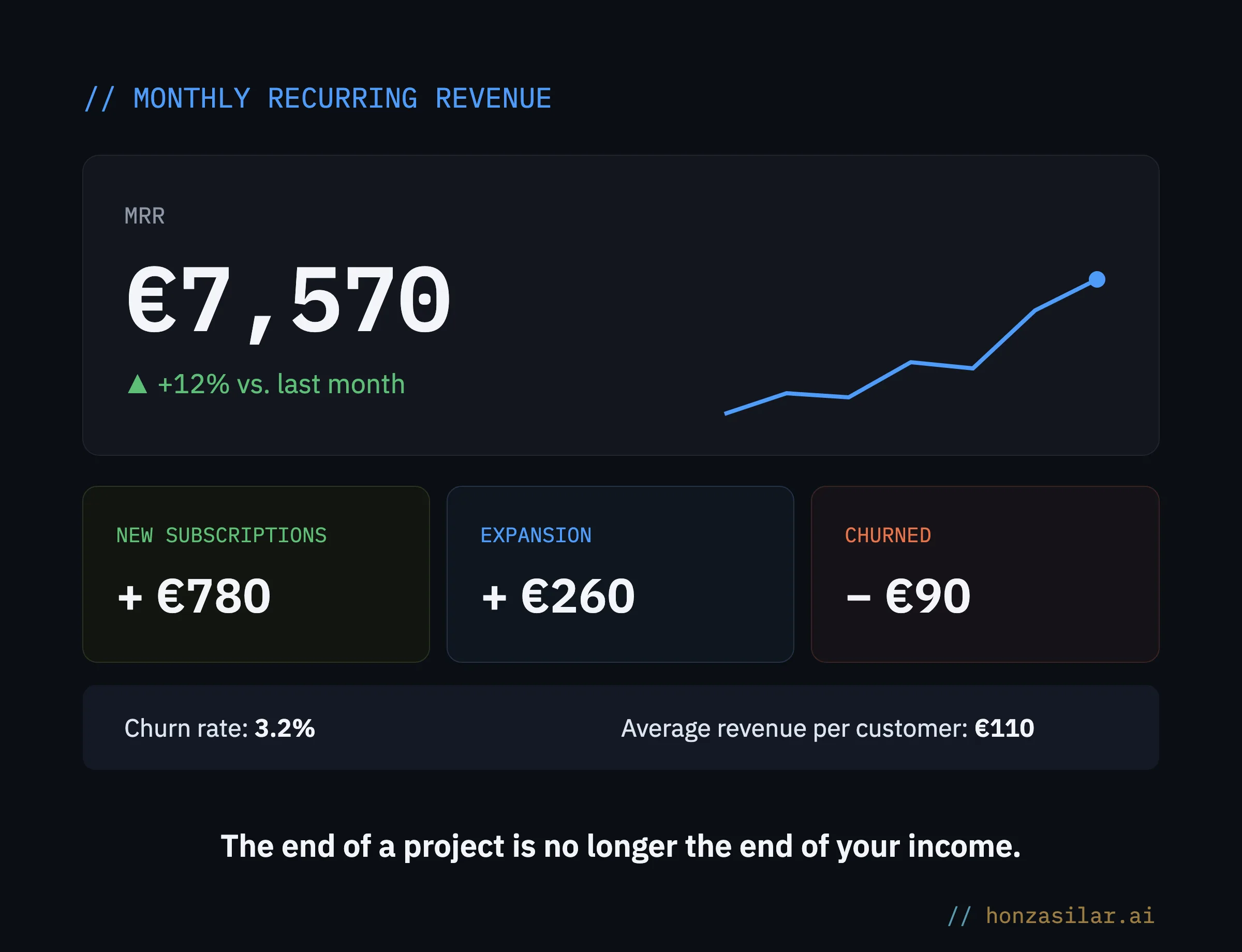
- Subscription overview. You see monthly recurring revenue broken down into new, expanded, and lost subscriptions, plus the churn rate and average revenue per customer.
SaaS Mode
SaaS Mode is a built-in GoHighLevel feature that turns the platform into your own subscription software. You build the pricing plans, and the platform then creates accounts for customers, charges their monthly payment, and deals with non-payers too. So subscription billing is in the hands of the system under your brand, not in yours.
A new customer without extra clicking
Surely every new customer means you have to set up their whole environment, and that’s the catch. Snapshots, ready-made templates of an entire account, solve it. You deploy funnels, automations, calendars, and emails for a new client in a few minutes instead of dozens of hours of manual setup. So your software has its own installer, and more customers doesn’t mean more clicking.
One-minute self-test
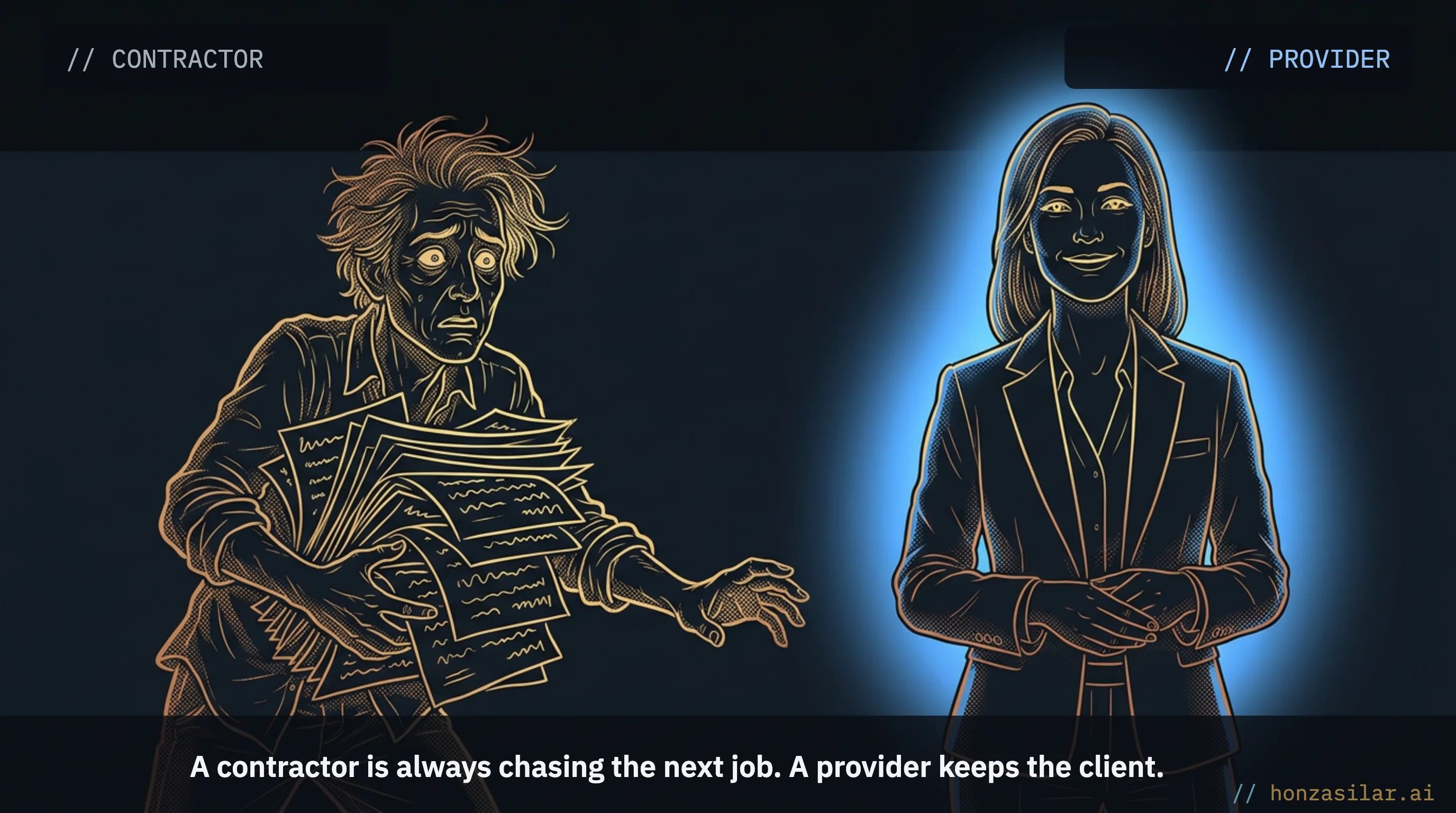
Go through your last ten jobs and split them into two piles: one-off work after which the client left, and monthly services that still pay you today. Then be honest with yourself: do you want to be a contractor who’s always chasing the next job, or a provider your clients stay with?
What you need
Now for the technical part I saved for the end. SaaS Mode with the configurator and markup rebilling is tied to HighLevel’s top agency plan, Agency Pro. Plain cost rebilling without a markup works on the lower Unlimited plan too. Exact prices change over time, so I keep them in a separate plan overview. Usage runs through a prepaid wallet, and it’s small change: a thousand sent emails cost you a fraction of a dollar, which leaves room for a margin.
Expect one operational catch: when an account is paused, its automations fall back to drafts, and when you turn it back on, you have to publish them again by hand.
And a note in case you got your account from a white-label reseller: don’t bother looking for the SaaS Configurator in it. It lives one floor up, at the agency level, and that floor belongs to the reseller. If you want to resell the software under your own brand, you need your own Agency Pro license directly from HighLevel.
Three myths about white-label, and the facts
Who white-label isn’t worth it for
Let me be straight: this model isn’t for everyone. The moment you sell clients software under your brand, you become their provider, and that comes with support, onboarding, and responsibility for keeping the thing running for them. If you just want to deliver the job and have the client leave you alone, stay away from white-label. You’d be adding work you don’t want to do. It pays off for anyone willing to be a long-term partner to their clients and to treat the service around the software as part of the offer, not a burden.
Who white-label is worth it for, and who it isn’t
Worth it
- You want to be a long-term partner to your clients.
- You see the service around the software as part of your offer.
- You want monthly subscriptions instead of chasing jobs.
Not worth it
- You just want to deliver the job and be left alone.
- You don’t want to take on client support and onboarding.
- You’d rather be a contractor than a provider.
The whole system in a nutshell
- You dress GoHighLevel in your brand: your own domain, logo, colors, and a mobile app in the App Store.
- In the SaaS Configurator, you build your own pricing plans and the markup on usage.
- The platform creates customer accounts, charges the monthly payment, and deals with non-payers for you.
- A snapshot deploys a new client’s whole environment in a few minutes instead of dozens of hours.
- What’s left for you is the service around it: strategy, campaigns, and support that clients are happy to pay for.
The whole system in a nutshell
As long as you only sell your hours, you have to answer the question “what will I invoice next month?” from scratch every time. With your own software, the answer is always the same: whatever you had last month, plus every newly added subscription. The end of a project then doesn’t mean the end of your income. It just means that instead of a closed job, the client has become a subscriber who stays with you.