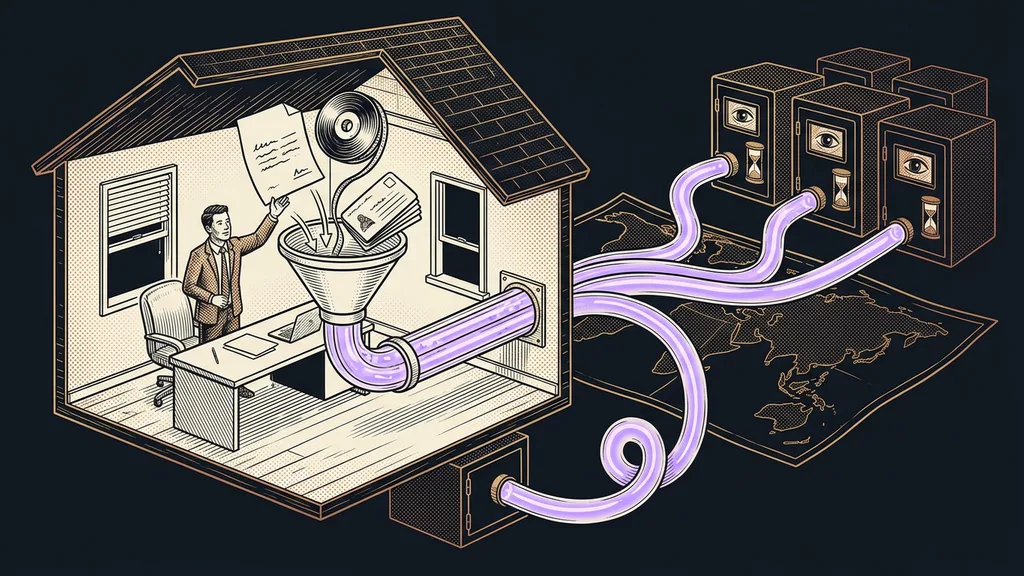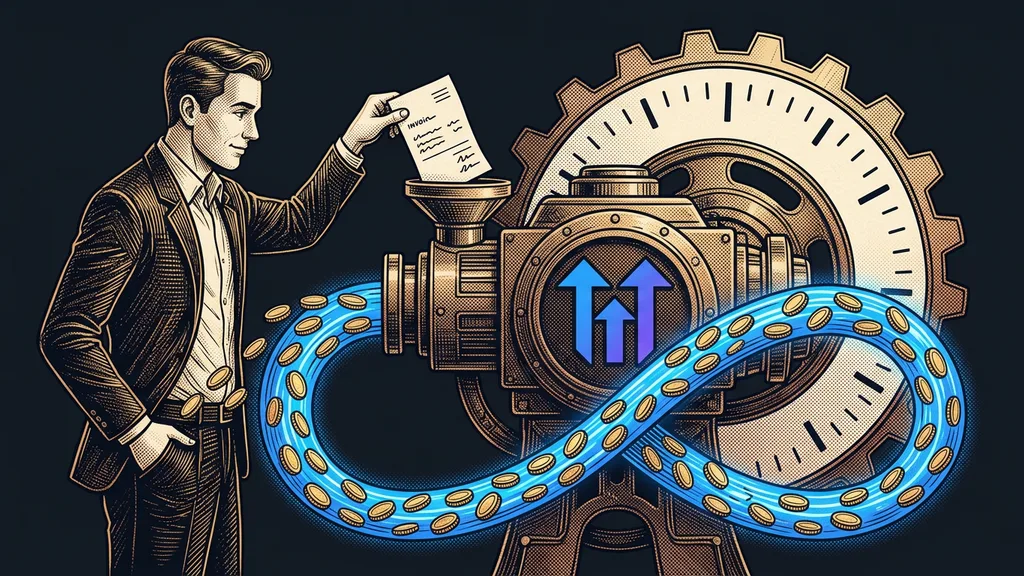
Most agencies and contractors live off one-off projects. The project gets done, the invoice gets paid, and next month the hunt starts over. But there’s a second business model next to it, one where income doesn’t end with the last invoice: the client pays every month and doesn’t want to leave. The size of the amount matters less than what happens to it next month.
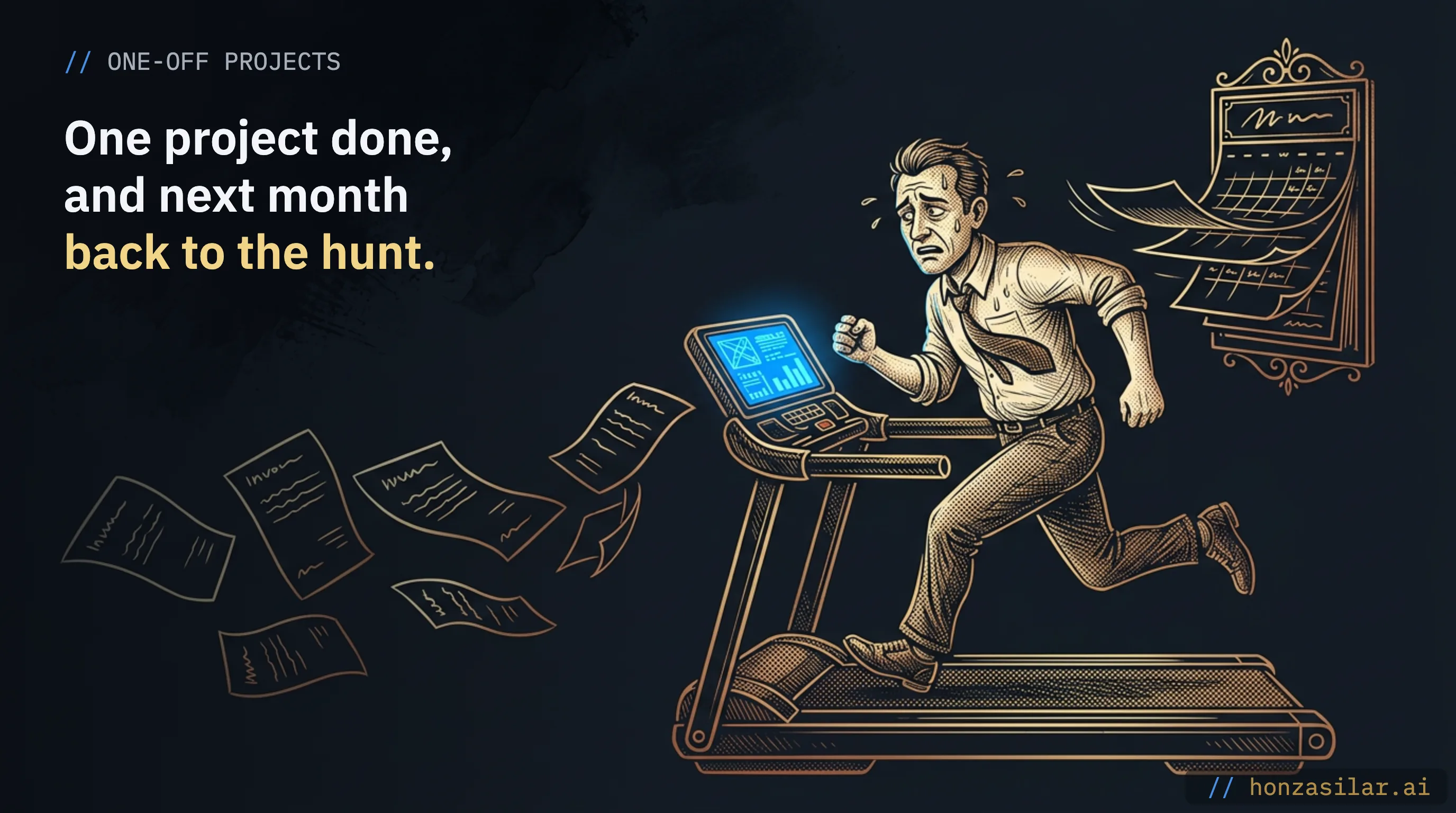
I know that rhythm intimately. As a project manager and AI Solutions Engineer at a Czech GoHighLevel reseller, I talked to agencies and business owners every day, and I kept hearing the same story: great work, happy clients, and still a business that lives from project to project. The joy of a finished project lasts about a day. Then comes the quiet question: and what about next month?
The better your work, the sooner the client stops needing you
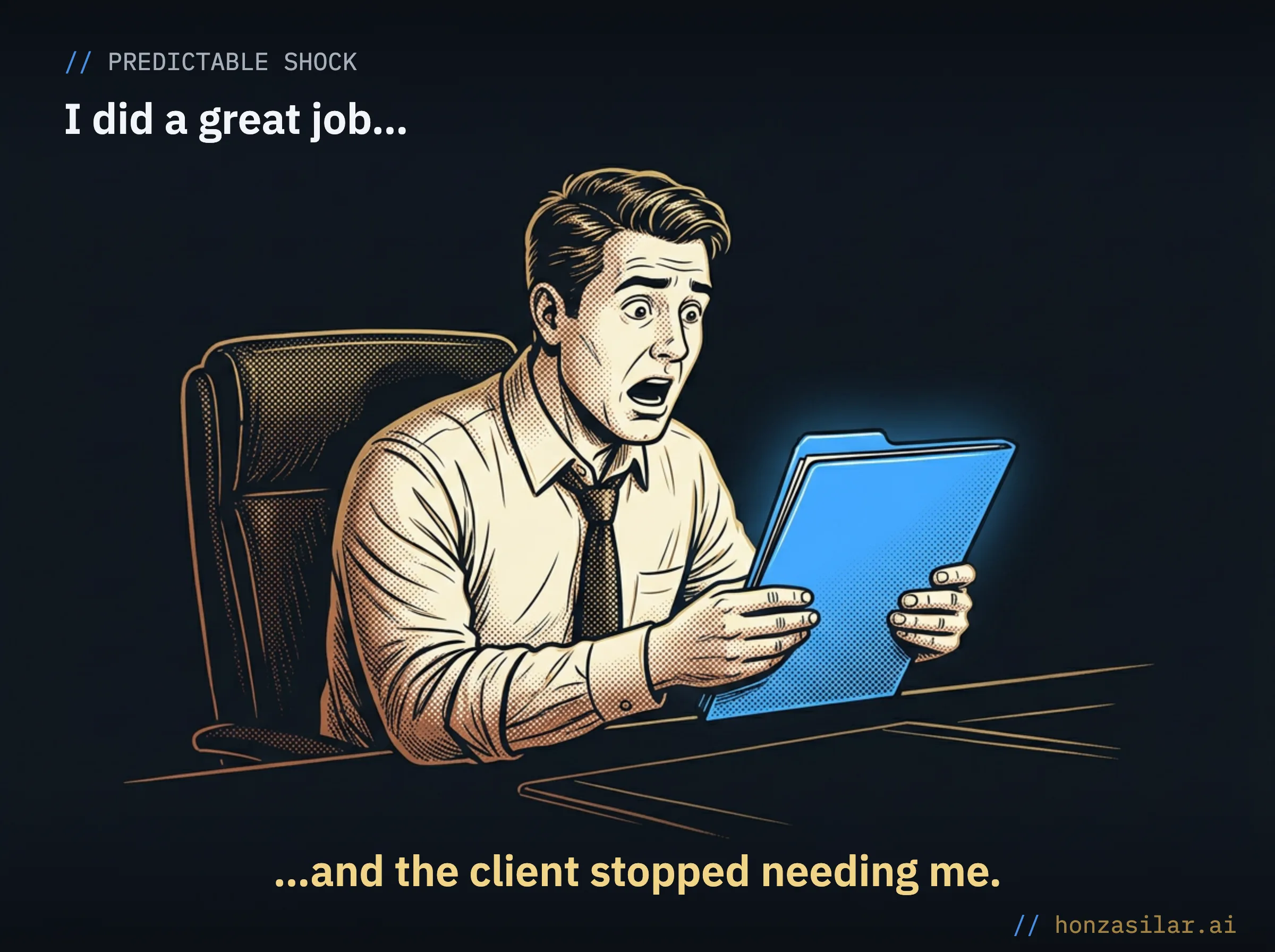
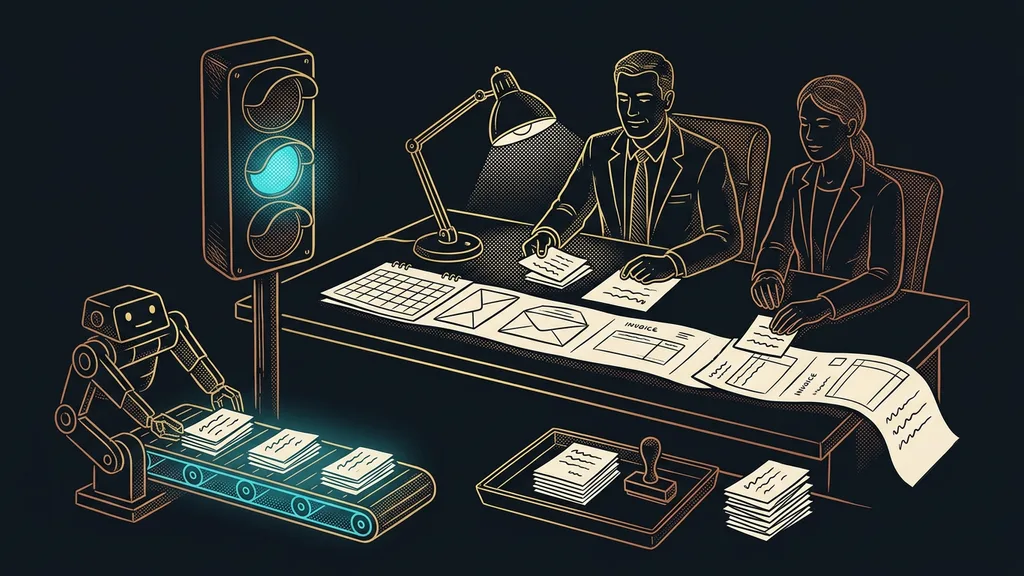
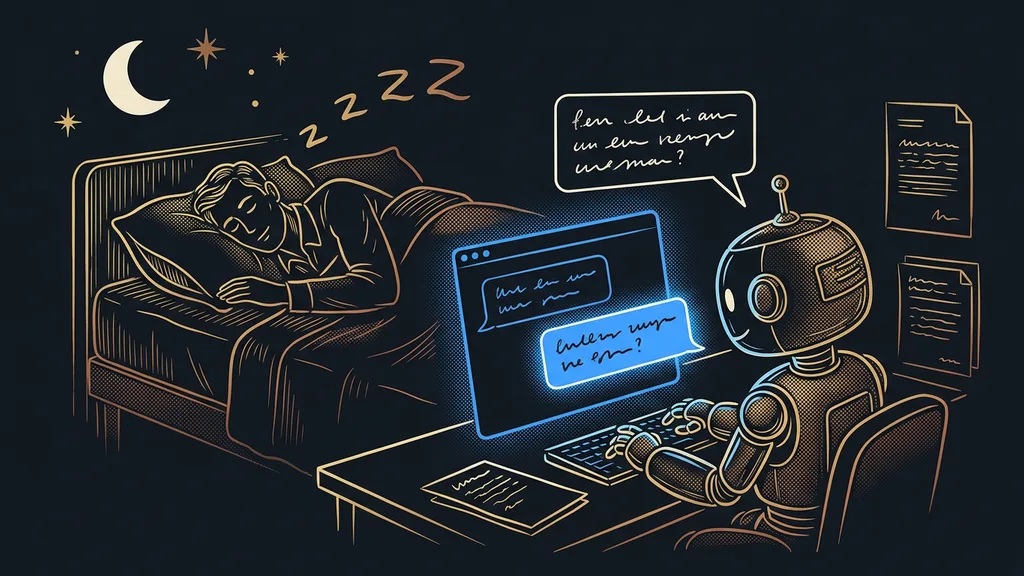
The one-off project model has a flaw built into its foundations. You sell hours, and hours can’t be stored or copied: when you don’t work, you don’t earn, and if you want to earn more, you have to either work more or raise your prices. This model has no third way. And the better you do the work, the sooner the client stops needing you.
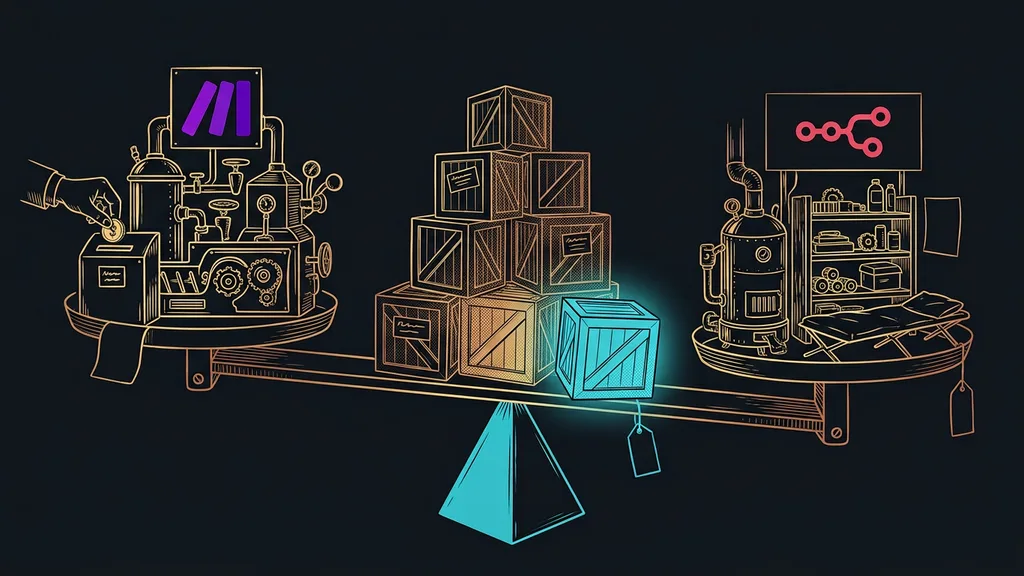
Are you selling hours or access?
You sell hours
They can’t be stored or copied.
No work = no income.
Your income ceiling is the number of hours you have.
You sell access
The client pays for keeping things running, whether you’re working at the moment or not.
A system the business lives in every day: CRM, email, calendars.
It grows without you adding hours.
The owner of a small agency once told me something about this that I haven’t been able to shake.
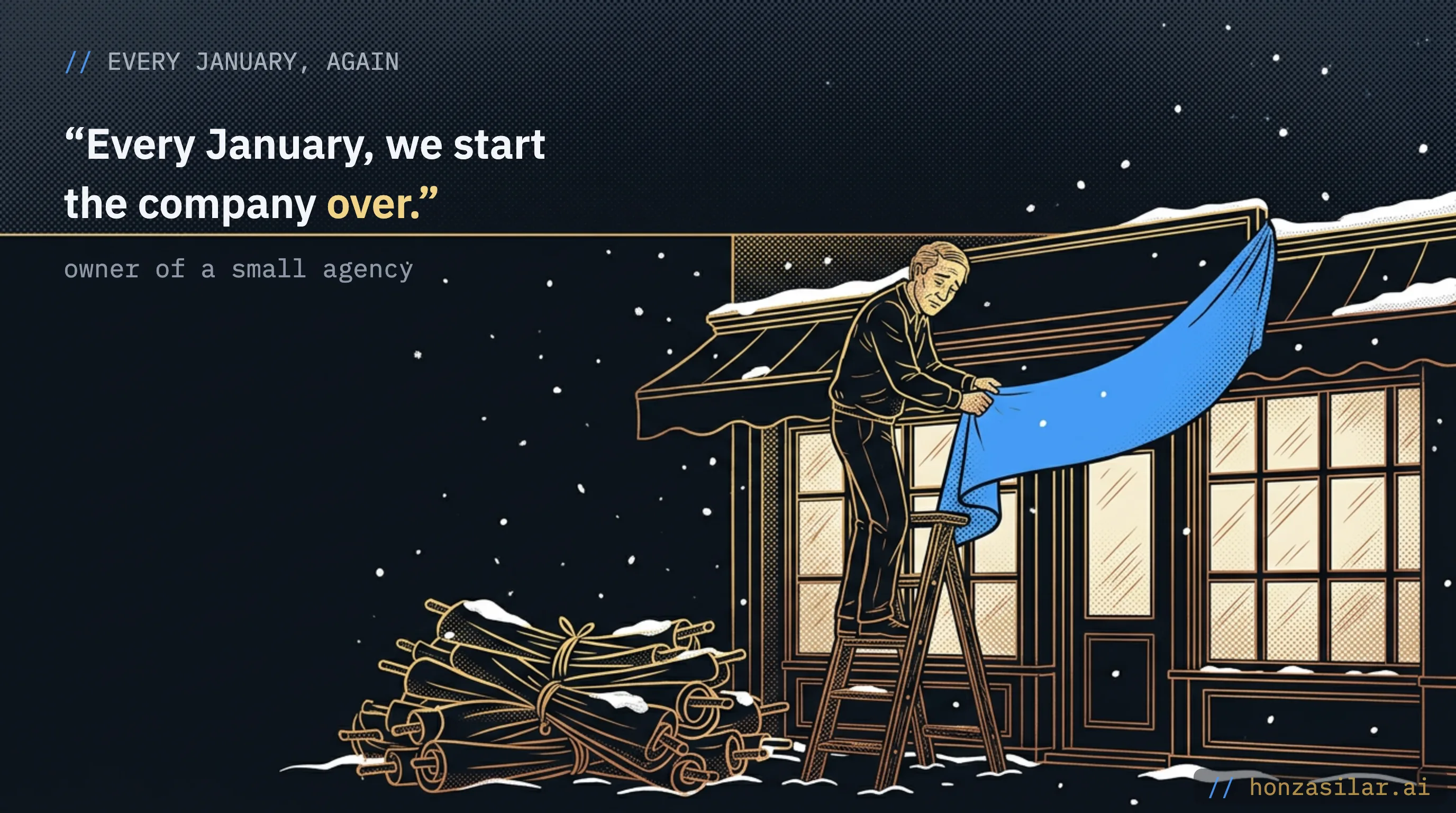
“Every January, we basically start the company over. The projects run out, the clients scatter, and we start from zero.”
A business without recurring revenue is hard to plan, hard to grow, and one day it will be hard to sell, because its value depends on the owner landing something again next month. One illness, a vacation, or a weaker quarter, and revenue drops.
Recurring revenue (MRR)
Recurring revenue, or MRR (Monthly Recurring Revenue), is the part of your sales that comes back every month without you having to land a new project for it each time. It’s usually a monthly subscription for access to a system the client uses day in, day out. A one-off invoice earns once; recurring revenue keeps earning as long as the client stays.
Predictable income adds up, one-off income resets
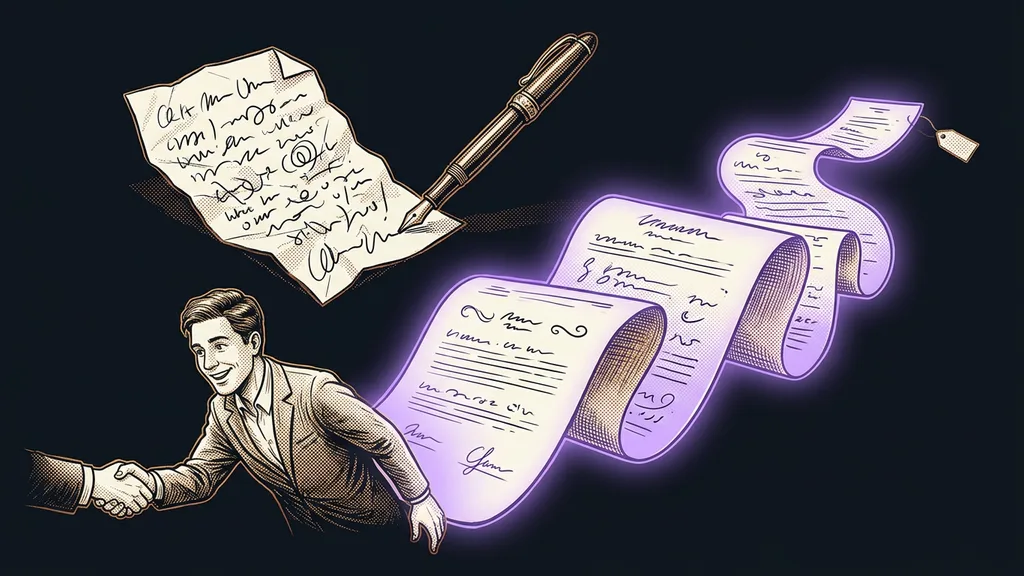
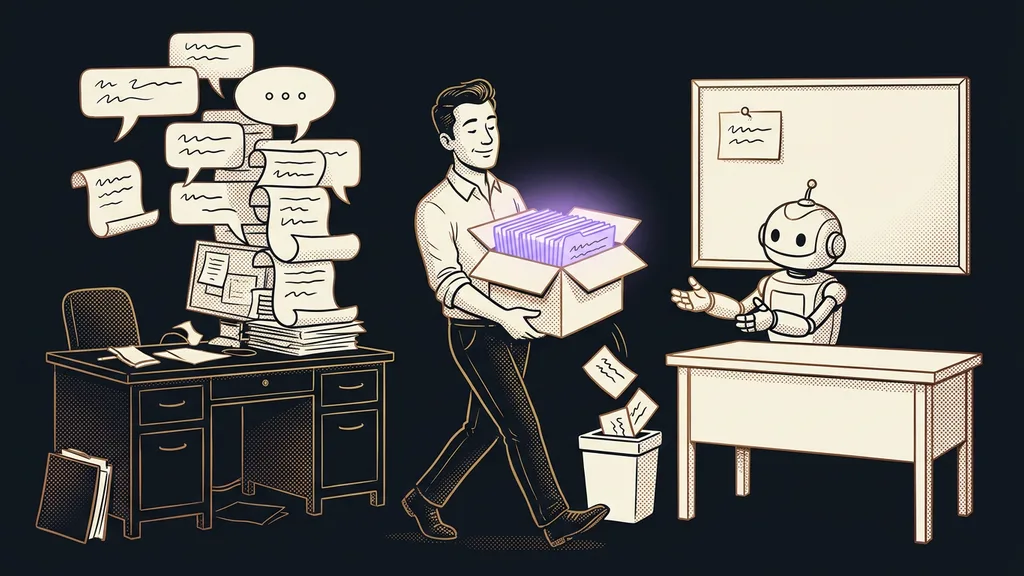
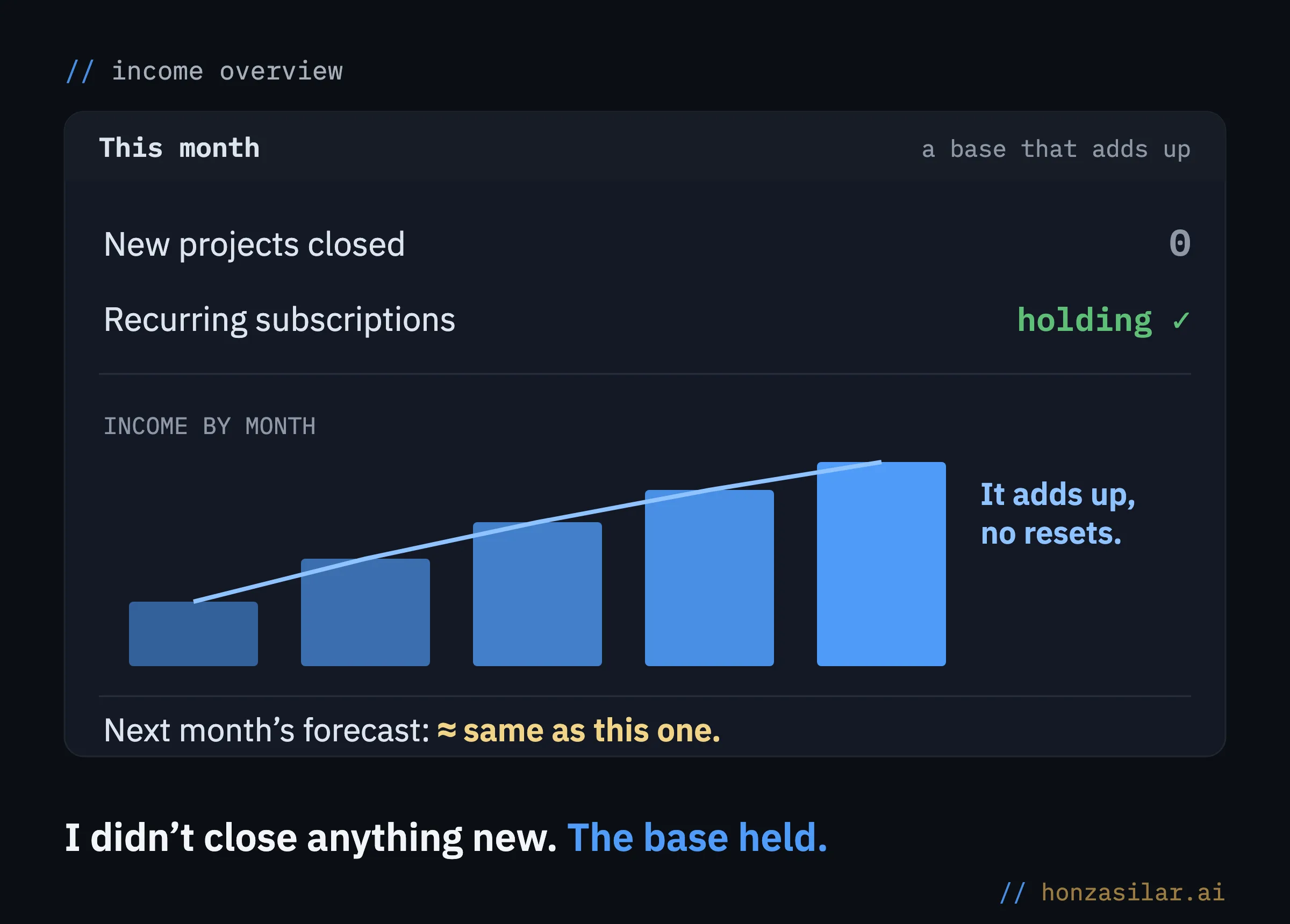
With one-off projects, your income resets to zero on the first of every month, and you have to earn it all over again. With subscriptions, it adds up: what you earned this month is the floor for the next one. Each new client raises your income for good, not just once.
Why does predictable income add up?
One-off project
On the first of every month, income resets to zero.
You can only earn more by working more or raising prices.
One illness, a vacation, or a weaker quarter, and revenue drops.
Recurring revenue
“What you earn this month is next month’s floor.”
A new client raises the base for good, not once.
You can plan the business, pay yourself from it, and sell it.
Everything else grows out of this simple math. A business with predictable income can be planned, because you know roughly what to count on. You can pay yourself from it, invest in it, and eventually sell it, because a buyer pays for a steady stream, not for the owner’s luck at landing projects. And you can add two more streams on top of the subscription itself: a margin on the usage the client racks up in calls and emails, and extra services, which you keep doing, only now as an add-on on top of a stable base instead of your only income.
One-minute self-test
Take last month’s income and cross out everything that won’t repeat on its own next month. What’s left is your real base: the amount you can count on even if you don’t close a single new project all month. With a purely one-off model, you’re left with zero.
From vendor to operator
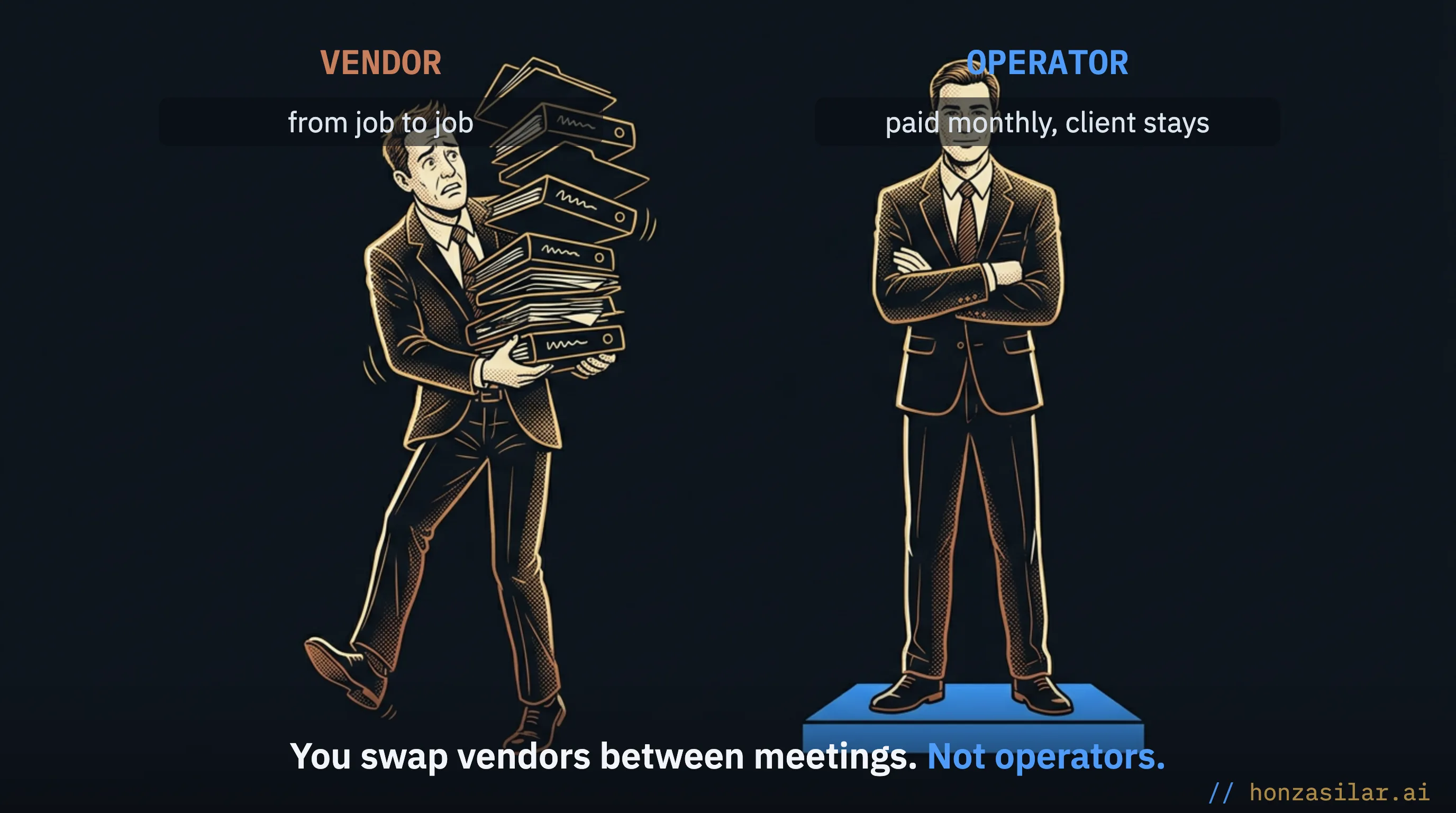
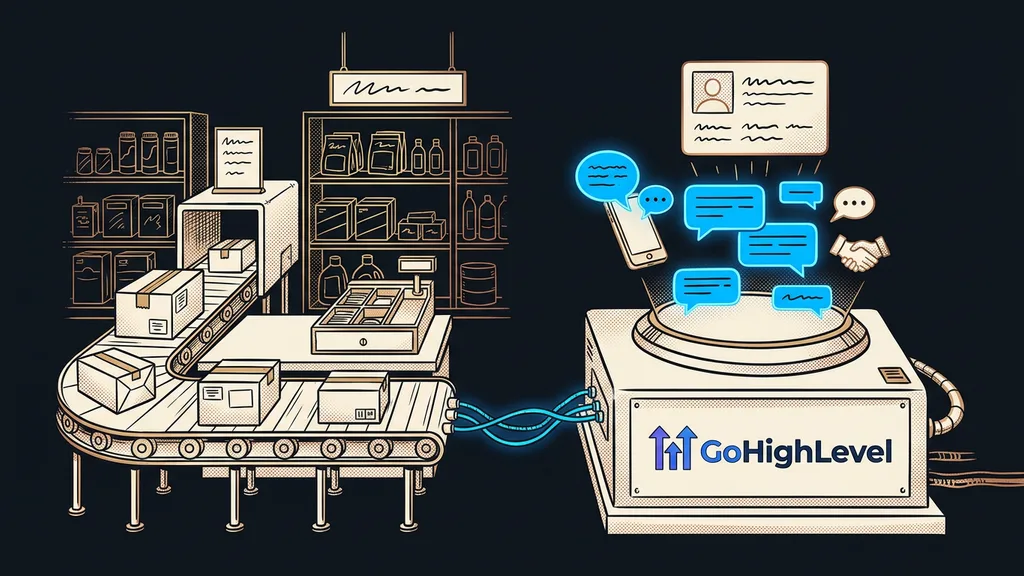
Recurring revenue doesn’t fall from the sky just because you set up a recurring payment with the client. There has to be something behind it that’s valuable to the client every day, not just on delivery day. This is exactly where the nature of the relationship changes: you’re no longer a vendor who brings a campaign every so often and says goodbye. You run the system the client’s business lives in every day: CRM, email, calendars, automation, and websites. A client will swap a vendor between two meetings, but nobody moves the system their whole operation runs on to get a discount.
How to sell the whole GoHighLevel platform under your own brand, with your logo and your own domain, deserves a separate article about white-label and SaaS Mode. And so that dozens of client accounts don’t turn into a nightmare, you launch new clients from a snapshot, a ready-made template with funnels and automations, instead of from scratch. That’s the technical side. This article is about why it’s worth getting into at all.
The client stays even though nothing locks them in
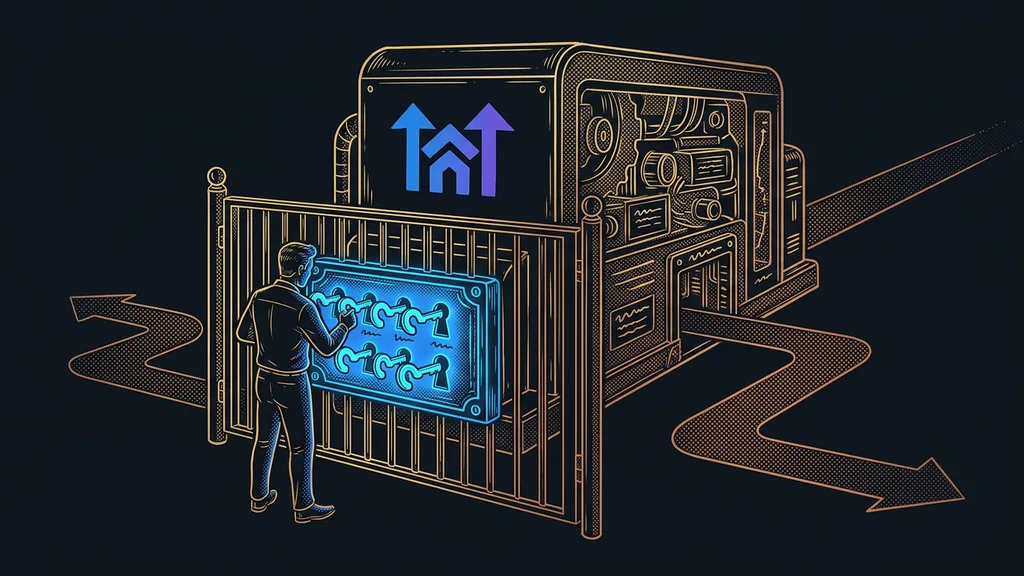
I want to be fair here, because a “trapped client” is a lousy business plan. The data isn’t a hostage: the client can download their contacts to a CSV anytime and leave whenever they like. No penalty, no lock-in clause in the contract.
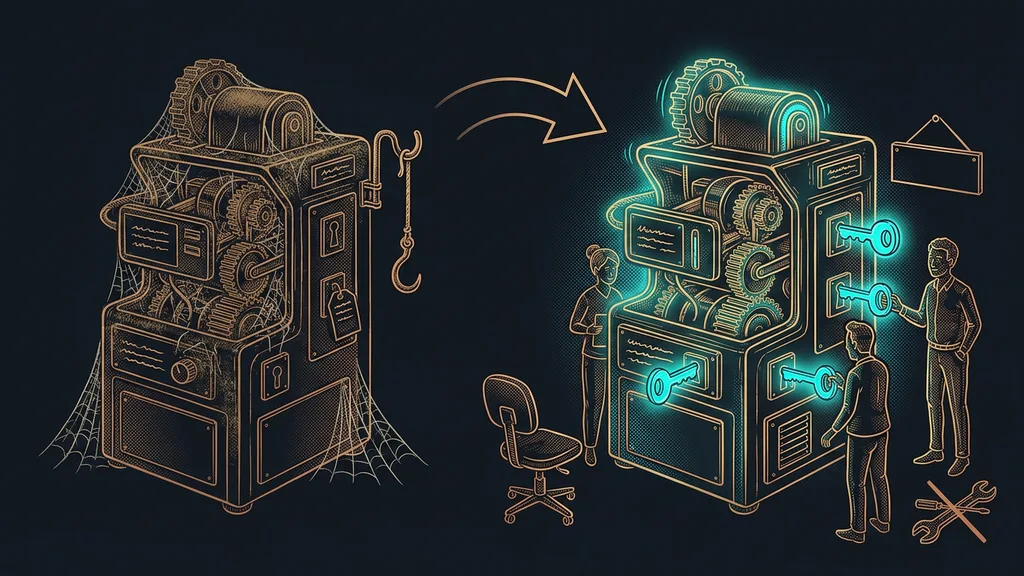
They just have no reason to. Everything is in one place, under one brand, from the people who built the system and understand how their business runs. Leaving would mean moving the CRM, reconnecting automations, rebuilding calendars, and teaching the team a new tool. Nobody goes through that because a license elsewhere is a few hundred CZK (around €10–20) cheaper. The client stays because leaving doesn’t pay, not because they’re locked in.
Switching costs
Everything it would cost a client to move elsewhere: not a penalty in the contract, but time, nerves, and the risk that something breaks during the move. The more the client has connected in your system, the higher those costs. Healthy retention is built on exactly these costs, not on a lock.
Who recurring revenue isn’t worth it for
This model isn’t for everyone. If you do purely one-off projects and don’t want an operational or support commitment attached to them, stay away from subscriptions. A monthly income comes with a monthly responsibility. When a client pays every month, they expect the system to run every day and someone to pick up the phone when something gets stuck. That’s a commitment a one-off project doesn’t have: you deliver and say goodbye. If that’s exactly what you want, a subscription only adds an obligation you don’t care for. Recurring revenue pays off for anyone willing to be an operator, not just a vendor.
Who is recurring revenue worth it for?
Worth it
- You want income that doesn’t start from zero every month.
- You want to be an operator, not just a vendor.
- You want a business you can plan, pay yourself from, and sell.
Not worth it
- You want to deliver a project and say goodbye.
- You don’t want an ongoing commitment (keeping the system running, picking up the phone).
- You do purely one-off projects, and that suits you.
And if you’re wondering whether this model works in the Czech Republic too: the company I used to work for, a white-label reseller of GoHighLevel, runs exactly like this. Its Czech clients pay CZK 1,990 (about €80) a month excluding VAT for a platform with a Czech brand, Czech support, and pricing in Czech crowns. So I’m not describing a theory from a slide deck. It’s a model I worked inside every day.
The whole model in a nutshell
- Instead of hours, you sell access to the system the client’s business lives in every day.
- The client pays a monthly subscription for it, at a price you set yourself.
- The system runs under your brand, so the client is with you, not with the software vendor in the background.
- The data stays the client’s: they can leave anytime, it just isn’t worth moving their whole operation.
- Your income doesn’t reset every month. A new client raises the base for good, not once.
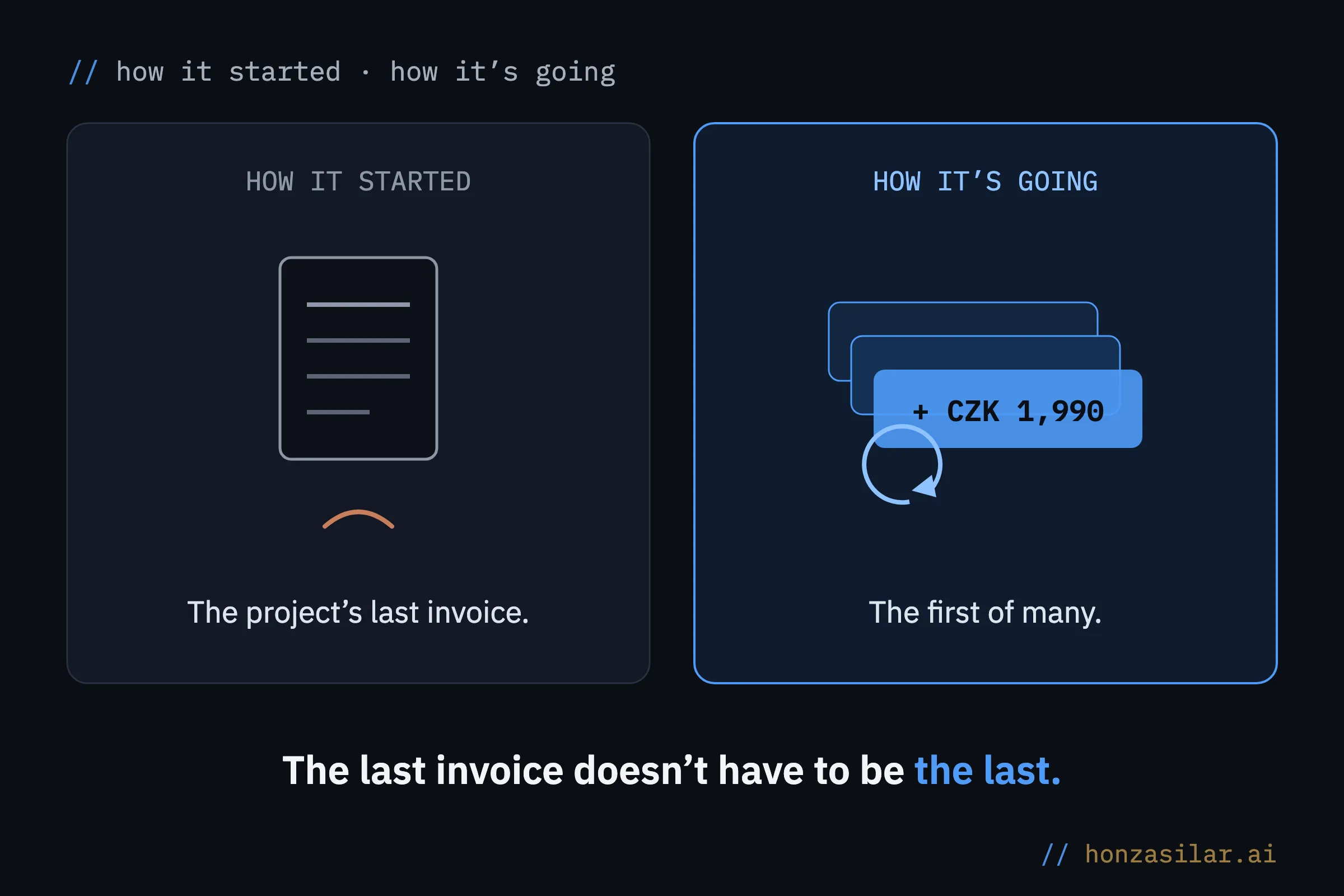
Let’s go back to the paid invoice and the quiet question of what next month will bring. In a subscription model, it has a boring and beautiful answer: next month will look roughly like this one. The subscription payments come in, and you get to think about what extra to offer your clients instead of hunting for someone to replace them. The project’s last invoice doesn’t have to be the last, then. It can be the first of many.