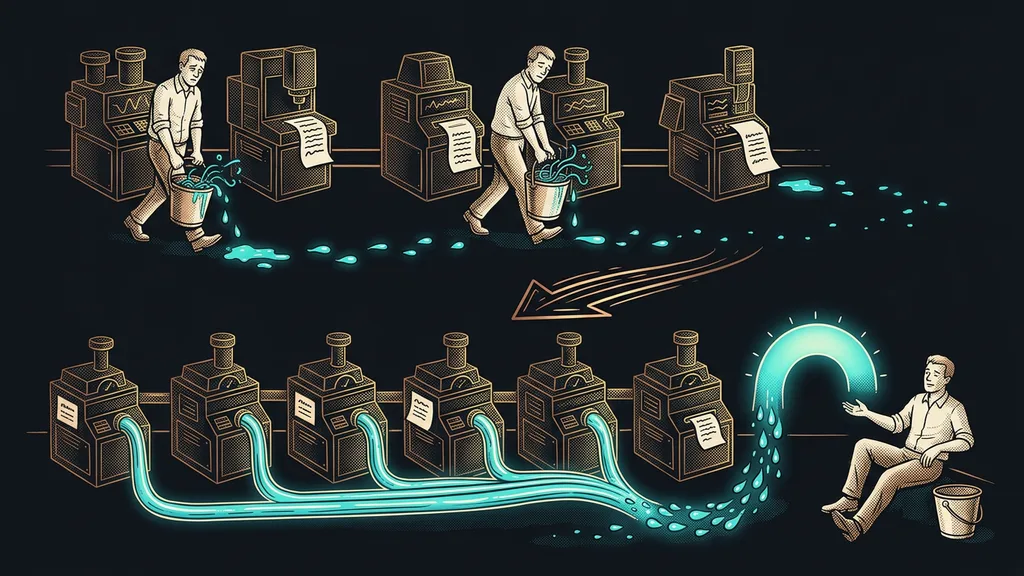
Before a website gets translated, the same number always comes up: how many pages it has. For one client, it came out to just over 300, and a quote for translating that many pages looks like a year-long project. The question that matters is how many of them are worth translating at all.
I know that moment well. The client looks at the number, takes a breath, and says we’ll come back to it next year. Yet all it takes is one thing: sitting down with the list and going through it page by page. Of those 300, just under a third remained in the end.
Most pages on a website aren’t waiting for anyone
An established website is a few dozen pages that carry the sales, surrounded by two hundred more that act as operational padding. There’s nothing wrong with the padding; it just has nobody to serve in another language.
It looks similar every time. Old promotions that ended long ago. Three versions of the same sales page from a campaign that tested headlines. The thank-you page that appears after a form is submitted. And articles written in a burst of enthusiasm years ago and unread ever since.
The ratio is surprisingly stable. Whether it’s an online store, a course website, or a company site, a minority of pages carries the sales, and the rest is operations and history. That’s why the scary number can almost always be cut down without losing anything.
Operational pages
Pages the website needs to run but nobody looks for: order confirmations, thank-you pages after a form, unsubscribe pages, empty search results. A large website has dozens of them, and they make up most of that scary number. Only the ones a customer actually passes through need translating.
The most expensive page is the one you translate for no reason and then maintain in every language for years.
The owner has to choose, not the vendor
This is the one point in the whole project that can’t be handed to a machine. The website owner knows what still sells, which promotion comes back in the spring, and which page is just a relic. You can’t tell from the outside, not even from the traffic, because the most visited page is often the one linked from the footer.
So the client got the complete list of pages and had to make exactly one decision for each, translate or not, without rating or filling in anything. The list of URLs can be pulled from the website automatically, so nobody had to click through page by page.
It was an ordinary table in a shared document, the kind AI can put together these days. The client went through it in a single afternoon and ticked just under a third. The rest stayed as it was. That afternoon saved months of work.
One-minute self-test
Open the list of pages on your website and, for the first twenty, ask yourself: if this page disappeared tomorrow, would anyone get in touch about it? Count how many you answered yes to. Those are the ones to translate first, and there are usually fewer of them than you’d expect.
What happened to the rest
The untranslated pages weren’t deleted. Deleting is irreversible, and it almost always turns out afterward that something was linking to one of them. They stayed where they were, just hidden from search engines.
Noindex
An instruction telling search engines not to include a page in their results. The page still exists, you can open it from a link or send it by email, but nobody will find it through search. It’s used for exactly this: keeping a page alive without offering it to people it wouldn’t help.
On a foreign-language website, this is especially important. A hundred Czech pages in the middle of the English version look unfinished, and search engines don’t care that it’s just an archive. Hiding them takes a few minutes.
The second advantage is that you can back out anytime. If, six months later, it turns out there’s interest in a topic in English, the page still exists, and all it takes is translating and unhiding it. If it had been deleted, you’d be starting from scratch.
And in the end, five pages were added. It turned out the path to an order didn’t make sense without them. That’s the reason the selection comes first: adding a missing page at the start takes a moment, while after launch it’s a fix.
The upkeep costs more than the translation
The money for the translation is the smaller part. Every translated page becomes a commitment for years to come.
When you change a price, you change it in every language. When you adjust your offer, you go through every version. None of that work applies to the pages you didn’t translate. The same goes for the documents and attachments that belong to the website: translate the ones a customer actually gets in their hands.
Deploying the selected pages is then routine. A new language version goes live with a single command and gets added as another section of the website, not as a new project.
If your website runs on a ready-made builder, find out its rules before you start translating. Some tools handle language versions without any trouble; others force you to duplicate every page by hand. With 300 pages, that’s the difference between an afternoon and a week.
Who sorting isn’t worth it for
If your website has twenty pages, sorting them takes longer than translating everything. There, it’s faster not to overthink it and just translate it all. It starts to make sense somewhere above a hundred pages, especially on websites where campaigns have piled up on top of each other for years.
The whole sorting step in a nutshell
- Pull the complete list of your website’s pages, not an estimate from memory.
- Remove the operational and technical pages nobody looks for.
- Hand the rest to the product owner and let them decide: translate or not.
- Translate the selected pages and deploy them as another section of the website.
- Leave the rest alone, just hide it from search engines. Don’t delete anything.
- Expect a few pages to be added later. That’s not a flaw in the selection.
Three hundred pages is the number that makes a client take a breath and say we’ll come back to it next year. Just under a third is a number you can start with on Monday. Neither the website nor the budget changed. The only change was that someone sat down with the list and allowed themselves to say no to most of the rows.