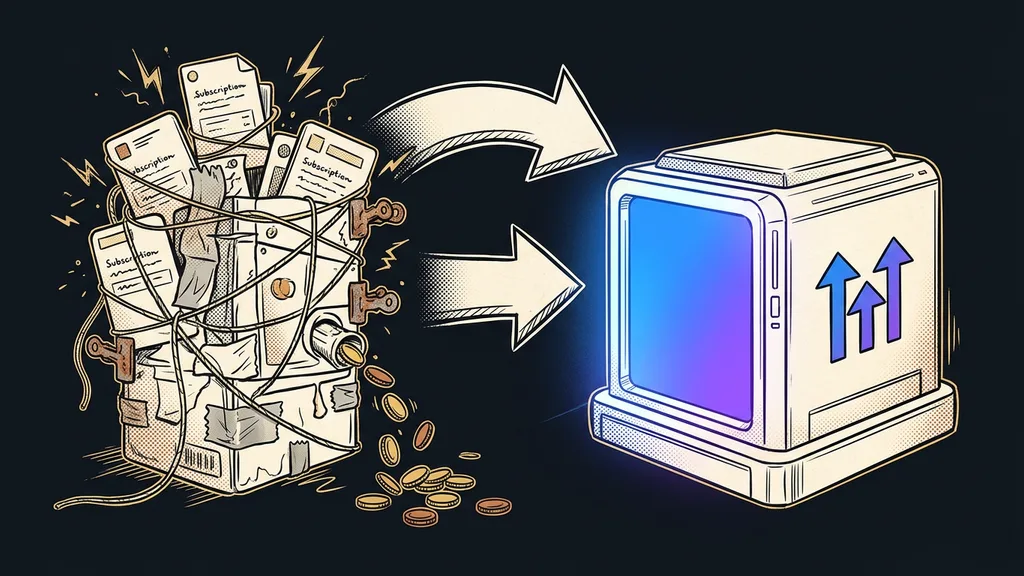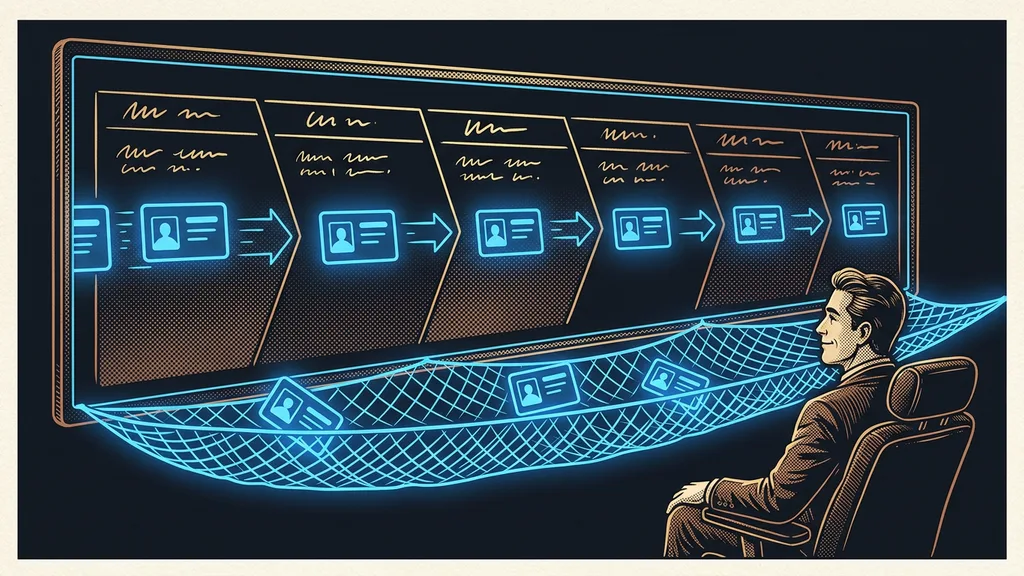
The most expensive call a small business gets is the one nobody picks up. There are more ways to handle it than there used to be, and they all promise roughly the same thing: we’ll answer it for you. Yet the difference between them comes down to just two qualities, and price isn’t one of them.
With the clients I set these systems up for, the decision always turns on these two questions. How it speaks Czech. And whether the call ends with an appointment in the calendar, or just a note that someone has to come back to anyway.
Czech and one calendar slot decide it
Those two qualities are enough to rank the whole field. Everything else is detail you can fine-tune later. I read the integration tool prices below in their official price lists on September 19, 2026. The per-call running costs are approximate, and the platform changes them from time to time.
| Option | Speaks Czech | Books the appointment | Running cost |
|---|---|---|---|
| Voice AI inside your CRM | yes, and well with an imported voice | yes, on its own | about CZK 8 (about €0.33) per five-minute call |
| Standalone voice service | depends on the tool, prices not verified | only through a bridge | the voice plus a connector from $9 |
| Missed-call text-back | yes, you write the text yourself | the customer picks the time | the cost of each text sent, from your wallet |
| Voicemail with transcription | yes, Czech transcription | no | from CZK 198 (about €8) per hour of audio |
In short: the first option sees the call through to the end, the second needs help, the third works around it, and the fourth just tidies it away.
Why these two qualities in particular? Czech decides whether the caller stays on the line. The calendar decides whether the call leaves anything behind. Everything else, like the number of voices, call length, or nice-looking reports, is something you can choose by later.
Calendar integration
The assistant’s ability to see your open slots, offer them to the caller, and create the booking on the spot. Without it, the assistant just collects inquiries, and someone still has to arrange the appointment by hand. This is what decides whether the call is actually over or has just moved somewhere else.
“Most of our calls come in exactly when everyone in the workshop has their hands full. And those are the calls nobody’s free to take.”
That’s how the owner of a repair shop put it to me, and half the businesses I work with would say the same. Callers don’t wait. They call the next business on the list, and that’s where they buy.
Voice AI inside your CRM: answers the call and books the appointment on the spot
This is the only one of the four options that takes a call all the way from pickup to booking. The assistant answers, finds out what the caller needs, offers an open slot, and books it.
Best for: businesses that get calls every day, most of which end in a meeting, a viewing, or a service appointment.
It works because the assistant and the calendar live in the same place. The appointment goes into a booking calendar that confirms it and sends a reminder, and the caller becomes a contact right away. I broke down the whole setup in my article on a voice receptionist whose line is never busy.
Where it falls short: you pay for the whole platform, not just the assistant. On top of that, the platform only allows outbound calls to a contact list from US numbers for now, so this is a receptionist for incoming calls. And the default voices sound foreign in Czech until you import a premium one.
Pricing as of September 19, 2026: the Starter plan is $97 a month with a 14-day free trial, and AI features cost extra. Running costs are roughly CZK 8 (about €0.33) per five-minute call, around CZK 25 (about €1) with a premium voice, and a Czech phone number costs about CZK 36 (about €1.50) a month.
A standalone voice service: it talks, but it can’t see your calendar
The second route is to buy a voice assistant separately and connect it to what you already have. It talks well, but on its own it knows nothing about your schedule or your customers.
Best for: businesses that already have a system they’re happy with and don’t want to switch just because of the phone.
The missing connection gets patched in with an integration tool, which takes the result of the call and writes it where it belongs. I explain how these bridges between systems work separately. Here it’s enough to know that it’s one more moving part.
Where it falls short: every bridge is a spot where something will quietly break one day. And it really is quiet: the calls keep coming, the appointments just stop getting recorded. I’m not listing specific prices for voice services here, because I couldn’t verify them from an official source when I checked prices for this article.
Pricing as of September 19, 2026: add the connector to the cost of the voice. Make has a free plan up to 1,000 credits a month and Core for $9, Zapier has a free plan with 100 tasks and Professional from $19.99, and n8n has a free Community Edition on your own server and Starter for €20 a month.
Call latency
The time between the moment the caller stops talking and the moment the assistant starts answering. In a text chat, nobody notices a second. On the phone, it’s instantly an awkward silence. It’s the lag, more than the words, that tells most people they’re talking to a machine.
Missed-call text-back: the cheapest way to keep a call from going to waste
The third option doesn’t answer the phone at all. When nobody picks up, the caller gets a text within a minute with an apology and a link to book an appointment.
Best for: businesses that get a few calls a day and don’t want to put anyone on the phone or pay for voice AI yet.
The effect is surprisingly big. The caller has the link in hand before they can dial the next business, and they choose the time themselves. You write the text yourself, so the Czech is automatically fine and nobody has to import anything.
It’s also the fastest thing on the whole list. You switch it on as a single rule on your phone number, and it’s usually done in an afternoon. I recommend it even to businesses that end up getting a voice assistant, because it stays on as a safety net for after-hours calls and for the moments when something breaks.
Where it falls short: people who don’t feel like typing won’t reply. Some ignore the text and call somewhere else. And with a more complicated inquiry, you’ll have to get back to them anyway, because a calendar link doesn’t answer a question.
Pricing as of September 19, 2026: the rule itself is part of the platform’s automations. You only pay for each text sent, which is deducted from your prepaid wallet based on actual volume.
Voicemail with transcription: the cheapest and most honest option
The fourth option neither answers nor texts back. It lets the caller leave a message, then transcribes it into text that becomes a task.
Best for: businesses with a few calls a week, and fields where an inquiry needs an expert’s assessment anyway.
Czech transcription is good these days, and it pulls the name, number, and reason for the call out of the message. The upside is that nobody pretends to be human, and it costs next to nothing. Meanwhile, a text assistant trained on your company’s knowledge can answer on your website and in chat.
Where it falls short: it won’t save the call. The caller hears a voicemail box, which almost nobody talks into anymore, and most people hang up. It never produces an appointment.
Pricing as of September 19, 2026: Beey (a Czech transcription service) has a Start plan with no monthly fee that charges CZK 198 (about €8) per hour of audio, and Plus costs CZK 590 (about €24) a month for five hours. Transcription with the open-source tool Whisper is free on your own computer.
How I choose
Count your missed calls from the past week and ask yourself whether each one should have ended in an appointment. If the answer is almost always yes and you get more than ten a week, the first option makes sense. Under five calls a week, start with the third, because you can switch it on in an afternoon and it costs almost nothing. Get voice AI once the phone starts holding you back, not once you’ve read about it.
Who none of these options will help
Who is this not for? A business where every call needs the expert judgment of a specific person. The assistant would only transfer the call, and the caller would end up explaining everything twice.
The second case is trickier. If your schedule is a mess, voice AI won’t help you. The assistant offers an open slot from the calendar, and if your other commitments aren’t in it, it books a meeting for a time when you’re somewhere else. The Czech is easy to fine-tune, as I describe in my piece on AI features that speak Czech. But nobody can put your calendar in order for you.
And third, expectations. Voice AI is a receptionist, not a salesperson. It can’t negotiate, persuade, or give discounts, and if that’s part of the job, it’s work for a person. You can also recognize a well-built assistant by the fact that it can say “let me have a colleague check that for you” and pass the call on. An assistant that answers everything is more dangerous than one that answers half.
The whole choice in a nutshell
- Count how many calls you miss each week and how many of them should have ended in an appointment.
- Under five calls a week, turn on missed-call text-back and leave it at that.
- From ten calls a week, an assistant that books the appointment itself makes sense.
- Before you let it loose on customers, import a Czech voice and run through a whole call as a dry run.
- Expect the assistant to introduce itself as an AI right at the start.
- Check prices before you buy. The figures in this article are as of September 19, 2026.
The most expensive call from the first sentence comes back in the evening as a list of missed numbers to call back. Working through that list doesn’t count as extra work. You’re collecting damage that’s already been done. And the damage comes from a call that ends up nowhere, not from a missing voice AI. Any of these four options beats silence, even the cheapest one.