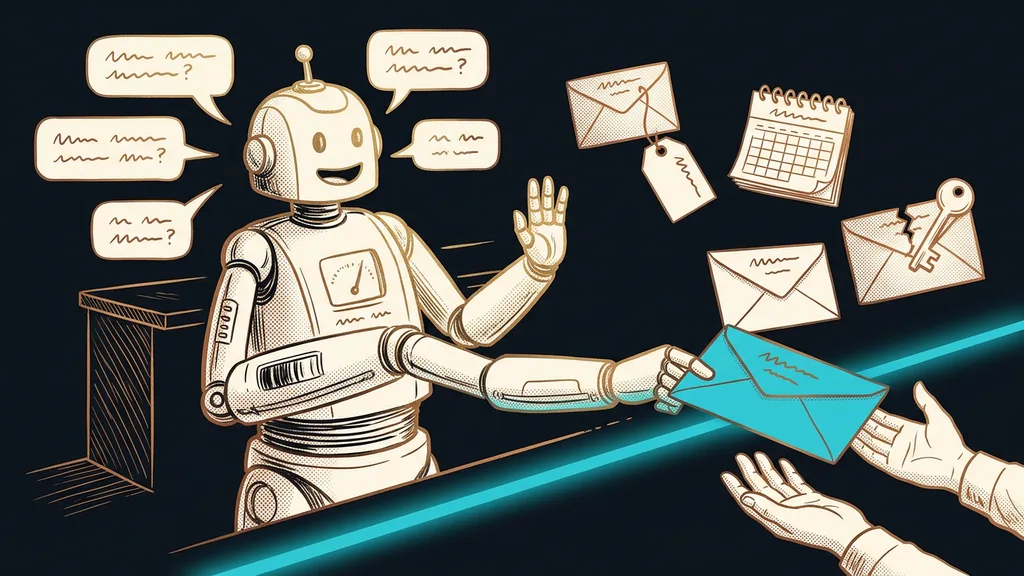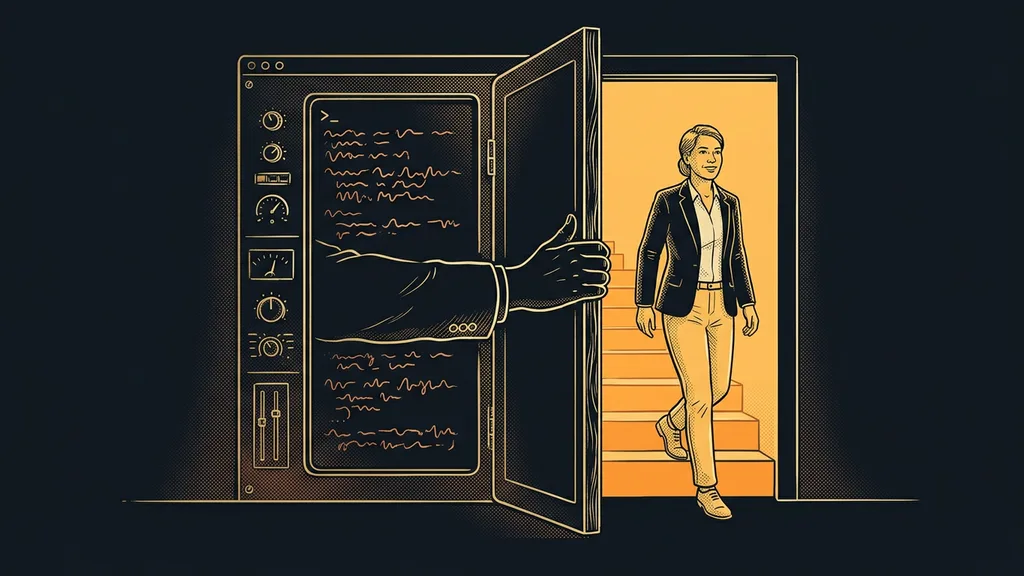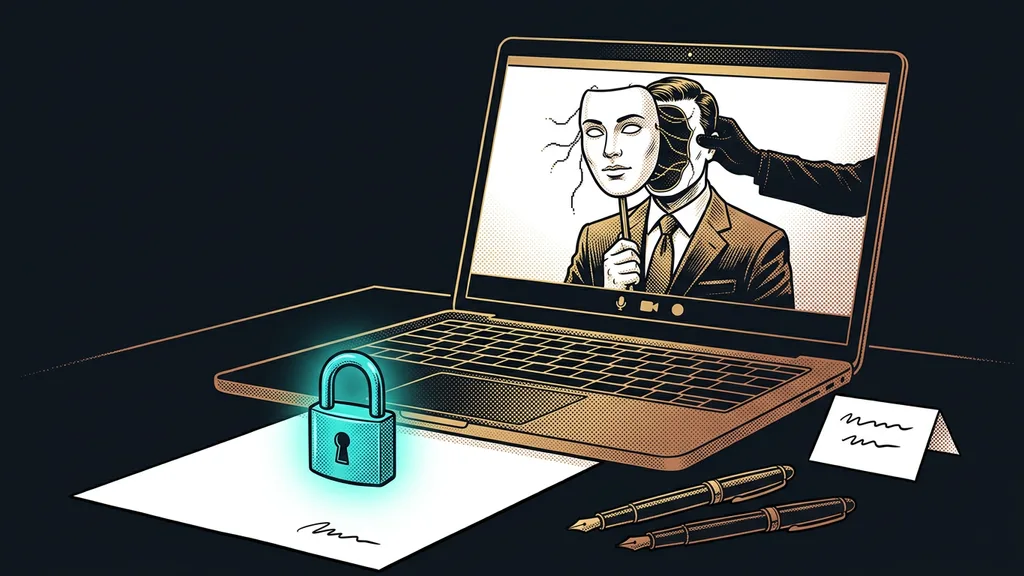
These days a deepfake scam looks like an ordinary work meeting. On the screen you see a boss or a customer you know, you hear their voice, and they’re in a hurry: they want a payment, a higher limit, or a new account number. But the face and the voice were lent to the scammer by AI. Even a small business with no IT can stop them, though. All it takes is a few agreed rules.
In early September 2026, it happened to OpenCode, a company that sells developers access to AI models. As one of its people described on X, a new customer on a video call posed as the head of another company. The caller promised to spend $400,000 a year and wanted higher limits. Beforehand, the salesperson had watched videos of the real executive, and the person on the call looked and sounded the same. Still, the scam failed.
What does a deepfake scam on a business look like?
The scammer poses as someone you trust and pushes you toward a payment or an exception. The best-known case happened in late January 2024 in Hong Kong. An employee at Arup’s Hong Kong office got an email from a fake chief financial officer at the company’s UK headquarters. The employee then joined a group video conference and sent money to five accounts. The Hong Kong government puts the loss at about HK$200 million, which CNN put at roughly US$25.6 million.
Police believe the video was stitched together from public footage and that the employee never actually spoke with the scammer. According to CNN, the employee suspected fraud at first, because the email asked for a secret transaction. Those doubts only went away after the video call.
Deepfake
A video or voice recording that AI has generated to look and sound like a specific person. A deepfake can be prerecorded, as in Hong Kong, or run live during a call. In December 2024, the FBI warned about both cloned voices and live deepfakes on video calls.
For a long time, a video call counted as proof that you were talking to a real person. Today it can be faked just like an email or a voice message.
This kind of scam has nothing to do with the company data you send to AI tools yourself. Here, someone outside your company is using AI against you.
The three forms a small business is most likely to run into
They are a fake person on video or in a voice message, a forged invoice with a new bank account, and stolen cards on your payment form. In May 2024, Arup’s head of IT told CNN that fake invoices, fake WhatsApp voice messages, and deepfakes were all rising sharply.
| Scam | What it looks like | What gives it away |
|---|---|---|
| Fake boss, customer, or supplier | Video call or voice message | Urgency, secrecy, a new address |
| Forged invoice | A known supplier announces a new account | Address off by one letter, change sent by email only |
| Testing stolen cards | Small payments from strangers | A sudden run of small payments |
The invoice is the quietest of the three. As the FBI has pointed out, AI writes the scammer an email without the typos that would otherwise give them away. According to police cases summarized on October 5, 2026, by Měšec.cz (a Czech personal finance site), a company near Uherské Hradiště in the Czech Republic paid a €43,000 invoice in February 2025 to a “new” account announced by email. The target is whoever prepares the payments: an accountant, an assistant, or an accounting firm.
The third form skips people and goes straight for your payment form. Scammers use small payments on it to check which stolen cards still work. According to a January 2025 post on the blog of the payment gateway Stripe, they get the cards from leaked databases holding details of millions of cards. If your website has a form with a small payment, turn on the protection your gateway offers.
What gave away the fake customer at OpenCode
The face and the voice passed. What gave the scammer away was everything around them. The emails came from a domain that only resembled the real company’s address and had been registered four days earlier. The traffic coming from the account looked odd and came from abroad. And then a message arrived: “I’m boarding a plane right now, I can’t sort anything out, just carry on.” The OpenCode team messaged the real executive on Instagram. He knew nothing about any call.
Lookalike domain
An address that differs from the real one by a single letter, a swapped pair of characters, or a different ending. The scammer registers it a few days in advance, and mail from it looks fine at first glance. Komerční banka, one of the big Czech banks, specifically warns about addresses like these.
If a scammer sends mail straight from your own domain, sender authentication helps, and I describe it in the article on email deliverability. It does nothing against a lookalike domain, though. That one has to be caught by an attentive eye or by an automated check.
A test right on camera
Hong Kong police advise asking the other person to turn their head up, down, left, and right, and asking them something only they would know. With a prerecorded video like the one at Arup, both would have worked immediately. With a live deepfake, I wouldn’t rely on them completely, so verification through another channel still applies even after a successful test.
Five checks any business can handle without IT
All five rest on agreements between people, not on software. They’re based on advice from banks, the police, and the FBI, and you can agree on them in a single meeting.
- Verification through another channel. Whoever is asking for money, contact them at a number or address you saved yourself. Komerční banka (page as of October 10, 2026) advises against using contact details from a suspicious message and recommends verifying even a boss who’s on vacation. According to Air Bank, another Czech bank, a reply in the same email thread verifies nothing. If you want to take Fridays off, decide who will confirm payments in your place.
- An agreed code word. A word or question that only the owner and the person who makes payments know, agreed in person. The FBI gives families the same advice: a secret word to confirm they’re talking to the real person.
- A second signature. Komerční banka recommends approving payments in several steps, especially for large amounts. Have two people confirm any payment to a new account or above an agreed amount. I have the same rule for the AI I work with: no email goes out in my name until I’ve approved the exact wording.
- The full address and a known account. Click the sender’s name and read the full address. Don’t accept a change of account by email alone. If an automation reads your invoices from email, have it check the account number too and stop when it sees a new one. Then nobody has to do that check by eye.
- No rushing. “Pressure to act quickly is a typical scammer tactic,” Komerční banka writes. Treat urgency and secrecy as a reason to slow down.
When two rules are enough instead of five
If you’re self-employed and pay a few invoices a month to regular suppliers yourself, you have nobody to co-sign a payment or share a code word with. Two rules are enough: an account change by email doesn’t count, and an urgent payment waits until it’s verified another way. I wouldn’t buy deepfake detection software for a small business. Rules cost less, and they also work against an ordinary email with no video.
If the money does go out, contact your bank and the police right away. In May 2026, the head of E-bezpečí, a Czech online safety project, told the Czech website Page Not Found that a bank can stop a payment only if it finds out quickly.
The whole defense in brief
- Verify every payment, account change, and exception through a contact you saved yourself.
- Agree on a code word in person with whoever makes payments.
- Two people approve any payment to a new account or above an agreed amount.
- Read the sender’s full address, and don’t accept an account change by email.
- Treat urgency and secrecy as a signal to slow down.
- If money goes out anyway, contact your bank and the police right away.
The boss on the screen can have a perfect face and voice and speak without a moment’s hesitation. But AI can’t lend them a saved phone number, a word agreed over coffee, or a second signature. If you’d like, I’ll help you set up approvals and rules so that AI helps your business instead of hurting it. You can take the first step yourself this week: sit down with whoever pays your invoices and agree on a code word.