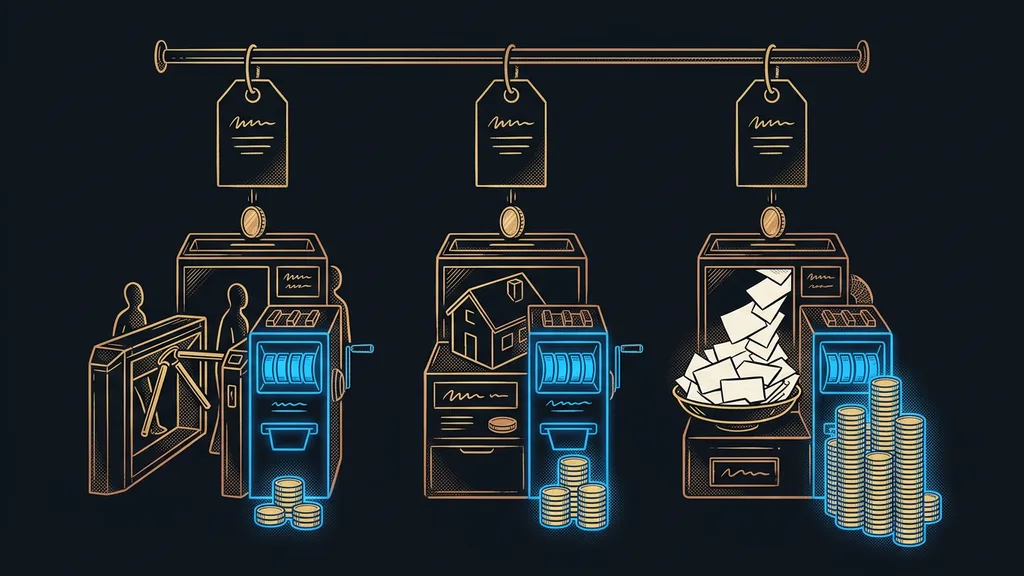
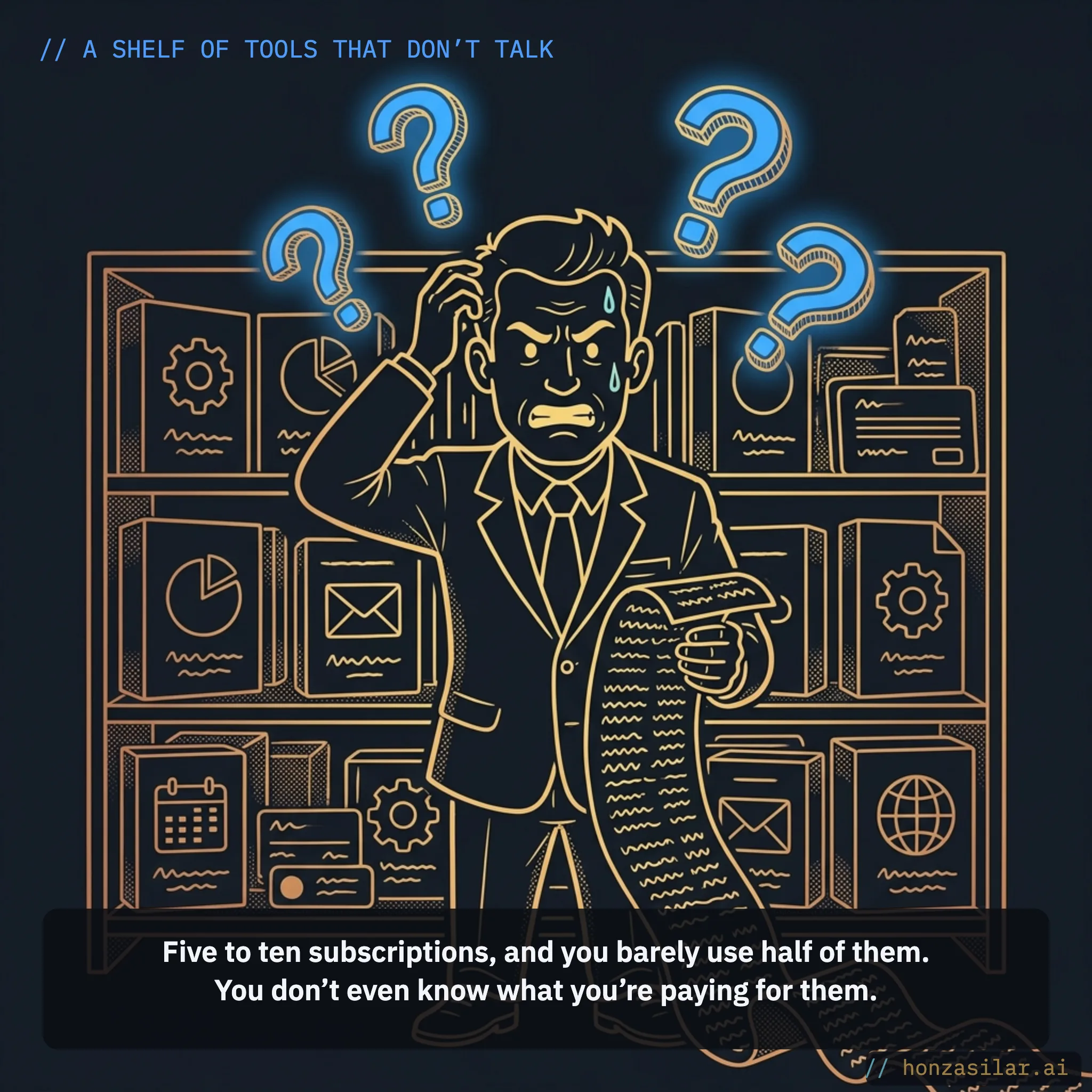
Try listing how many marketing tools your business pays for every month. Usually it adds up to a CRM, a bulk email tool, a booking calendar, and a website builder, plus forms, a chatbot, and something for SMS. For the businesses I set systems up for, the list usually stops somewhere between five and ten items. And almost nobody can put it together from memory.
“I couldn’t even tell you exactly how many subscriptions we pay for. All I know is that about eight payments leave our account every month, and we don’t really use half of them.”
A client told me that at our first consultation. And they weren’t the first, or the last, I’ve heard it from.
The problem is the gaps between the tools
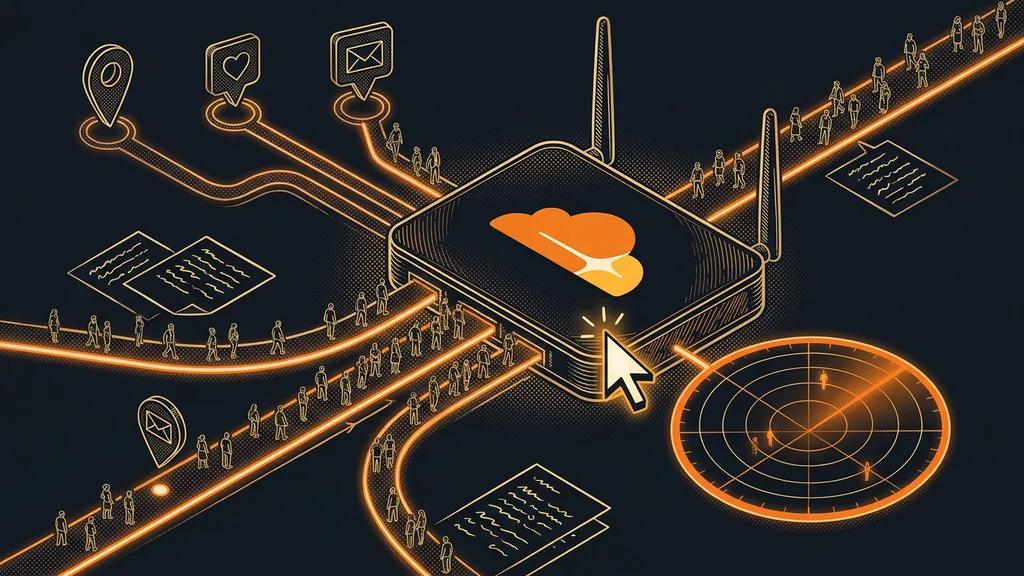
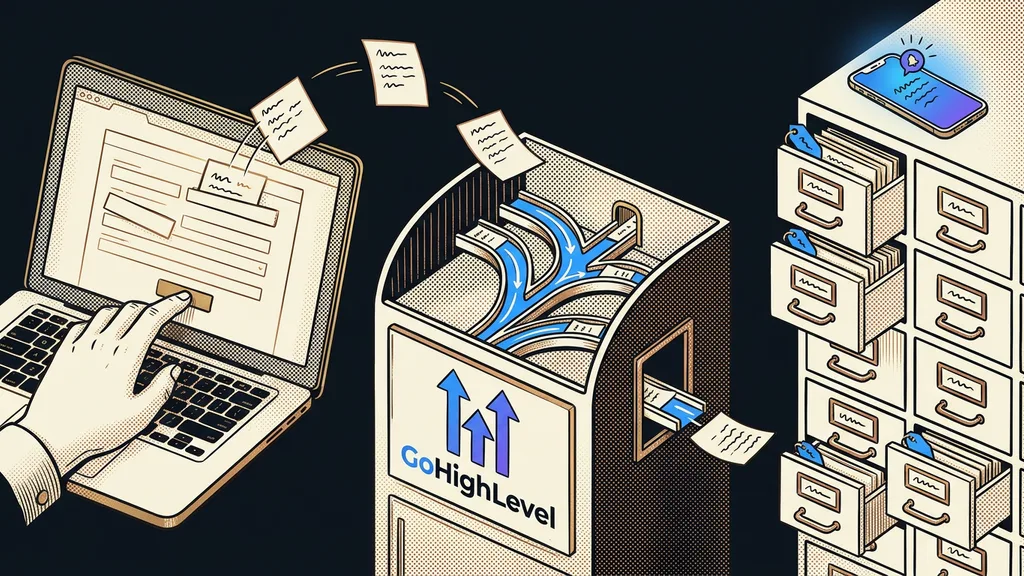
Each of those tools is fine on its own. But they don’t talk to each other. You have to get a contact from the form into your email tool, from the email tool into the CRM, and attach a meeting from the calendar to the deal by hand. Sometimes Zapier glues it together, sometimes a capable assistant does, and sometimes it simply gets lost. And a lead that falls through the cracks between two systems won’t call to tell you that you forgot about them. They’ll buy elsewhere.

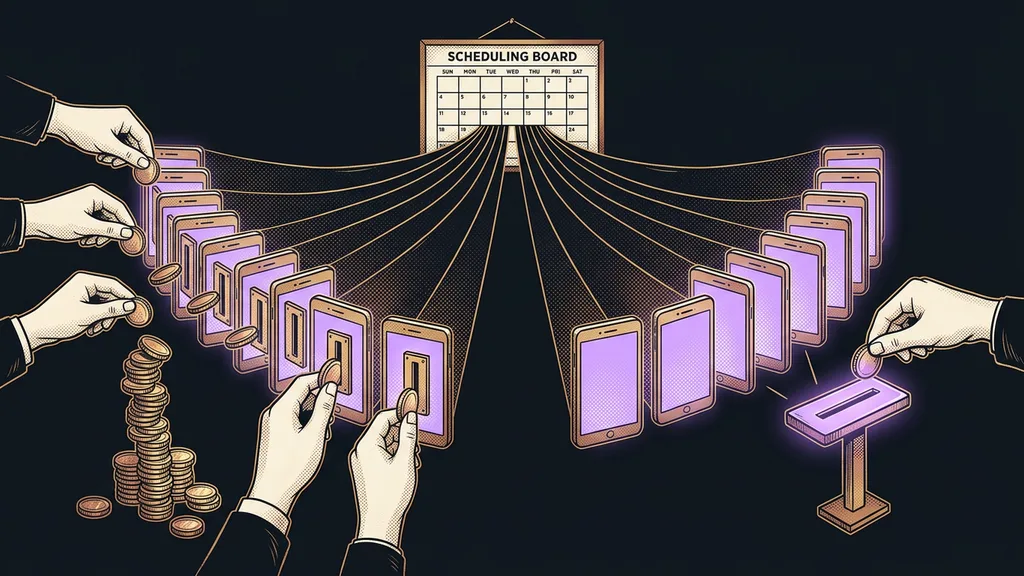
The second problem is money. Most of those tools charge by the number of contacts, so you can easily pay for the same database two or three times: once in your email tool, again in your CRM, and a third time in your chatbot. As the business grows, every plan grows with it. I’ve written a separate article on what fragmented marketing really costs a business. In short: more than most owners will admit.
A platform built for agencies from the ground up
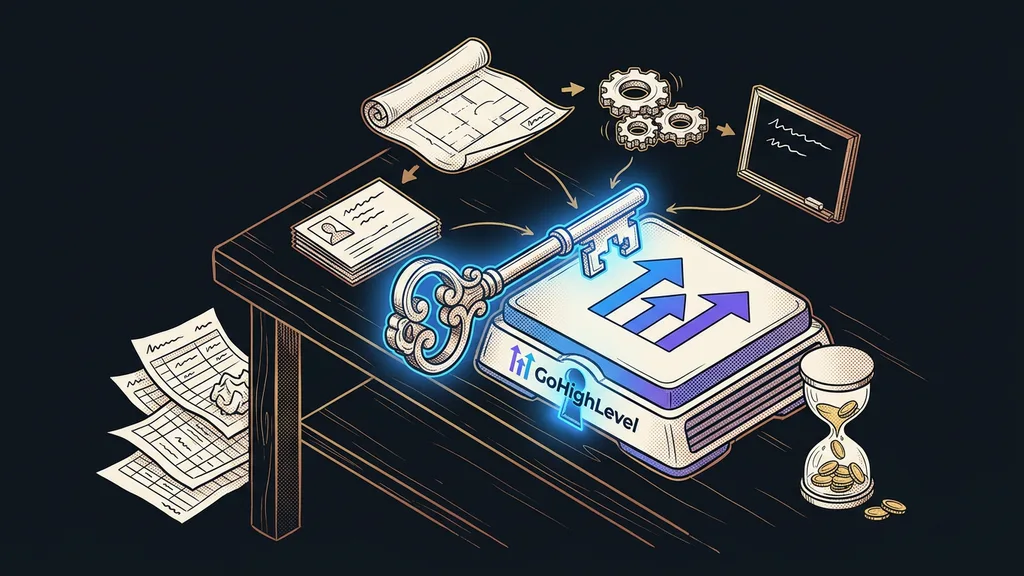
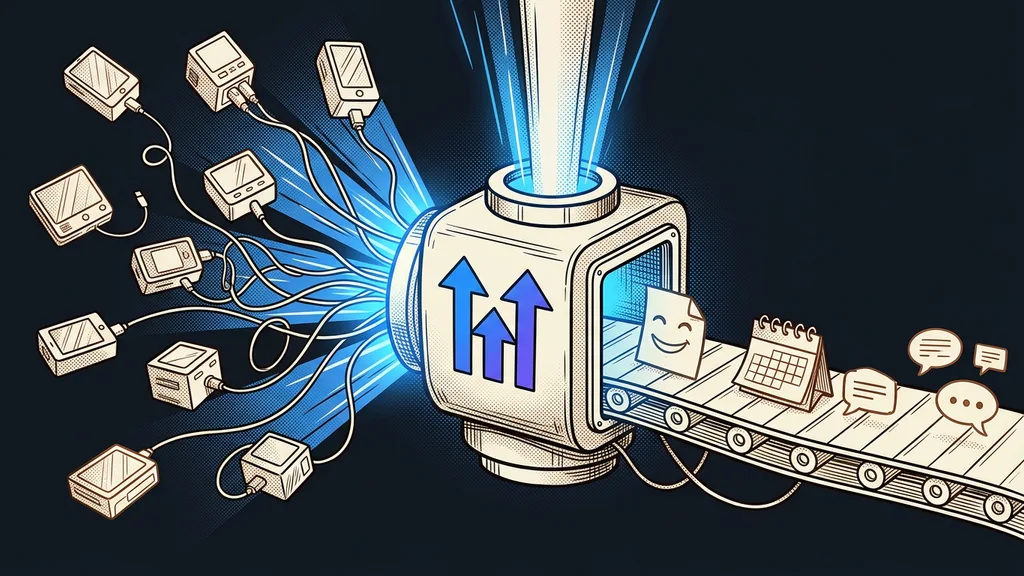
GoHighLevel comes at it from the opposite end. Instead of becoming the eleventh tool in your collection, it’s built to replace ten of them.
Ten tools × one platform
Ten tools
Five to ten subscriptions a month.
You move data from one to another by hand.
You pay for the same database up to three times.
One platform
One license at a fixed price.
Everything sits on one contact database.
You pay only for actual usage.
It was built from the start for marketing agencies: one instance carries the agency’s headquarters and, underneath it, any number of separate accounts for individual businesses, each with its own data. On top of that, an agency can dress the whole environment in its own brand and sell it as its own software, so the client sees the agency’s logo and domain. That structure is exactly what made it a standard among agencies. And because it’s often sold under other names, many businesses use it without ever hearing the name GoHighLevel.
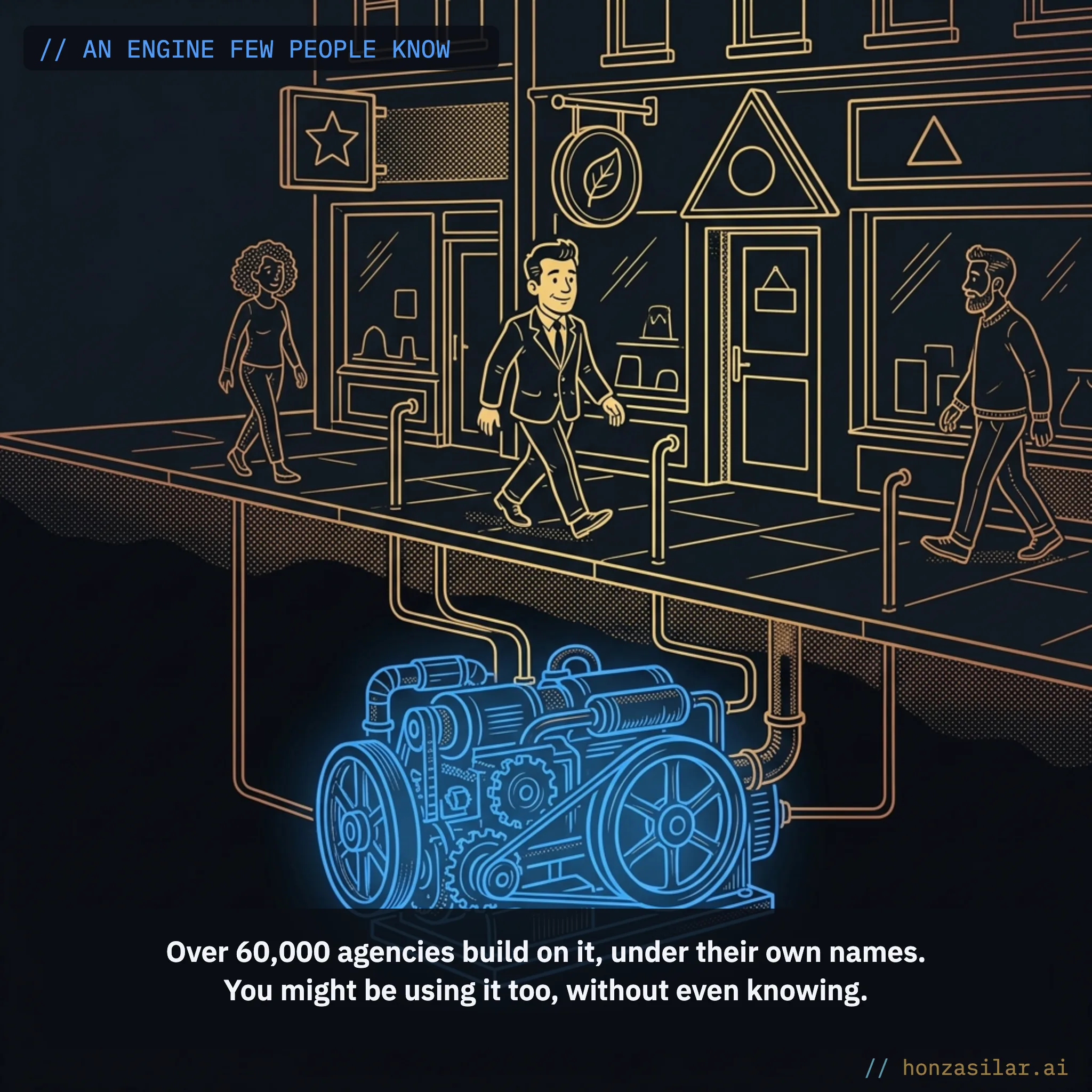
A telling number
According to HighLevel, more than 60,000 agencies build on the platform, and through them, about 1.4 million businesses. You won’t know it from billboards: it grows because agencies build their own services on it, not because it advertises under its own name.
A telling number about GoHighLevel
Everything that fits into one login
Inside one license is a business’s entire marketing and sales backbone. A list of features won’t thrill you, I know. What matters is that all of this used to live in separate subscriptions and now sits on one set of data:
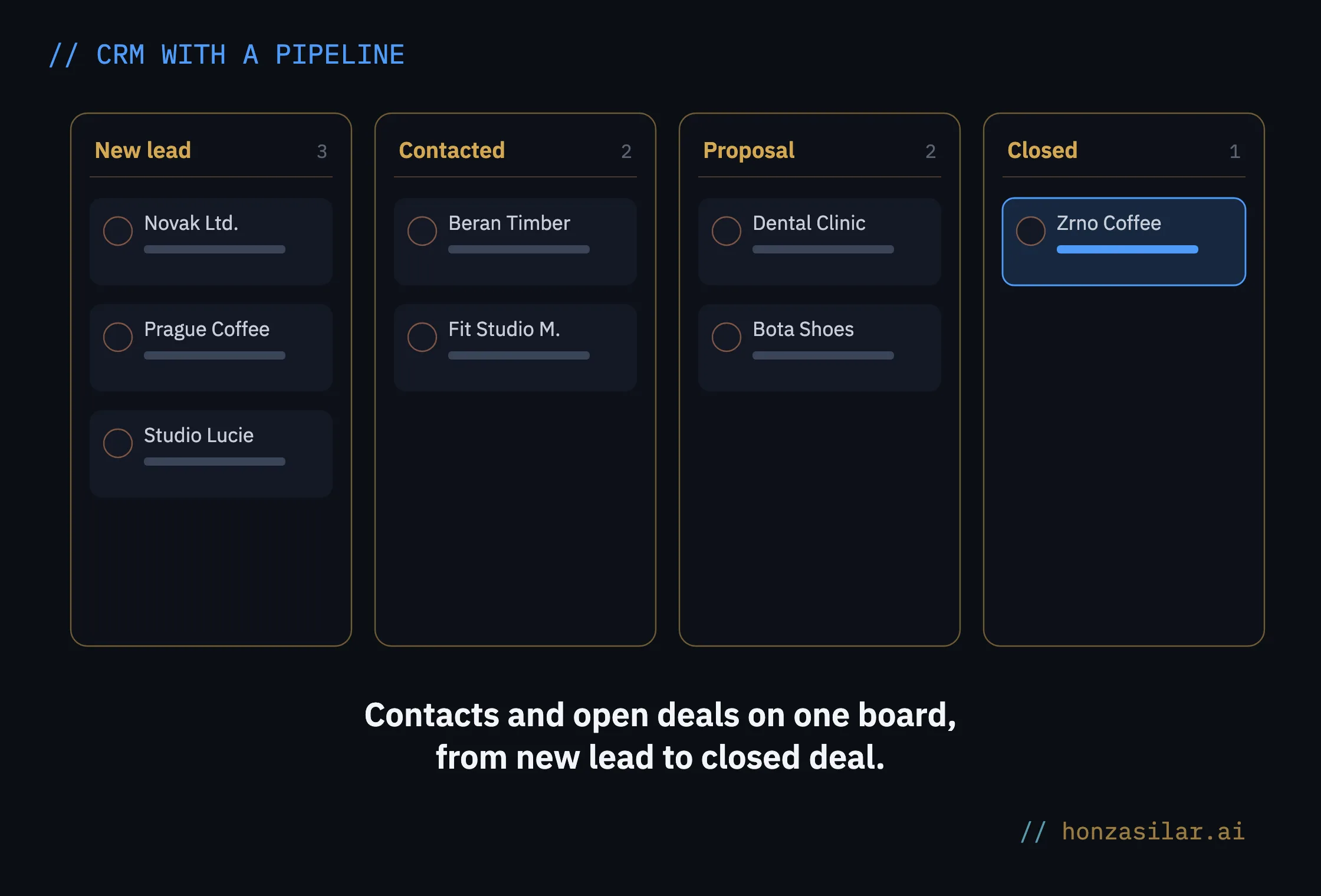
- CRM with a pipeline, contacts and open deals on a clear board, from a new lead to a closed deal.
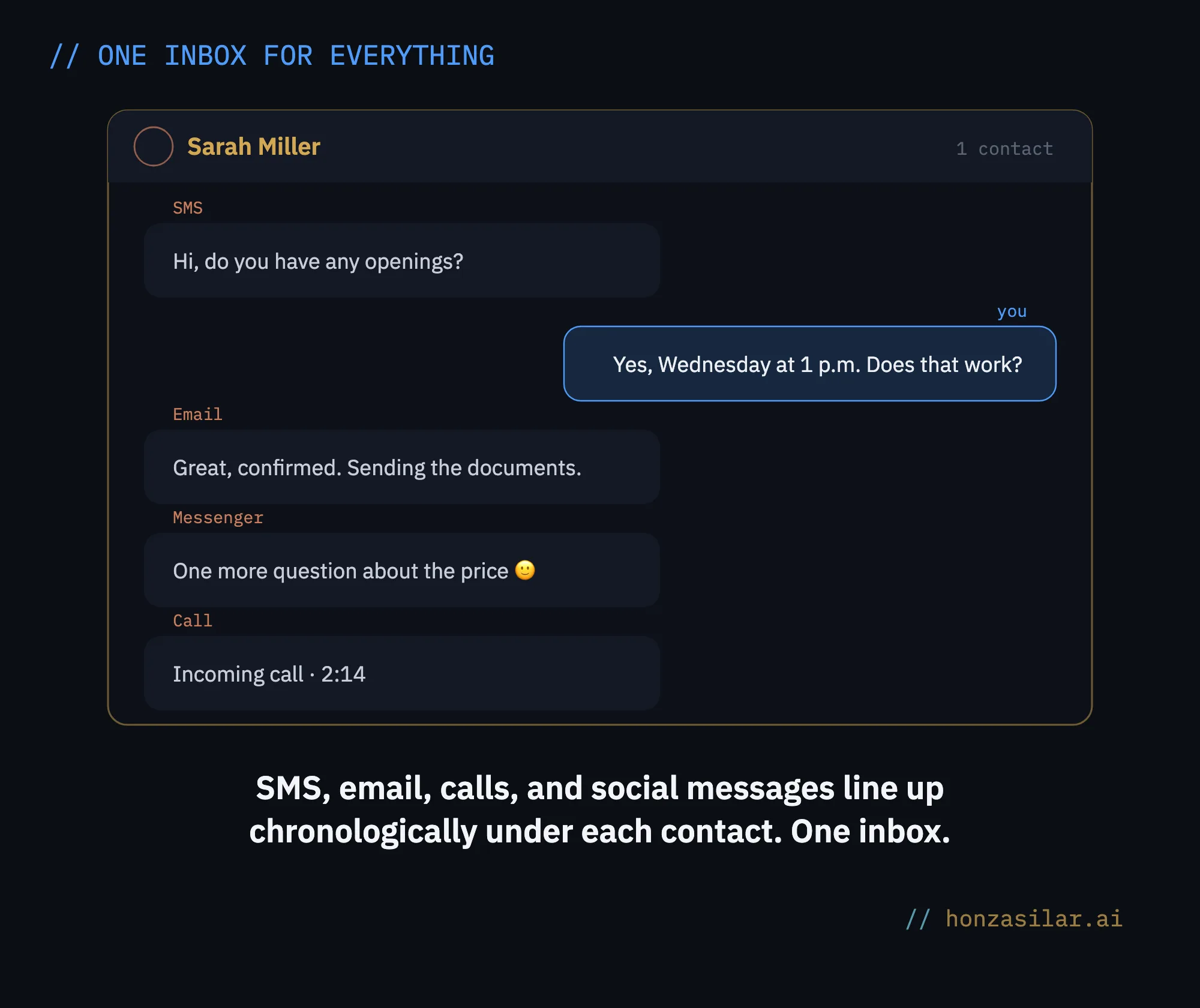
- One inbox for all communication, SMS, email, calls, Messenger, and Instagram line up chronologically under each contact.
- Websites, funnels, and forms: a drag-and-drop editor with more than 200 templates, and whatever a visitor fills in lands straight in the CRM.
- Booking calendars: the client picks a time slot, and the system creates the contact, the appointment, and the reminders on its own.
- Email campaigns and automated sequences, sent right from the CRM database, with no exporting or importing.
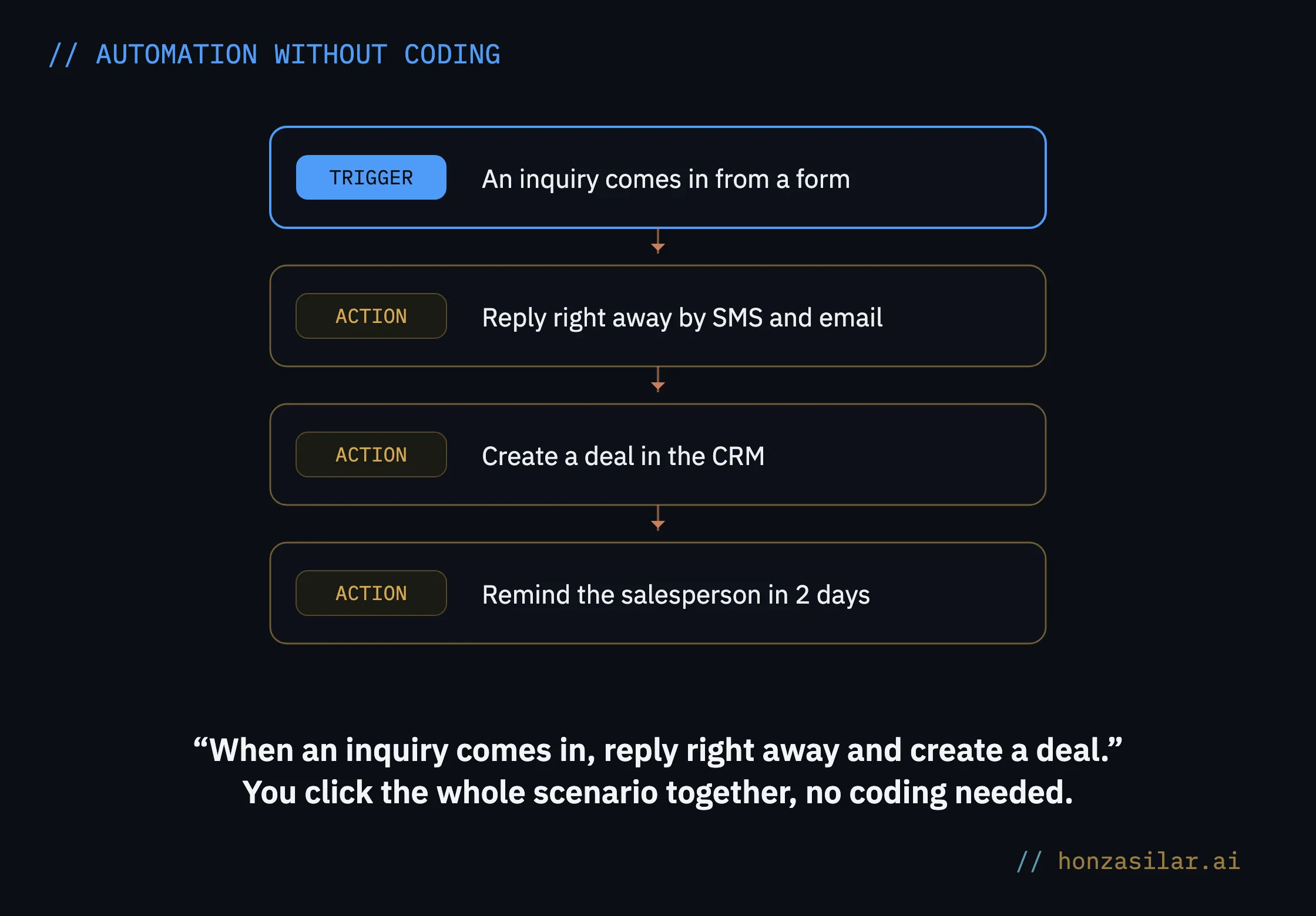
- Automations: visual scenarios like “when an inquiry comes in, reply right away and create a deal” that you click together without any coding.
- Communities and courses: a membership area and your own academy under your brand, with no extra platform.
- AI features: a chatbot trained on your business’s knowledge answers on your website, by SMS, and on social media, and voice AI picks up the phone.
What GoHighLevel replaces in one license
| What you need | Separate tool today | In GoHighLevel |
|---|---|---|
| Bulk email | Mailchimp | ✓ email marketing |
| Booking appointments | Calendly | ✓ calendars |
| Websites and funnels | ClickFunnels | ✓ builder |
| Communities and courses | Skool | ✓ membership area |
| Contacts and deals | standalone CRM | ✓ CRM with a pipeline |
So one platform covers the work you now split among Mailchimp, Calendly, ClickFunnels, Skool, and a classic CRM. But it isn’t the market leader in any single discipline. If you need one thing done to the very highest standard, say just email marketing, a specialized tool will serve you better. GoHighLevel’s strength lies elsewhere: everything comes together on one set of data, and that’s exactly what ten separate tools can’t give you, no matter how good the connectors you glue them together with.
Who GoHighLevel suits, and who’s better off with one top-notch tool
It suits you
You pay for five or more tools that don’t talk to each other.
You want your data and communication in one place.
You value a fixed price that doesn’t grow with your database.
Better a specialist
You need one discipline at the absolute top level.
Say, just email marketing, but the best on the market.
You don’t need to deal with any other tools.
A price that doesn’t grow with your database
With most marketing tools, you pay more with every additional thousand contacts. GoHighLevel flips that: the license has a fixed monthly price, the number of contacts is practically unlimited, and you pay only for actual usage. Emails sent, SMS, and call minutes are deducted from a prepaid wallet.
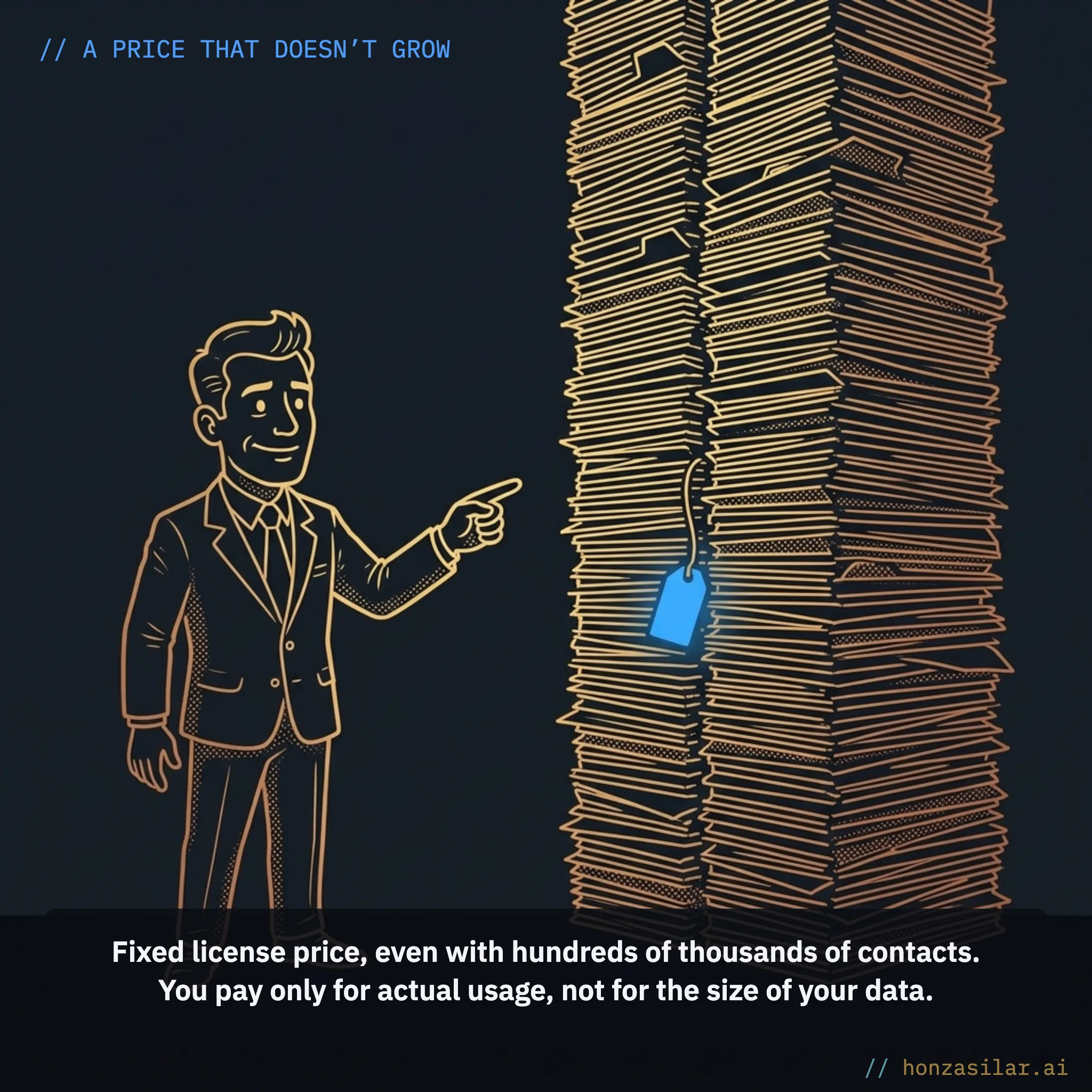
A direct license from HighLevel is paid in dollars: the Unlimited plan costs $297 a month (price as of early October 2026). I cover the pricing plans, including what’s in the price and what costs extra, in a separate piece.
For the technically minded: what it looks like inside
The platform has two floors. Upstairs is the Agency View, the administrative headquarters where the agency creates accounts and handles billing. Below it are the sub-accounts, the workspaces of individual businesses.
Sub-account
A separate workspace for one business inside the platform, where its CRM, marketing, and sales live. Each sub-account is a strictly isolated database: a contact from one account simply doesn’t exist in another. Because of GDPR and trade secrets, that’s a fundamental property, not a detail.
Finished setups move between accounts through what’s called a snapshot, a template of the entire account: a new client gets funnels, automations, and calendars in a few minutes instead of dozens of hours of clicking by hand. The platform connects to the outside world through APIs and webhooks, for example to Make or Zapier. Just keep in mind that the foundation is American: you switch the default currency and date format in the settings, and the data sits on servers in the US.
What GoHighLevel is, in five points
- It’s one platform instead of five to ten separate tools.
- It brings together CRM, email, websites, calendars, automations, and AI on top of one database.
- The price is fixed and doesn’t grow with the number of contacts; you pay only for actual usage.
- It’s built for agencies, which is why it’s often sold under another brand.
- Inside, it keeps data in isolated sub-accounts and copies finished setups with snapshots.
Let’s go back to the list from the beginning. You can keep paying for five to ten subscriptions, moving data by hand from one tool to another, and hoping nothing important falls between them. Or you can have the inquiry, the email, the meeting, and the deal under one contact in one system. With my clients, that choice has one visible result: the list of subscriptions shrinks to one item, two at most.