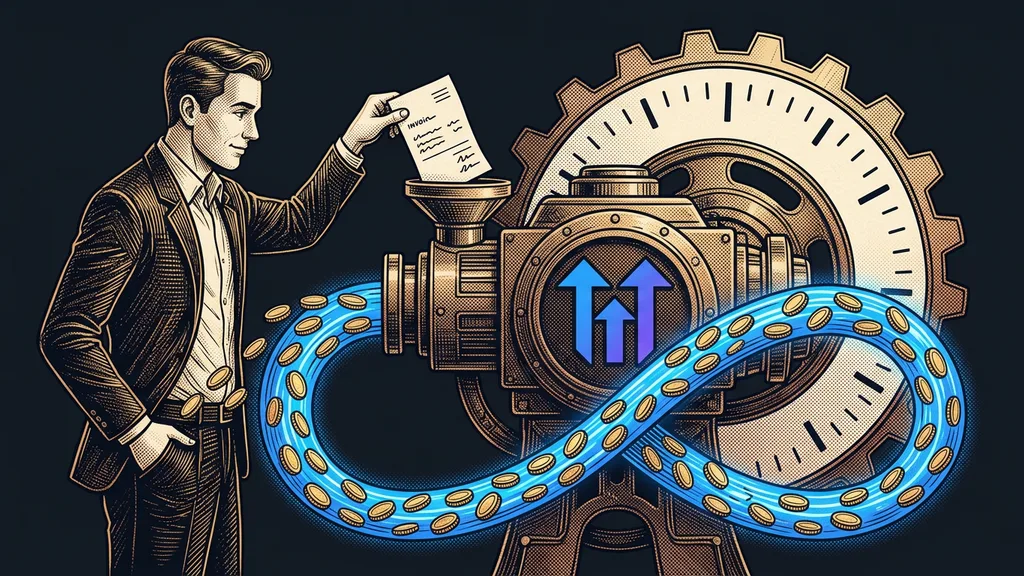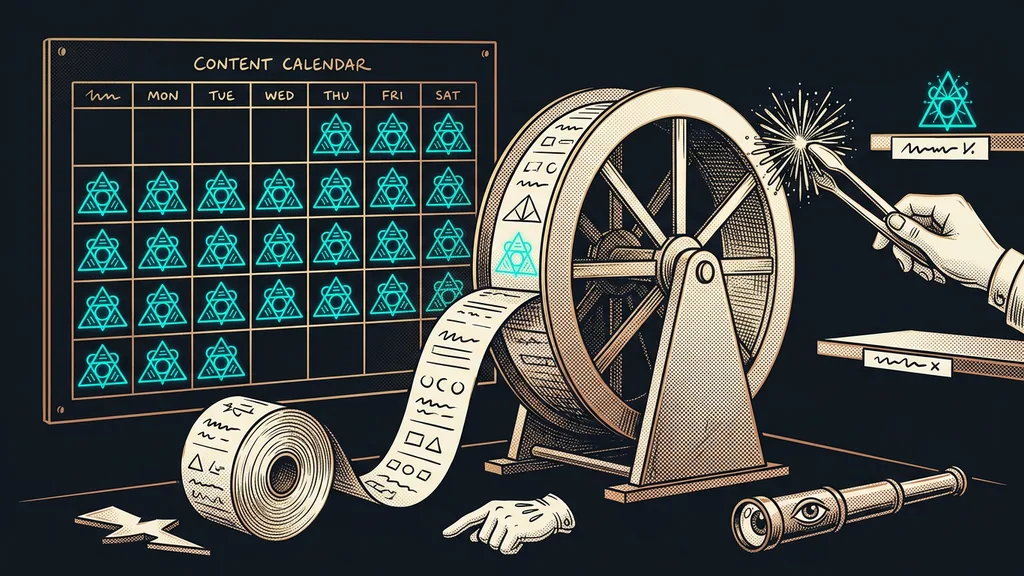
What to publish next month tends to be the hardest question in all of marketing. The answer usually comes from three sources: an idea that just popped up, advice from someone outside, and whatever the competition is doing. Your own numbers usually aren’t part of that decision, even though they’ve been sitting there, collected, for ages.
I did it that way myself for years. On Friday afternoons, I’d sit down in front of an empty calendar and come up with topics for the next month. I had the numbers; I just only reached for them when I needed a chart for a report. They never helped me decide anything.
Fill the calendar with findings, not ideas
A good content decision comes from reading rather than brainstorming. First you read what actually happened over the past few months, and only then do the topics for the next period fall out of it.
For there to be something to read, the numbers have to live somewhere, in one place and with the same definitions. I’m not covering that part here. It has its own article about which post brought you customers. I’ll take it as done and go one step further.
Content decision loop
A closed circuit where you publish, measure, evaluate, and change the plan for the next period based on what you found. Most companies have the first two steps but not the other two. The numbers get collected, and decisions still get made by eye. The loop only closes when the evaluation produces a specific sentence for the calendar.
And the difference between collecting and deciding is huge. Every app can collect numbers. Reading them once a month and changing the plan based on them takes a fixed rhythm and someone who owns the job.
Numbers can’t tell you what to write, but they can tell you what to write more of and what to write less of.
One successful post isn’t a pattern yet
You can’t decide anything from a single number. A pattern only emerges when the same thing repeats across several posts, and ideally across networks too.
A spike usually has a different explanation. Someone influential shared it, the topic happened to be trending, or it landed on a day when people were glued to their phones. Building all of next month on that means repeating a fluke and expecting the same result.
Only one thing helps here, and that’s tags. Every post gets a note saying what type of content it was. A real-world story, a how-to, a comparison, an announcement, an answer to a common question. Plus the format and the topic. Only with tags like these can you ask questions about something other than individual posts.
Four questions your numbers can answer
Numbers answer questions about repetition, not about causes. So ask in a way that lets you count the answer:
- Which content type gets a response most often (not most strongly)?
- Which network brings people who get in touch, and which one just brings views?
- What publishing rhythm do we keep in the months when things go well?
- What did we publish once, see it work, and never repeat?
The last question tends to be the most useful. In most companies, two or three formats that worked are sitting in the archive, and nobody has repeated them. Nobody decided against them. They were simply forgotten.
One-minute self-test
Think back to how you picked this month’s topics. Was it a finding from your numbers, or an idea from a meeting? And if you had to say right now which content type most often brings you an inquiry, would you get it right?
A recommendation you can put straight into the plan
The output of a review should be a sentence you can take to the calendar, not a chart. So nothing like “video is growing,” but rather “next month, three real-world stories and one comparison, and we skip the announcements.”
A recommendation written like that can be rejected, and that’s its main strength. You can’t reject a chart; you just look at it and close it. A sentence asks for a decision.
Every month, the finished overview lands straight in a document the AI maintains on its own, so in the morning I just open it and start crossing things out. The review runs overnight, when nobody needs to be around. The approved plan then gets published to every network from one place, and the whole loop keeps going as content that runs without daily intervention.
Scheduled routine
Work that starts on its own at a set time and delivers a finished output without anyone asking for it. For content, it’s usually the monthly review: the numbers get read and compared with the previous period, and the result is a short overview with a recommendation. A person only steps in at the end, when it’s time to decide.
Who shouldn’t bother
When should you leave this alone? If you put out three posts a quarter, there’s nothing to read a pattern from. Your own judgment will serve you better than a spreadsheet with six rows.
It also makes no sense where the recommendations won’t be followed anyway. If every week a new idea from the top overrides the plan, the review turns into a ritual with no consequences. That’s worse than nothing, because it costs time and creates the impression that you’re data-driven.
The whole cycle in a nutshell
- Every post gets tagged when it’s published: content type, format, topic.
- Numbers get collected continuously and topped up later as they trickle in.
- Once a month, you read for repetition, not spikes. A finding has to hold at least three times.
- The review produces one sentence for the calendar, not a chart.
- The plan gets approved or rejected, and the next month gets measured again.
I brought those Friday afternoons in front of an empty calendar on myself. The calendar was empty because there was nothing to choose from, not because I was short on ideas. A good content plan starts when you stop coming up with topics you already know don’t land, rather than when you come up with more.