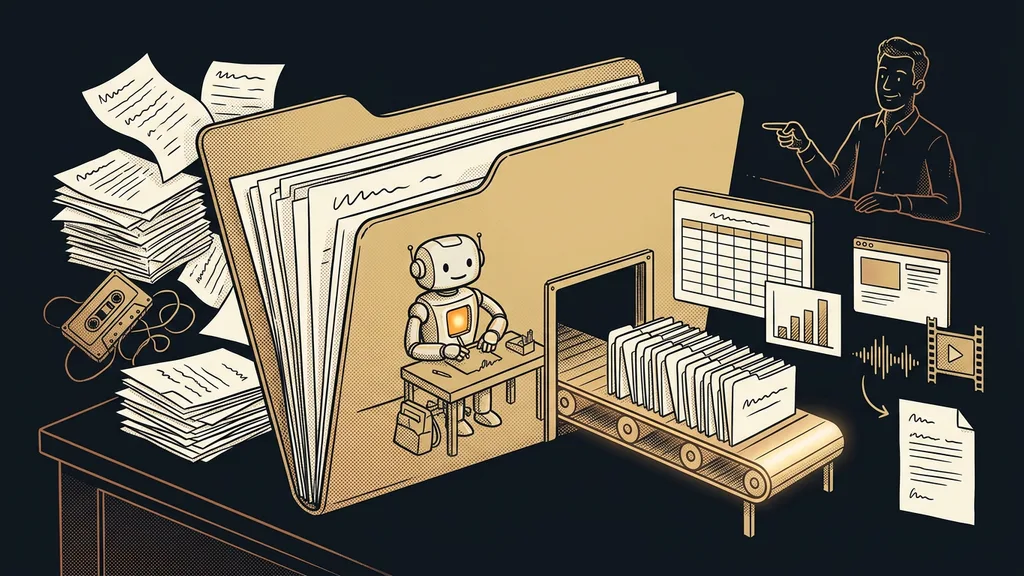
Most people lose the most time preparing for work rather than doing it. Before you can start deciding or creating in the morning, you first have to piece together a picture of what’s on your calendar today, what’s on fire, and what actually comes first. And you piece that picture together again every single time, by hand, from scratch.
That’s how it was for me for years. A quarter past seven, still half asleep, I open my email and scroll through what came in overnight. Then the CRM: who got in touch and who’s still silent. Then the calendar: who I need to prepare for today. By the time I finish my coffee, it’s half past eight and I’m still just getting my bearings. The actual work hasn’t even started. And this isn’t an unusual morning: this is every morning.
The most expensive part is the time before you even get to work
The morning start-up costs more than the work itself. And having too much on your plate has little to do with it. You start from zero every day: before you get to what people actually pay you for, you first have to piece together by hand what happened, what’s on fire, and who’s waiting for an answer.
The work you do isn’t the expensive part. The expensive part is the time before you even get to it.
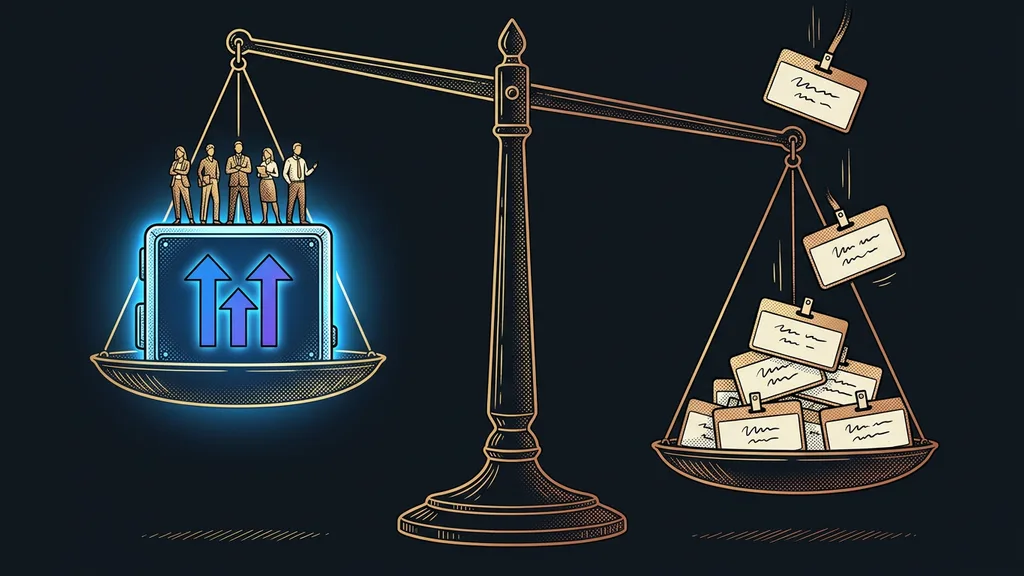
It’s a silent tax. You won’t see it on any invoice, yet you pay it every morning. Say the start-up costs you half an hour a day; over a month, that’s ten hours. A whole working day spent figuring out what to do instead of doing it.
And on top of that comes the extra weight: the feeling that something slipped through, that you forgot someone. You start the day feeling like you’re catching up, instead of with a clear head.
The one-minute self-test
Tomorrow morning, check the clock when you sit down at your computer. Then check it again when you do the first thing someone pays you for. The difference is your morning start-up. For me, it used to be 20 to 30 minutes, every day of the week.
You sit down with your coffee and the summary is ready
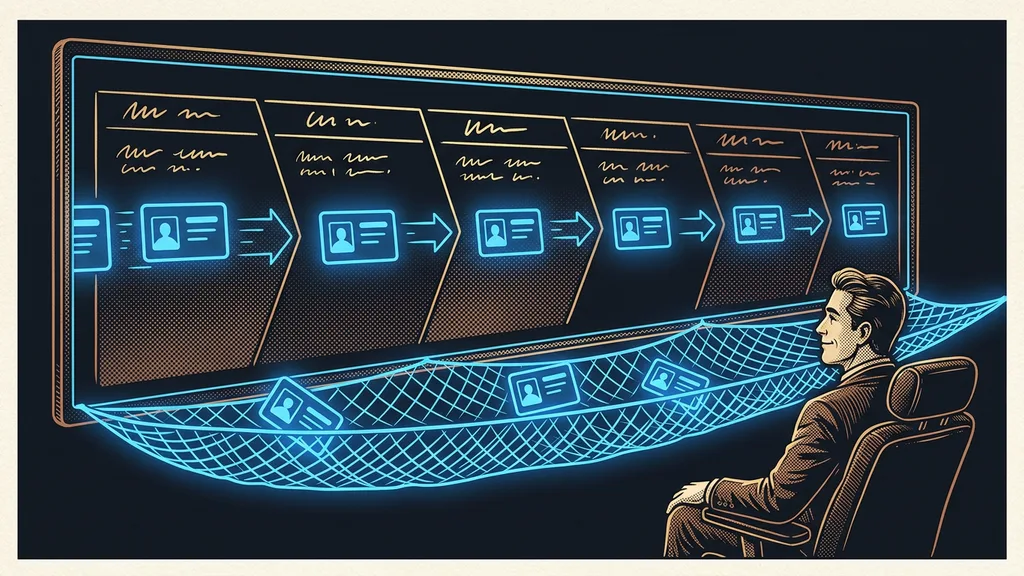
The best way to shorten the morning start-up is to skip it. You sit down with your coffee, open your laptop, and the summary is already waiting for you: who got in touch, who’s silent, what needs handling today, which meetings to prepare for. You didn’t search for anything, and you didn’t have to be there for any of it.
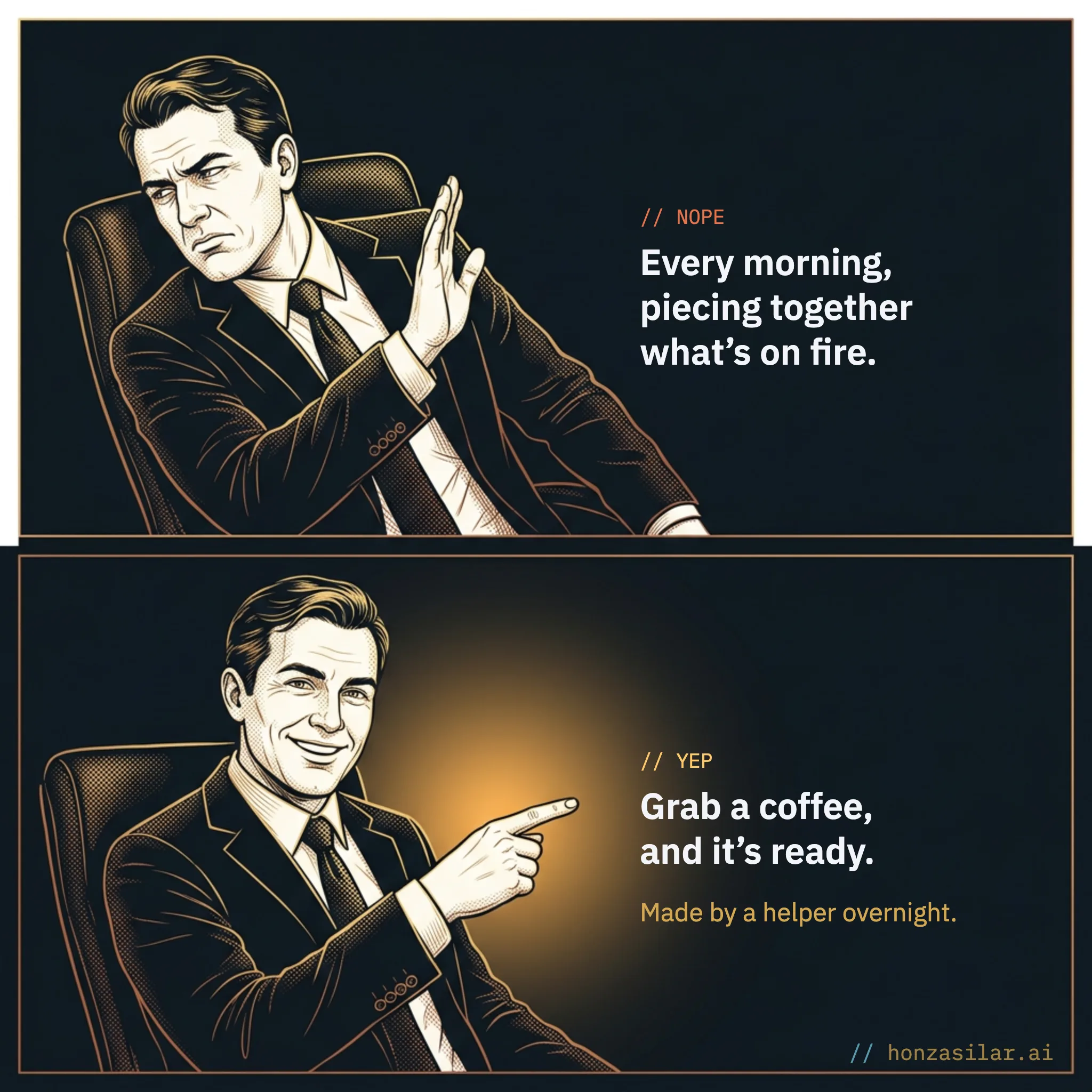
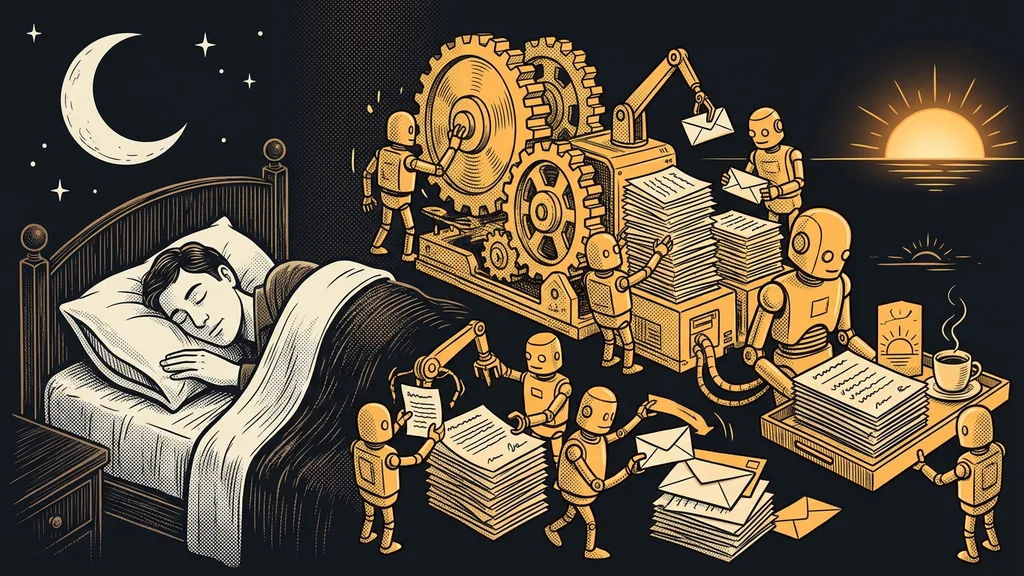
That’s exactly what I built for myself. An assistant that wakes up on its own at a set time, goes through what it’s responsible for, and puts the result on my desk. While I’m still asleep.
Scheduled routine
A task you describe once, in advance, and the system then runs it on its own on a schedule: every morning at six, every Sunday evening. You don’t have to click anything or remember that it’s supposed to happen. Unlike an app that you open yourself, a routine runs for you even when you’re nowhere near your computer.
How I handed it over
I didn’t have to learn anything complicated. All it took was describing once what I always do in the morning and handing it to an assistant; it takes care of the rest. It runs in Claude Code, so I didn’t write a single line of code. I said in a plain sentence what I wanted and when.
Agent
An AI assistant that gets a whole task instead of a single command, and works out the steps to complete it on its own. You tell it “go through my inbox and CRM and prepare a summary,” and it opens what it needs, reads it, pulls out what matters, and writes up the result. The difference from an ordinary command is that it thinks about the approach instead of carrying out a single step.
Before I get up in the morning, the agent has already gone through my inbox and CRM and pulled out what’s new and important. It prepares a clear summary so I can see where things stand at a glance. It checks what’s been left hanging and where someone is waiting for a reply. And it prepares materials for today’s meetings and calls. I don’t start or monitor any of it. It happens on its own, every day at the set time.
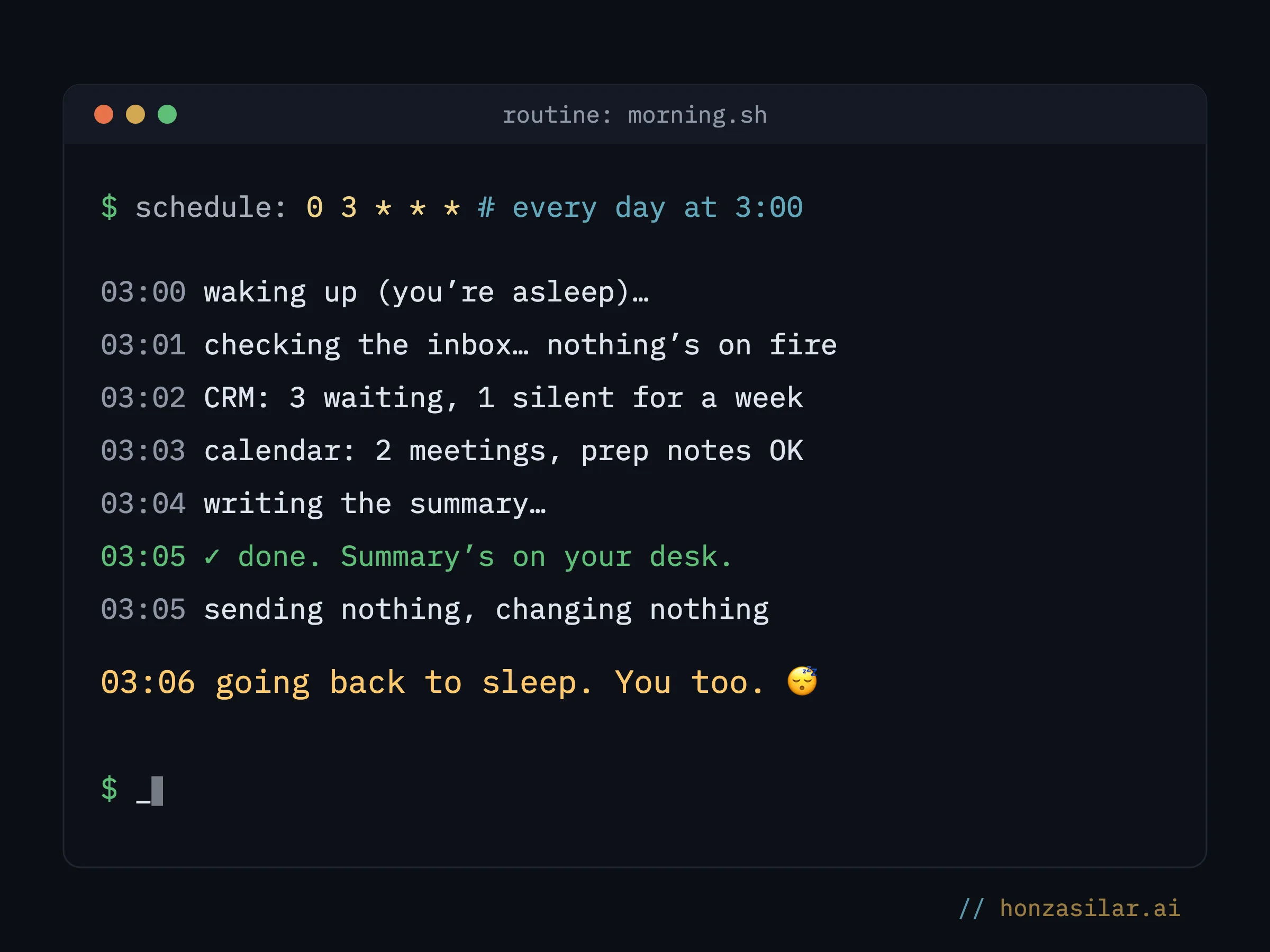
And it doesn’t stop at the morning summary. An assistant can just as well prepare materials for tomorrow in the evening, write up a summary for Monday’s team meeting on Sunday night, or keep an eye out for anything that’s gotten stuck. Anything that repeats and runs on a clock can run without you, from a single agent to a whole team of assistants that looks after the business even while you sleep.
Who this isn’t worth it for
This isn’t for everyone. If every day starts completely differently and there’s no telling what you always do in the morning, there’s nothing to hand over to an agent. A scheduled routine lives on repetition. When the task is different every time, there’s nothing for it to learn.
And a second limit, so I don’t promise more than it can do: the assistant prepares the summary, but it won’t decide for you. It won’t free you from making decisions; it just clears your desk for them. Which is what you want anyway: for the few things that really matter to stay with you.
Who a routine is worth it for
Worth it
- Your morning start-up is always the same: inbox, CRM, prep for the day
- That prep can be described in one sentence
- You want to start the day deciding, not searching
Not worth it
- Every day starts completely differently, and there’s no telling what you always do in the morning
- The task is different every time, so the routine has nothing to learn from
- You expect it to decide for you: it won’t, it only clears the desk
The whole system in a nutshell
- You describe once what you always do in the morning: inbox, CRM, calendar, materials for the day.
- You hand that description to an assistant in Claude Code and say when it should run.
- At the set time, it wakes up on its own, goes through its sources, and pulls out what matters.
- It writes up a clear summary and leaves it on your desk. It doesn’t send anything or change anything anywhere.
- Over coffee, you read the finished result and go straight to deciding instead of searching first.
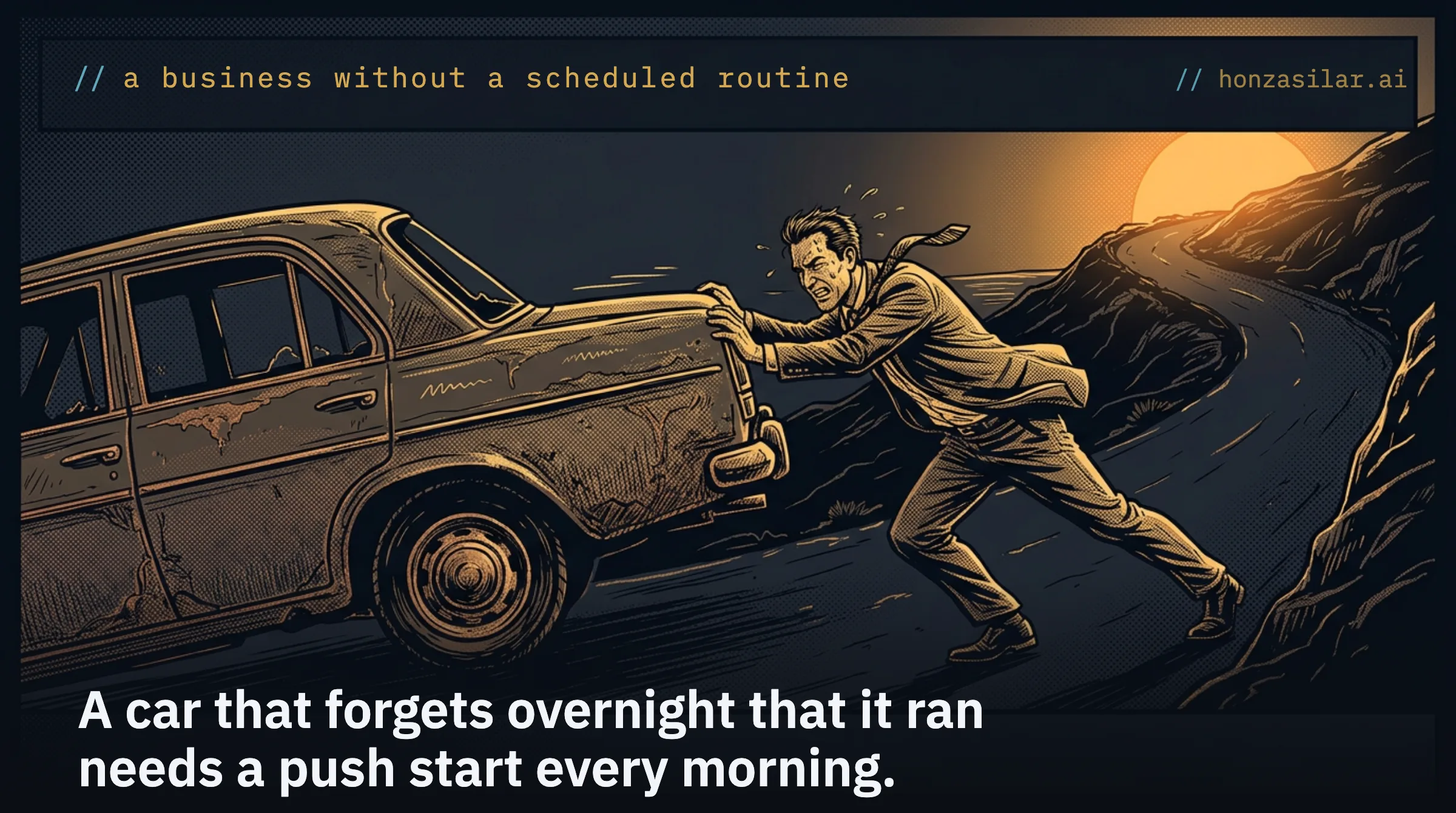
A scheduled routine answers a simple question: which of the things I do every morning don’t actually need me? The answer tends to be surprisingly long, and starting the day already in motion, rather than from zero, makes all the difference.