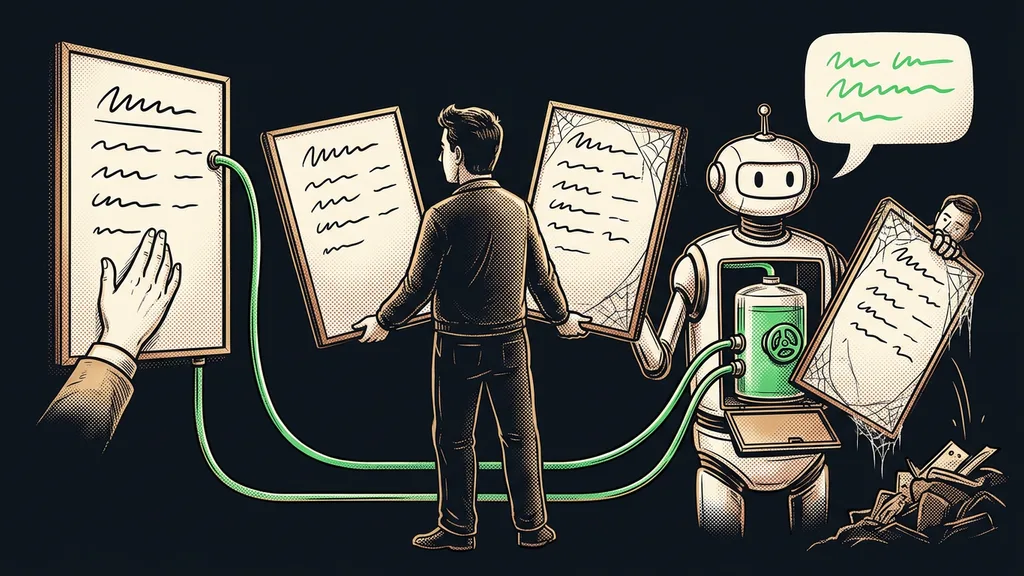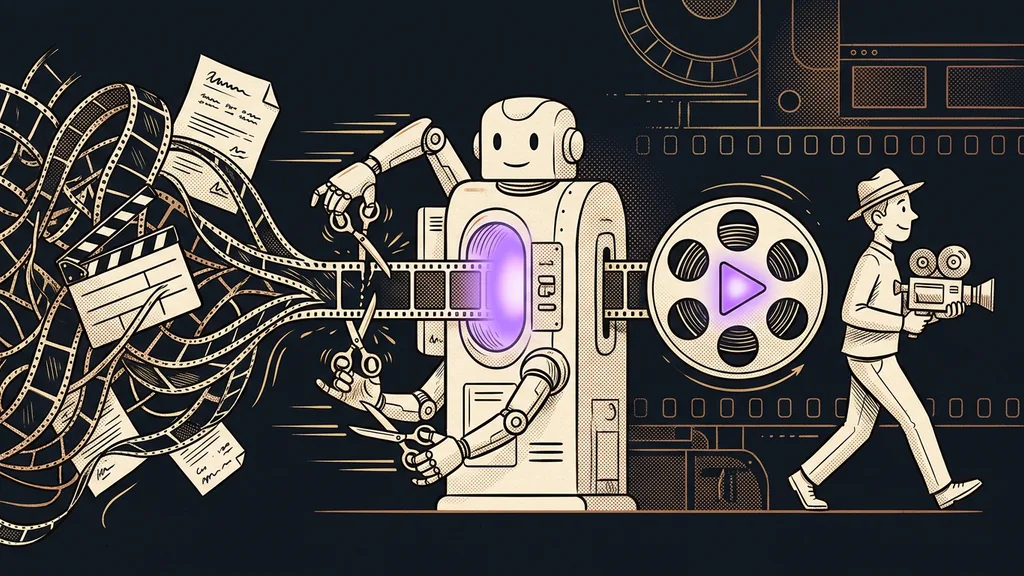
Shooting a good video takes a few minutes these days. Getting it finished and in front of people is the hard part. Between the raw clip and the finished video lies post-production: straightening the picture, watching the transitions, exporting. It’s a dull, mechanical layer nobody enjoys, and yet it’s the one that decides things: because of it, a pile of good videos sits on a drive and never comes out.
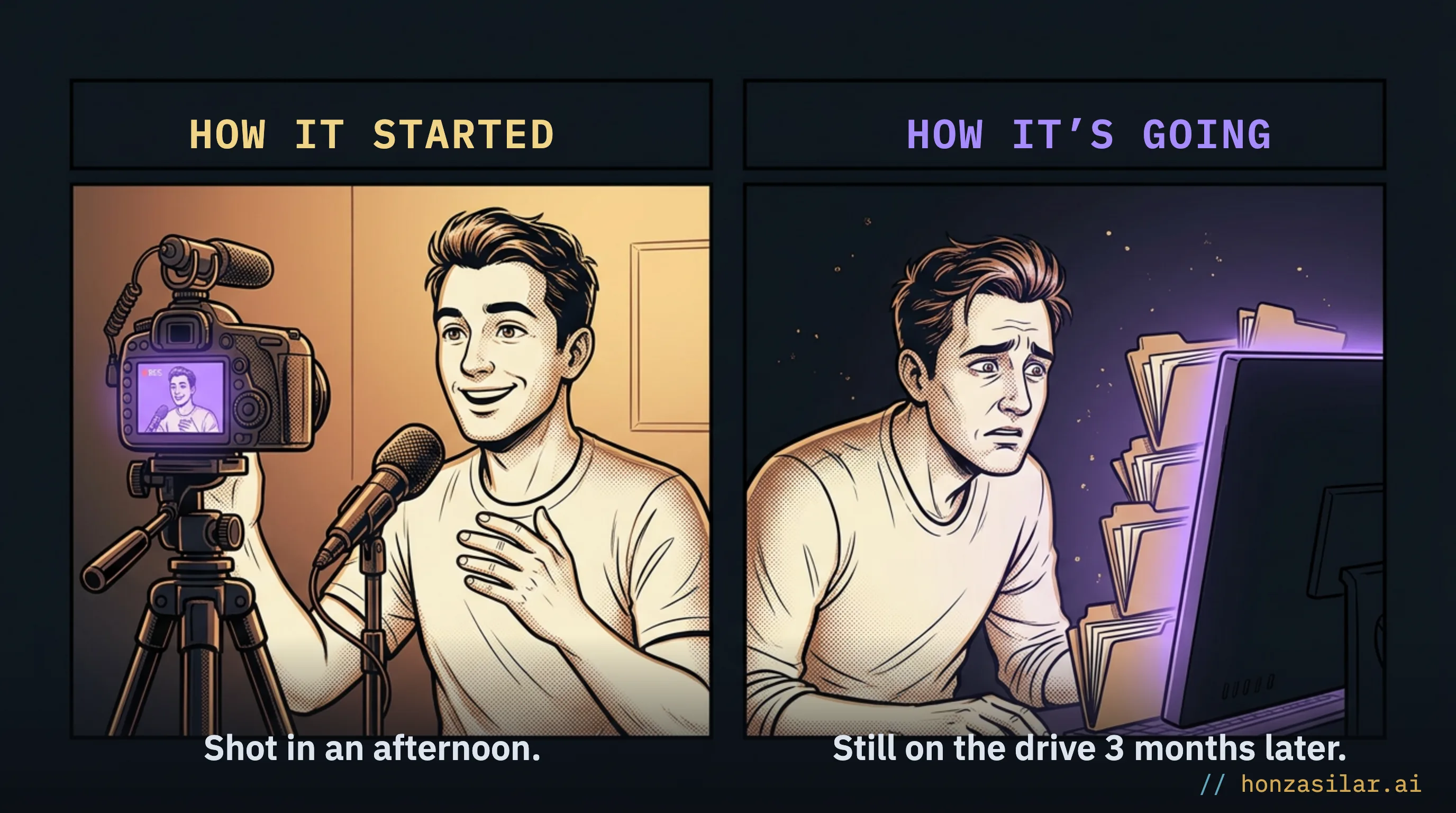
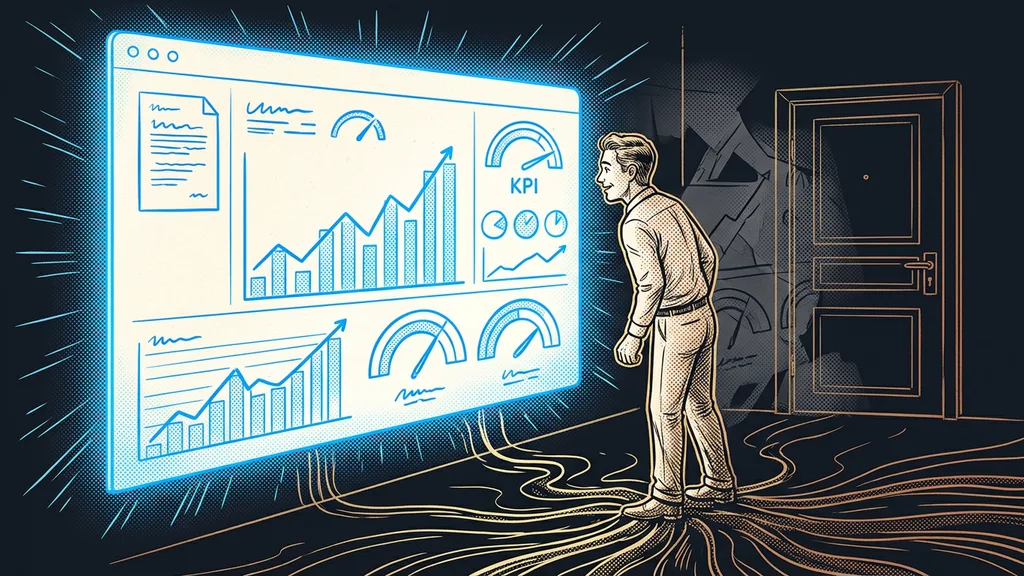
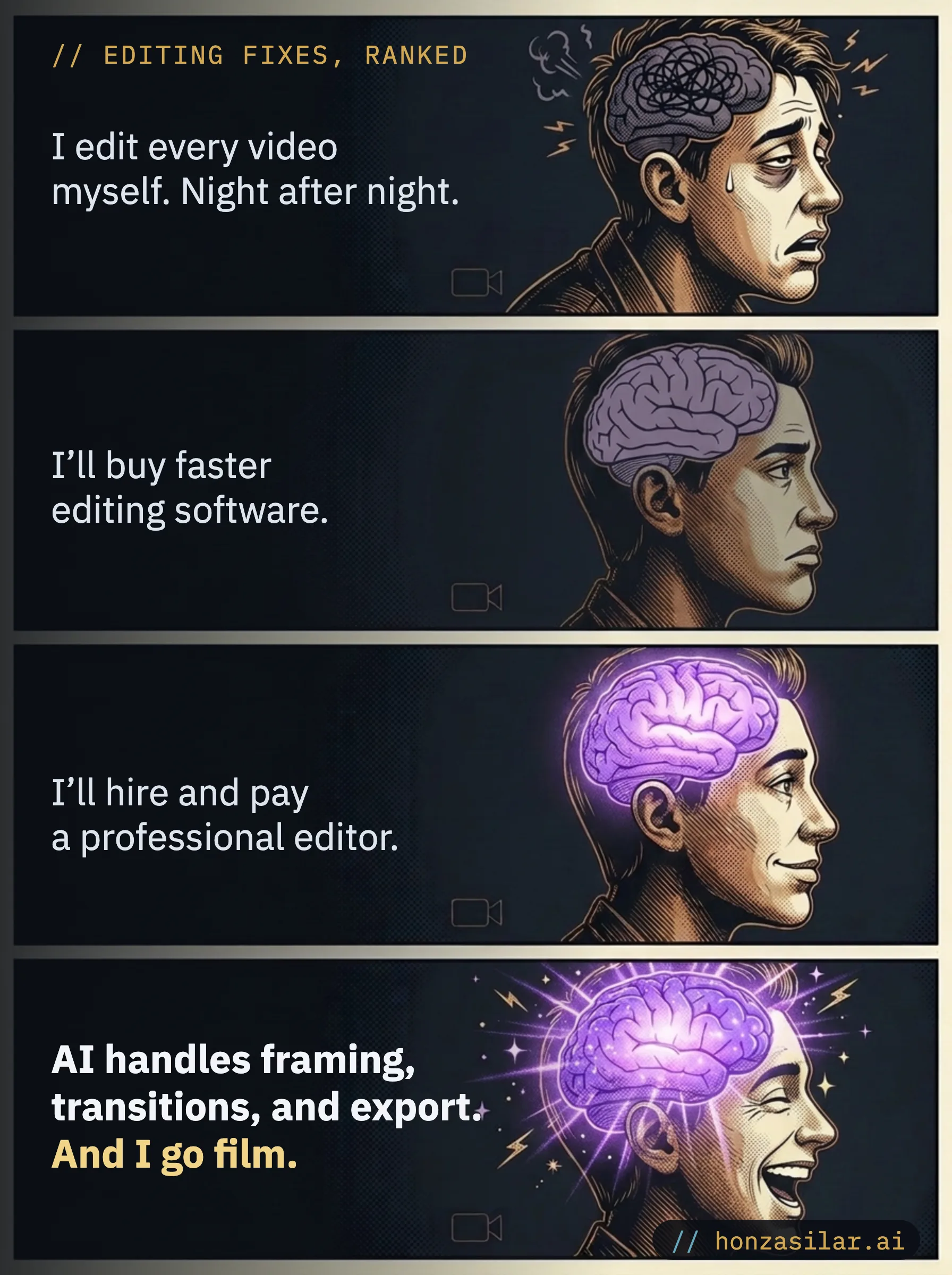
I know this firsthand. It’s half past eight in the evening, I shot a video in the afternoon, and it went well: I was talking to people, and I had it all straight in my head. Now I’m sitting at the edit, knowing the boring half of the job is still ahead of me. My head is a bit off center, so I nudge the frame. It jumps between two shots, so I smooth out the transition. Then export, check, export again. By the time the video reaches anyone, it’s long past midnight. Sometimes it’s not until the next day.
Filming is fun, editing is a grind
Filming and editing are two completely different jobs. One recharges you, the other eats away at you. And for a long time, nobody admits the real problem with editing: it keeps you from getting to your next shoot. That mechanical layer between “shot” and “done” is exactly where good content gets stuck.
Post-production gap
The post-production gap is the space between a raw clip and a finished video: the mechanical layer (straighten the picture, smooth the transitions, export) that someone has to handle before the video goes out. You won’t see it in any calendar. It only shows up as footage piling up while fewer videos go out than you’d like.
What post-production really costs you
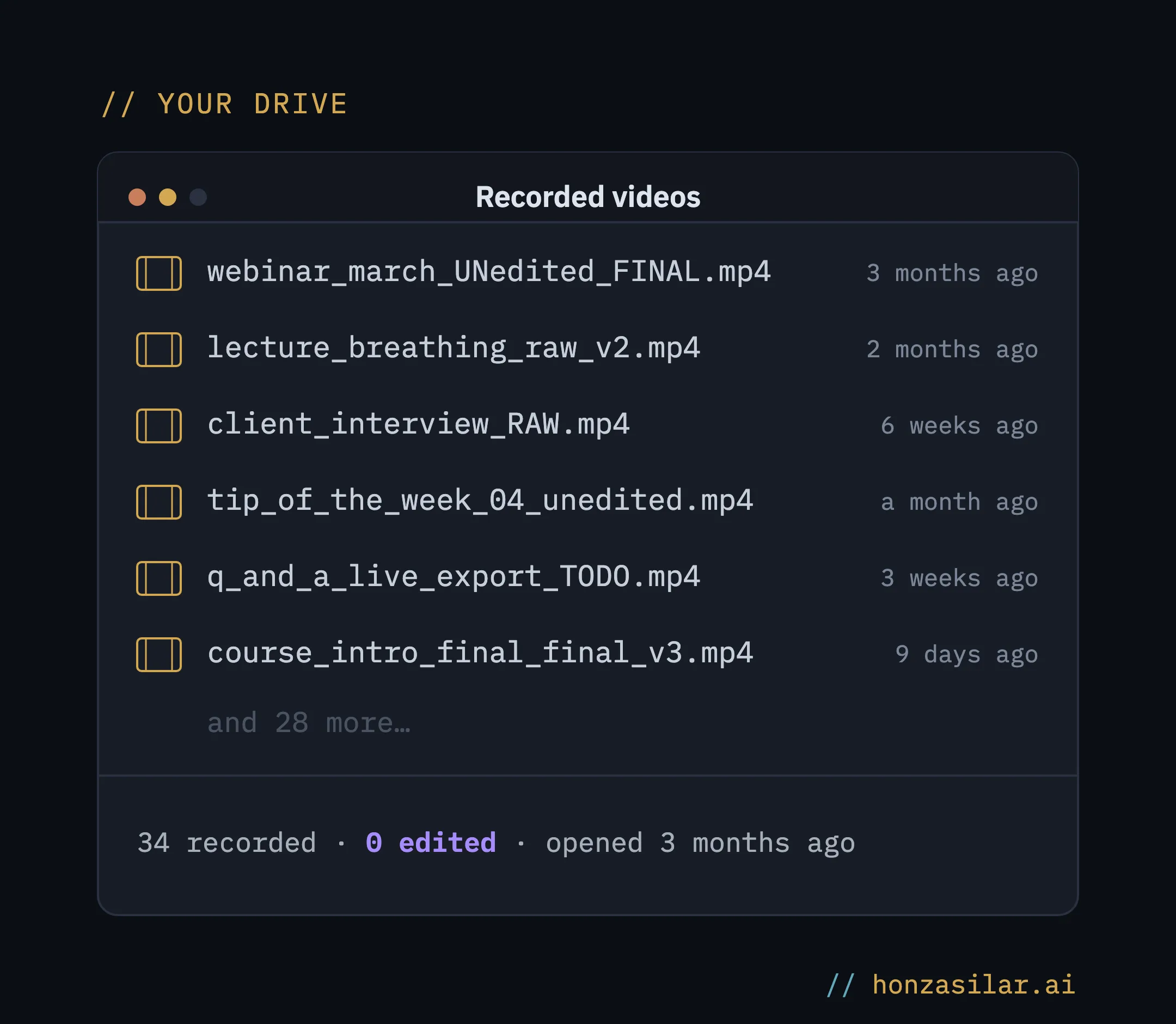
The most expensive part of editing is the content that never comes out because of it, not the hours at the computer. Open the folder where you save your raw clips: how many are sitting there? Videos that make perfect sense, only nobody ever edited them. Each one is a talk to an audience that will never see it. A lesson a client won’t learn. A piece of authority that never starts working for you.
You did shoot those videos. They pile up because every shoot is followed by an evening of editing, and you never feel like starting it.

And you pay twice. Once with the time you spend sitting at the edit instead of with clients or family. And again because the tedious routine puts you off your next shoot. You film less, publish less, and people see less of you. That’s how plenty of good channels and courses quietly die: of editing, not of a lack of ideas. Meanwhile, whoever publishes regularly grows.
One-minute self-test
Open the folder where you save your raw clips and count how many are waiting there unedited. Each one is finished work that nobody has seen yet. That number says more about your post-production gap than any argument about editing.
Do you have a post-production gap? A one-minute self-test
- Your folder holds recorded videos that never went out
- You put off editing until the evening, and then until “when there’s time”
- After a shoot, you don’t feel like doing post-production
- You publish fewer videos than you’d like
- You film less because you know what kind of evening comes next
How can AI handle this?
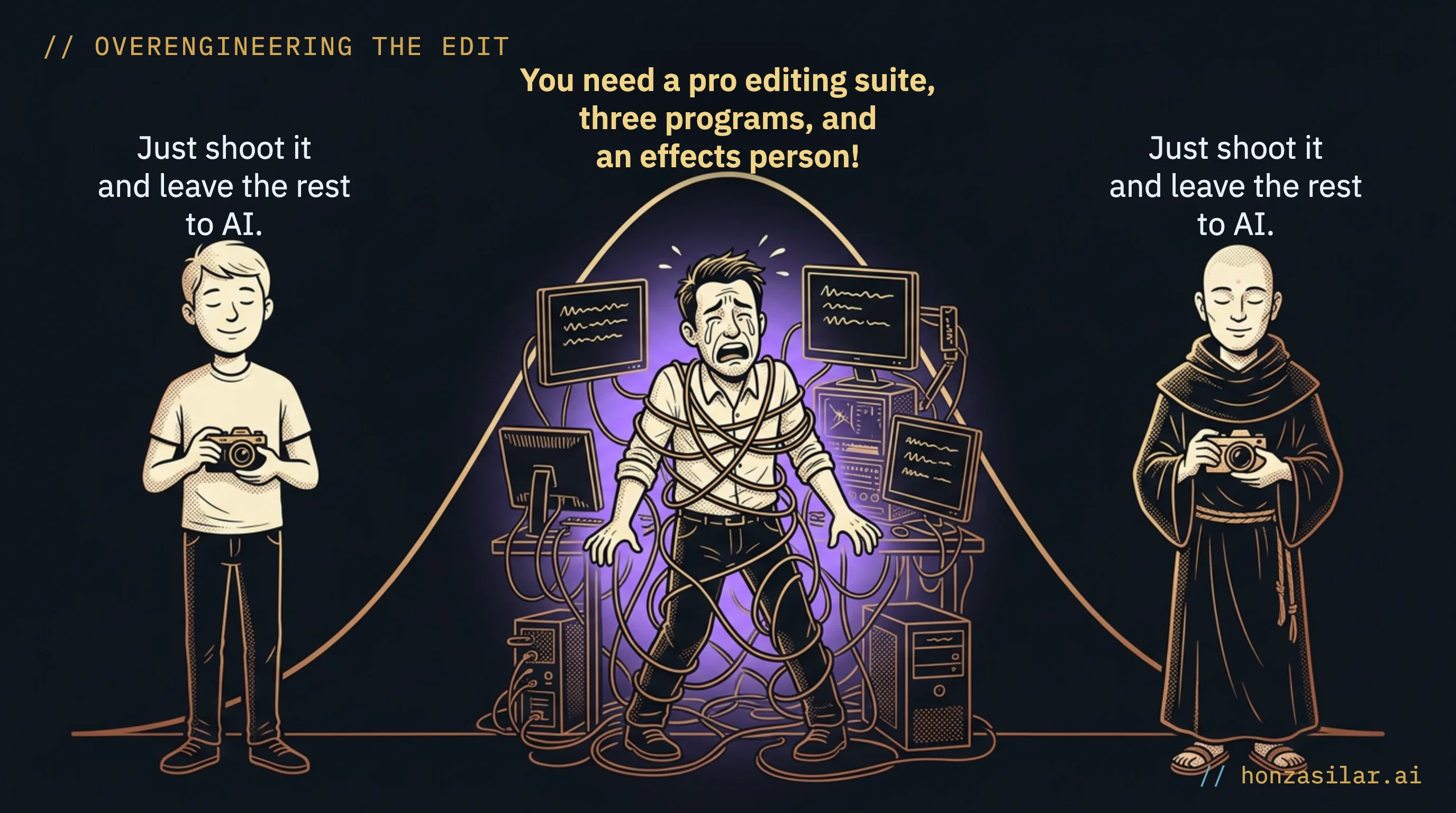
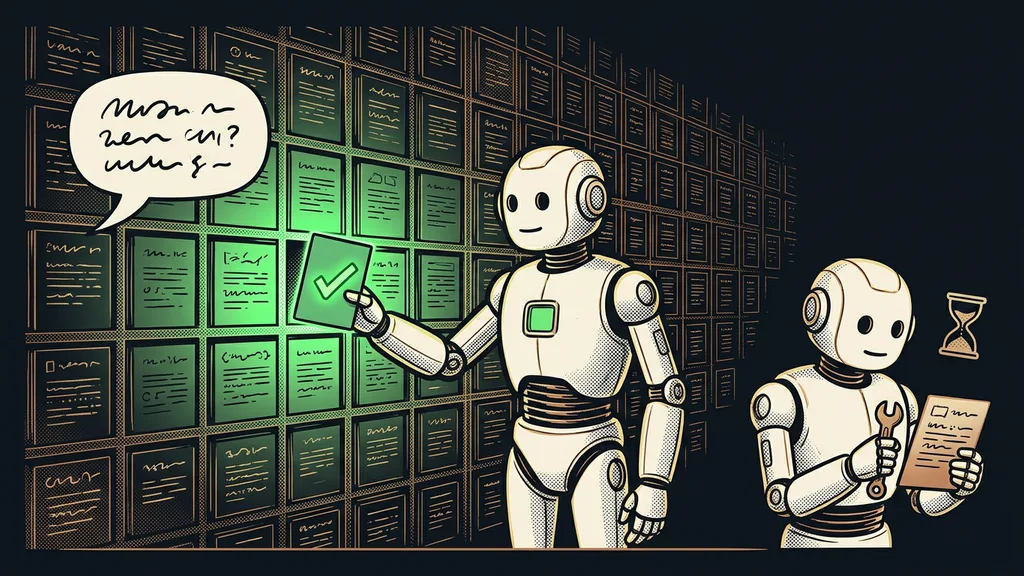
AI can handle post-production because talking-to-camera video is repeatable work. One person, one camera, talking, and the same steps every time. Whatever video comes in, the steps are the same: straighten the picture, smooth the transitions, export. And that’s exactly the kind of work today’s AI can take on; you only have to teach it once.
Repeatable work
Repeatable work is a task done the same way and by the same rules every time, like centering the picture or smoothing the transition between two shots. It doesn’t matter which video comes in; the process stays the same. That’s exactly the kind of work today’s AI takes over: you teach it the process once, and then it repeats it without you.
What the system does with your video
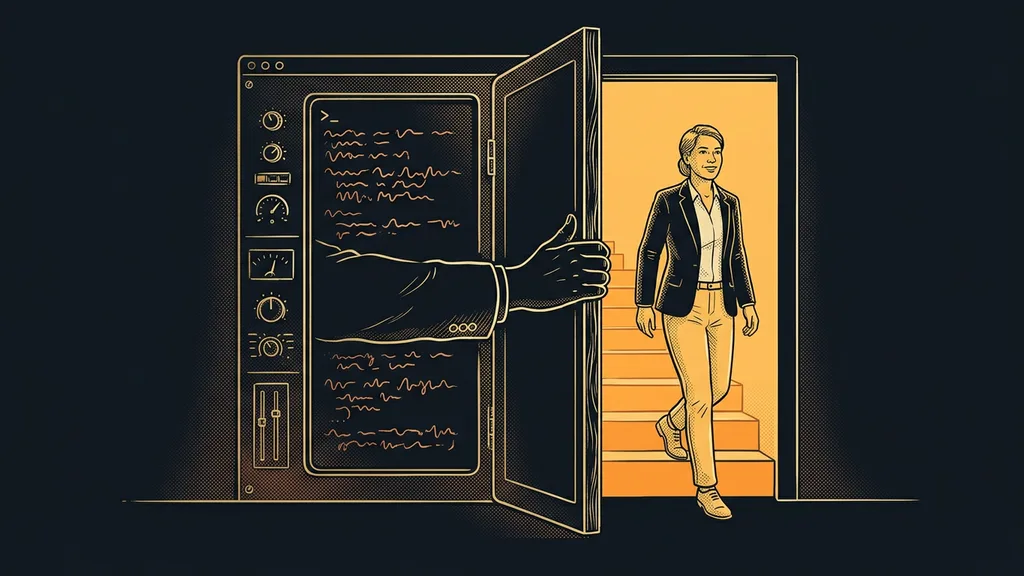
You toss the system raw camera footage, and it turns it into finished output. It aligns the camera frame, so you don’t have to sit over the picture nudging your head to the center. It smooths the transitions between shots so the result doesn’t jump. And it exports a finished file that can go straight out. Three mechanical steps that used to take your evening shrink to the moment you look at the result and give it the nod.
Exactly how it straightens the picture and what it uses to smooth the transitions, I’ll keep to myself. What matters for you is something else: the result is a finished video, not a guide to building your own editing suite. And the biggest change happens in your head, not in your schedule. When you know there’s no tedious evening waiting after a shoot, you film more relaxed and more often. Your content then goes out almost on its own instead of getting buried on a drive.
The evening after a shoot
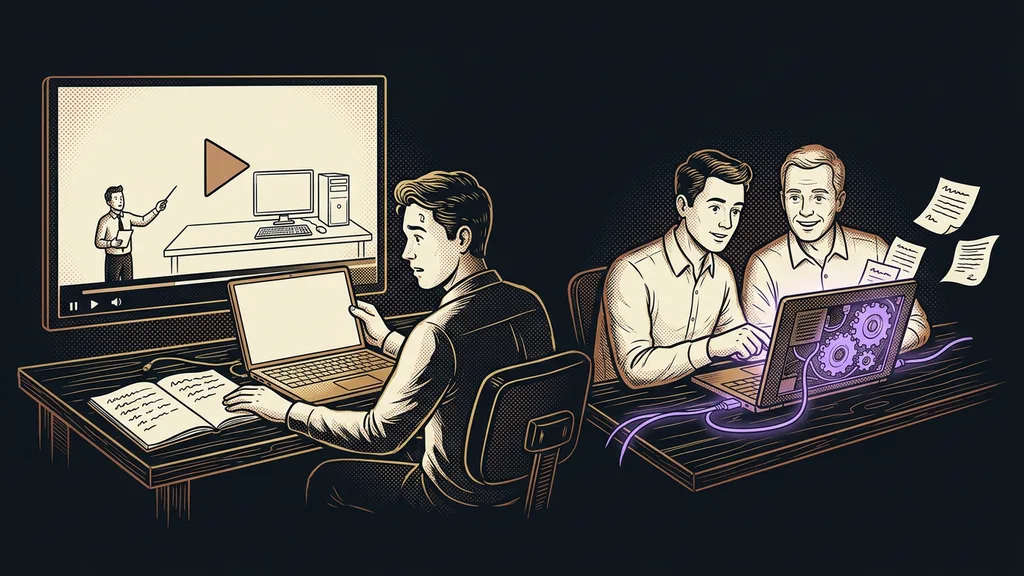
Before
You nudge the frame so you’re not off center
You smooth every transition by hand
Export, check, export again
A finished video costs you an evening at the computer
Now
You hand the raw video to the system
Framing, transitions, and export run without you
You look at the result and give it the nod
You go film the next one
What you get
You shoot the video and walk away. The framing is right, the transitions hold, the export is done. Instead of an evening of editing, you have time for the next shoot, and your videos finally stop getting buried on your drive.
Who this isn’t worth it for
This system is built for straightforward videos for people: you talk to the camera and pass on something you know. If you make richly edited, cinematic video with cut transitions, graphics, subtitles, and effects, straightforward AI post-production won’t be enough: you need a different tool and a person who assembles video as a craft. High-end production is simply a different discipline with its own tools. This system handles the other, more boring half: getting an ordinary talking video from the camera out into the world without an evening of editing.
What people think about AI editing
The whole system in a nutshell
- You record a video on camera: one take, talking to people.
- You hand the raw file to the system and tell it what to do with it.
- The system straightens the frame, smooths the transitions, and exports the video.
- You look at the finished output and give it the nod.
- The video goes out, and you go film the next one.
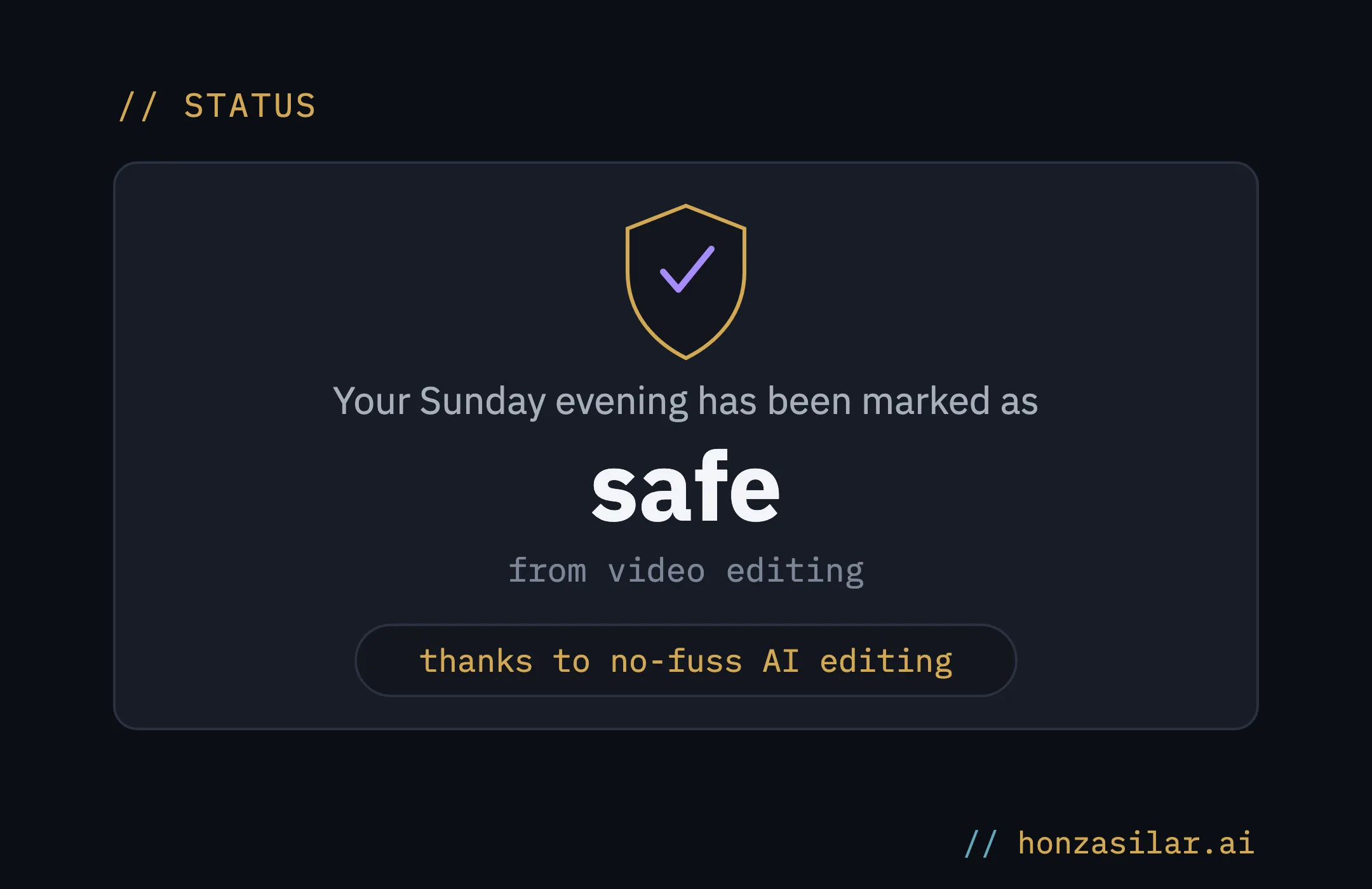
So tonight I’m not sitting over an edit. I shot the video in the afternoon, handed it to a system that works even without my supervision, and closed my laptop. I never wanted to become an editor; I wanted to get rid of editing and keep filming for as long as I enjoy it. Because a video only counts once someone sees it. Everything between the shoot and that moment is just work standing in the way.