Selling through ChatGPT affects small Czech online stores too. A customer first asks a chatbot what to buy and only comes to the store with a recommendation in hand. There are still few such orders, but according to data from Marketing Miner (a Czech marketing data tool), their number doubled between January and July 2026. A store can’t buy itself a spot in the chatbot’s answer. Its chances come mainly from complete and accurate product information.
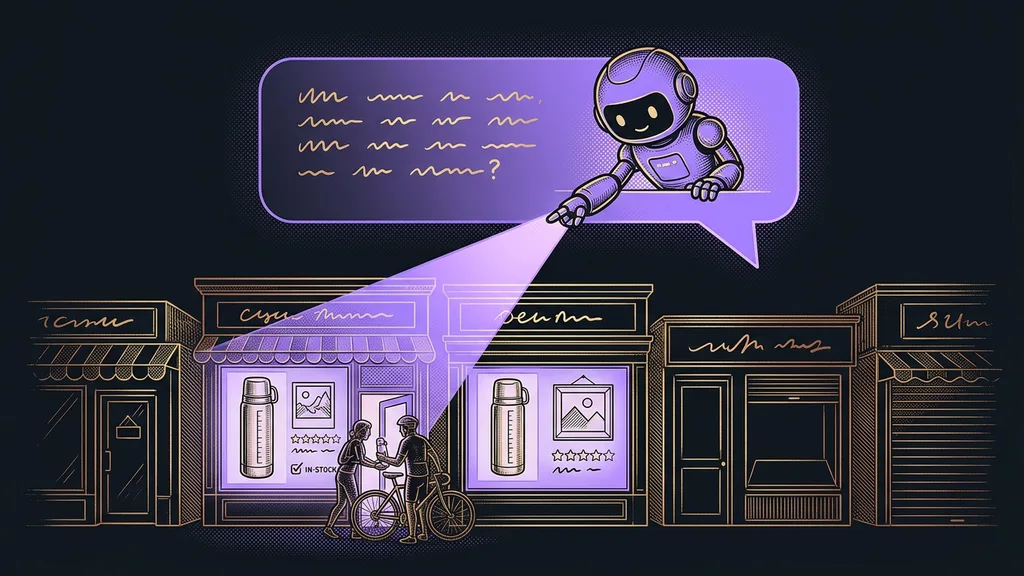
Take an ordinary evening. A customer types into ChatGPT: “I’m looking for a thermos for my bike that fits in a bottle cage. Under 800 crowns [about €33].” She gets a few suggestions with prices and links to stores. Whether yours is among them depends on what the chatbot can find out about your thermos. For example, whether it knows its diameter and capacity, and that it’s in stock.
How many orders does AI bring Czech online stores today?
Few so far, but they’re growing fast. On August 10, 2026, the Czech tech news site Lupa.cz reported on a Marketing Miner survey of more than a hundred Czech online stores. For the average store in it, 0.6% of orders came directly from recommendations by ChatGPT, Gemini, or Claude.
| Which stores | Share of orders from AI |
|---|---|
| The average store | 0.6% |
| The most visible quarter | 1.9% |
| The most visible tenth | 3% on average |
| The best individual stores | up to 5% |
According to Lupa, five percent is “a share comparable to established marketing channels.” But that’s the ceiling for a few stores, not the norm. Merchants still feel the change. Today, 36% of the companies surveyed call visibility in chatbots essential, and six in ten expect it to become essential within a year.
AI visibility
How often, and in what form, a chatbot mentions you when people ask it about products in your field. You can’t buy it like an ad placement. It’s made up of what the chatbot can find out about your store and your products: descriptions, prices, availability, photos, and reviews.
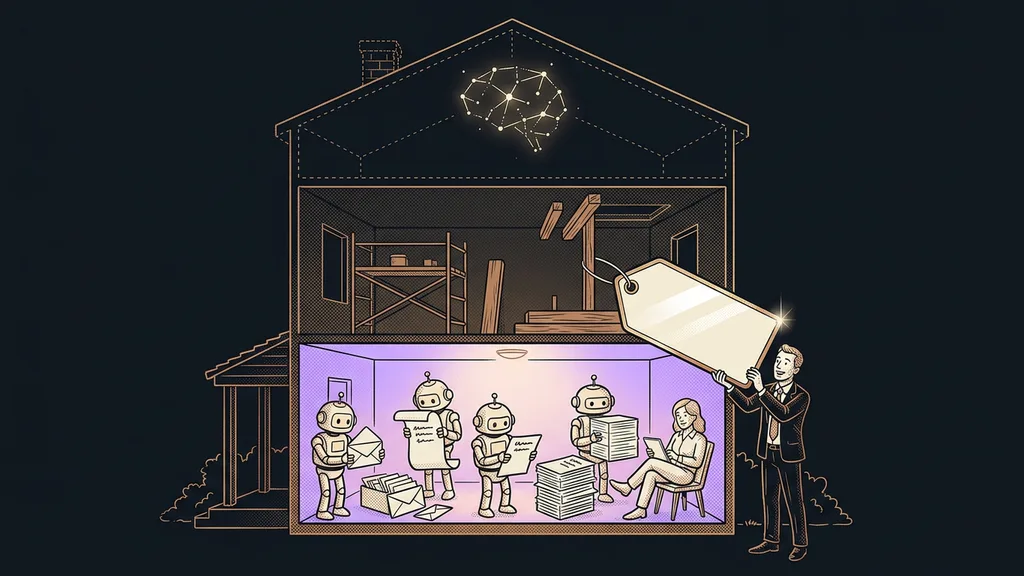
A chatbot won’t recommend a product it knows nothing about. To a chatbot, a product page with one sentence and a photo is a store with the lights off.
Customers from chat arrive almost decided
In the US, visitors sent to a website by a chatbot buy more often than others. That’s what Adobe Analytics data from more than a trillion visits to US online stores shows, as reported by Digital Commerce 360 in August 2026. In July, AI-referred visits ended in a purchase 60% more often than others and brought in 53% more revenue per visit.
Don’t apply those numbers one-to-one to a small Czech online store. Adobe mainly measures large US retailers. But it makes sense: someone coming from a chat has already done part of the choosing and is mostly looking for confirmation. That’s why it pays for the page they land on to answer their last questions right at the top.
What Shoptet offers: a feed for ChatGPT ads
Since late August 2026, Shoptet (a Czech e-commerce platform) has had a ready-made product feed for ChatGPT ads. In the admin, you’ll find it in the Propojení (Integrations) section, under XML feeds, on the OpenAI product feed row. You copy its URL into OpenAI’s Ads Manager, and you don’t have to build your own export. The feed’s content is generated by the system and can’t be edited by hand, so data quality is decided in the products themselves.
Product feed
A machine-readable list of everything an online store sells: names, prices, availability, photos, and specs. The store publishes it at a single URL, and the ad system keeps pulling data from it. Whatever is missing from your products is missing from the feed too.
What matters is what the feed is for. Shoptet says it plainly: “The product feed for ChatGPT Ads is used for advertising campaigns. On its own, it does not ensure organic display of products in ChatGPT’s answers.”
According to Shoptet (September 2026), the ads are also shown only to users of the free version and the Go plan. Since late August, Czech advertisers have been setting up campaigns themselves, even though the Ads Manager was still in beta in September. As of October 10, 2026, OpenAI’s help center lists a minimum daily budget of CZK 350 (about €14) for an account billed in Czech crowns, which comes to over CZK 10,000 (more than €400) a month. Then keep an eye on the campaign like any other ad, for example with a morning check.
What to do with your product data this week
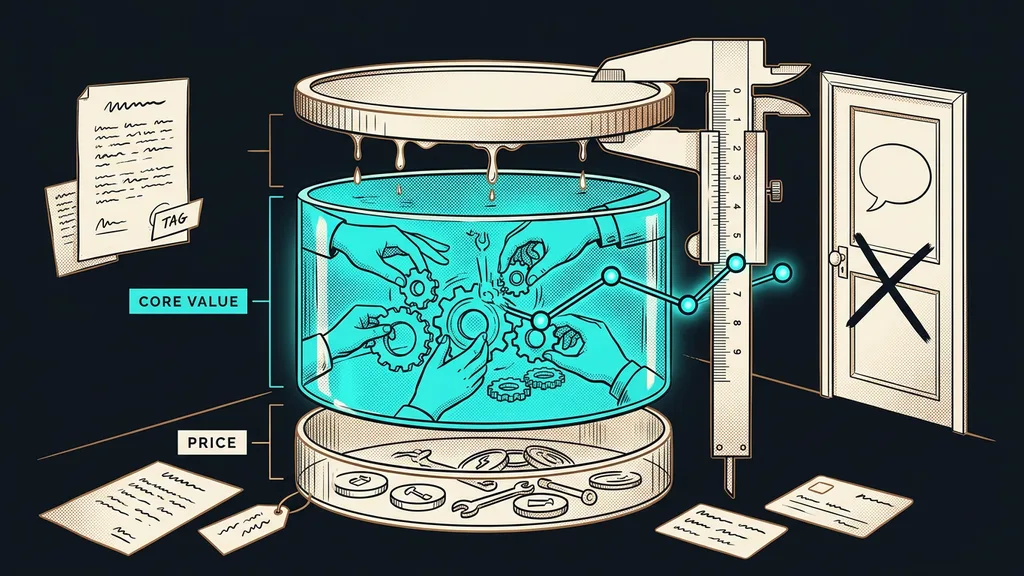
Fill in whatever customers base their decision on, and make sure price and availability are correct. It’s boring work, but it helps in chat, in ads, and with customers coming from Google.
Ask as your customer
Open ChatGPT and type the question your customer would ask, including the budget and the situation. Then ask directly about your best-selling product. What does the chatbot know about it, what price does it give, and does it know it’s in stock? Whatever is missing or wrong, add to the product page first.
According to OpenAI’s documentation for merchants, the required fields make sure price and availability display correctly. Photos and reviews then improve ranking and trust. Shoptet gives the same advice in plainer words: describe the situations in which customers look for the product, and add what they need to make a decision. For the thermos, that means diameter, capacity, material, and how long it holds the temperature. Your search queries and the questions in your inbox will tell you which situations apply to you.
With hundreds of items, nobody will finish this by hand, and nobody has to. The missing specs are often on the supplier’s website, and web data can be pulled without retyping. AI writes the descriptions from them in batches and in your tone; you just review and approve them. In the same way, in a small online store you can also hand AI the answers to customer questions or abandoned-cart reminders.
How can you tell a chatbot is selling for you?
By the traffic sources in your analytics. A visit that comes through a link in a chatbot’s answer usually shows up there under its address, such as chatgpt.com or gemini.google.com. Once a month, check how many orders came from those sources and compare it with the survey’s 0.6% average.
With ads, it’s easier. Shoptet recommends adding parameters to the campaign links so analytics can tell ChatGPT visits apart. Then nobody has to put the report together by hand; it can arrive on its own. And you decide the way you would with Sklik, the ad platform of the Czech search engine Seznam: based on how many of your customers really come through the channel.
Who shouldn’t bother with ChatGPT ads yet
ChatGPT ads don’t pay off yet for a store that hasn’t measured what its other channels bring in. Without that, you can’t tell whether the new channel added anything or just pulled over customers who would have come anyway. They also don’t pay off on a small budget, because the technical minimum alone won’t give you enough data to decide.
First, check your product range against OpenAI’s advertising policies, as Shoptet advises, because not everything can be promoted in ChatGPT. And if you sell ten products to regular customers, you don’t need to deal with any of this. Complete descriptions will still do you good either way.
The whole process in a nutshell
- Check your analytics to see how many visits and orders already come from chatbots.
- Ask ChatGPT what your customer would ask and find out what it knows about your products.
- For your best sellers, fill in specs, use cases, price, and availability.
- Have the rest of the catalog filled in by batch, and just approve it.
- Only try ChatGPT ads with a budget big enough to measure something, and with one product category.
Tomorrow, the customer with the new thermos will ask about fenders or a bike light. Once again, the chatbot will pick a few stores based on what it can find out about their products. If you want the data entry and the measuring to run largely on their own, I can help you set that up as part of bringing AI into your business. You can start today, with one complete product page.