Since late September, superintelligence has been an official word of the US government. On September 29, 2026, Donald Trump signed Executive Order 14434, and anyone who only read the headlines could have gotten the impression that America had proclaimed a new kind of machine. The text of the order says something far more modest: agencies are to use a new word for the same thing. In the same week, though, an agreement among AI companies and a new task force came along with it.
In consultations right now I mostly hear one question: does this affect us too? So I read the whole order, section by section, along with the reports on what came with it. The technical concept, a machine smarter than people at practically everything, I’m leaving aside here. I cover it in the article What is superintelligence. Here I’ll stick to the official paper.
What does Executive Order 14434 actually say?
Executive Order 14434 requires US federal agencies to write “Super Intelligence” and “SI” where they used to write “Artificial Intelligence” and “AI.” It’s titled Inaugurating the Era of Super Intelligence, and it has four sections:
- Section 1 justifies the change. According to the text, today’s systems go far beyond what was expected when the term artificial intelligence was coined.
- Section 2 lists where the new word is used: in correspondence, public communications, websites, reports, and other documents that aren’t law. Older regulations, contracts, and grants don’t have to be rewritten.
- Section 3 keeps the definition. Super Intelligence means the technologies that existing federal law classifies as artificial intelligence.
- Section 4 adds that the order creates no enforceable rights.
Executive order
An instruction from the US president to executive branch agencies. It tells them how to proceed, but it doesn’t replace law. Executive Order 14434 confirms this itself: its definition stands until another presidential action or a law passed by Congress changes it.
Executive Order 14434 swapped a word on official paper. The software you write your proposals in every morning didn’t change by a single comma.
Why the definition matters more than the name
What the rules apply to is decided by the definition, and the definition hasn’t changed. Section 3 refers to existing US law, under which Super Intelligence is exactly what used to be called artificial intelligence. So the new label hasn’t added or removed a single technology.
That may change later. Within 60 days, that is, by November 28, 2026, the President’s science and technology adviser is to propose a statutory definition of superintelligence. In doing so, the adviser will assess whether to expand the existing definition of artificial intelligence or replace it. Congress will then decide on the law.
The reason for the renaming came up a week earlier. According to UN News, the President said in his speech to the General Assembly on September 22 that the word artificial makes intelligence sound like something fake. Since then, the new name has been spreading beyond government agencies. On October 4, Elon Musk wrote that he would rename his company SpaceXAI to SpaceXSI.
What the AI companies signed and who leads the new task force
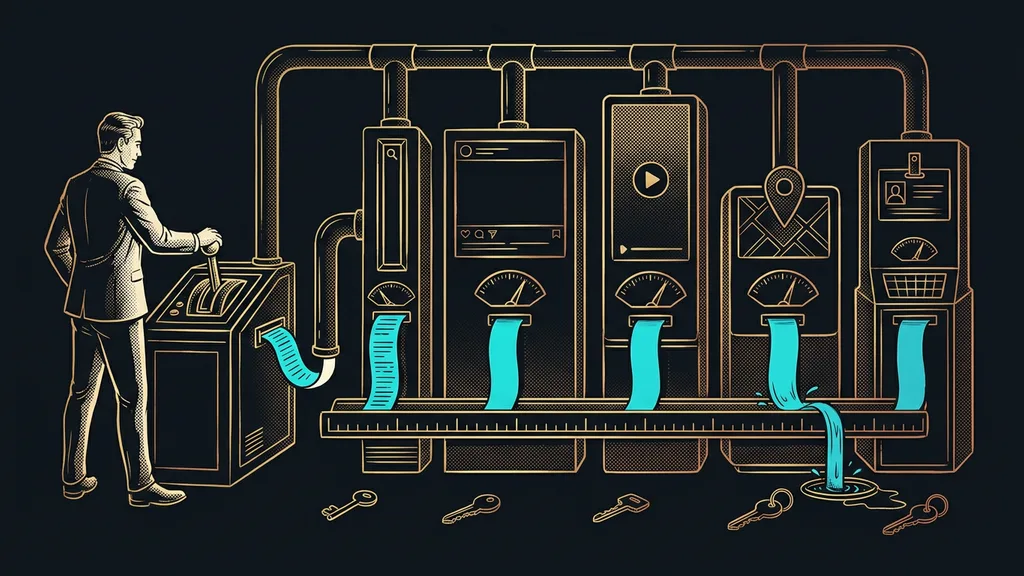
On September 29, six major AI companies signed a voluntary agreement with the White House on checks of their models: OpenAI, Anthropic, Google, Meta, SpaceX, and Nvidia. The agreement is one page long and describes four layers of checks:
- monitoring models both during training and in operation, partly for cybersecurity and biological and chemical threats,
- an in-house team that verifies the checks are working and fixes errors,
- an independent external auditor,
- an independent board committee that receives reports from both the team and the auditor.
According to the Guardian, the agreement has no penalties, and the companies choose their own evaluators. Trump called it morally binding, and Mark Zuckerberg called it the start of an agreement the whole industry can join. According to EUobserver, the text allows that these steps could eventually become law.
Self-regulation
Rules that companies set and police themselves, with no authority to enforce them. When they break them, there’s no fine, only a loss of trust. The September agreement at the White House is a textbook example of self-regulation.
The President announced the Super Intelligence Force task force on October 4. It’s led by four people: Director of National Intelligence Jay Clayton, Federal Trade Commission Chairman Andrew Ferguson, Under Secretary of Defense for Research and Engineering Emil Michael, and Office of Personnel Management Director Scott Kupor. It’s meant to coordinate the government’s dealings with consumers, businesses, religious organizations, and critical infrastructure operators. According to an October 7 summary by the law firm Crowell & Moring, it has 120 days to deliver a report on the technology’s risks and opportunities.
How it compares with the European rules
A business in the EU follows EU law, and nothing gets renamed there. The AI Act (Regulation (EU) 2024/1689) still talks about artificial intelligence systems and, unlike the American agreement, it’s binding.
| Question | Executive Order 14434 | AI companies’ agreement | EU AI Act |
|---|---|---|---|
| Who’s behind it | the US president, September 29, 2026 | six AI companies with the White House, September 29, 2026 | the European Union, 2024 |
| Who it binds | US federal agencies | the signatory companies, voluntarily | AI makers and the businesses that use AI |
| Enforceable | no, it creates no rights | no, it has no penalties | yes, it’s law |
| What it changes for an EU business | nothing | nothing directly | rules for labeling AI-generated content from August 2, 2026 |
The scope differs too. The American agreement is one page long. According to EUobserver, the European General-Purpose AI Code of Practice runs to more than sixty pages, and dozens of independent experts worked on it. OpenAI, Anthropic, and Google signed the code. Meta, SpaceX, and Nvidia didn’t. Under the act, model makers have to mark their outputs in a machine-readable way. But readers often spot machine-written text even without such a mark, as I show in the article on text that doesn’t sound machine-written.
What to do with your own texts
Don’t change AI to SI on your website, in your proposals, or in company policies. The European act talks about artificial intelligence, and the abbreviation SI would mean nothing to your customers. The exception is work for US federal agencies. There you’ll eventually see the new name in tenders and contracts, and answering in the same terms makes sense.
Who this analysis won’t help
This analysis won’t help if you want to know whether the tools in your business are safe. The order says nothing about the tools’ capabilities or safety, and the companies’ agreement is voluntary. So the old questions are more useful for a business, such as where the data goes from your AI tools and who handles it.
It won’t help a business that doesn’t use AI yet either. You can simply add the abbreviation SI to the other terms in the AI glossary for business owners, with a note that it means the same as AI. What the big words mean for decisions in a small business this month I cover in the article Superintelligence and the small business.
The order in a nutshell
- Executive Order 14434 of September 29, 2026 requires US federal agencies to write Super Intelligence and SI instead of AI.
- The definition doesn’t change: SI means the same thing US law has so far called artificial intelligence.
- A proposal for a new statutory definition is due by November 28, 2026, and Congress would have to approve it.
- The six AI companies’ agreement is voluntary and has no penalties. The task force has 120 days to deliver a report.
- In Europe, the AI Act still applies, and businesses there don’t have to rename anything.
Real change can only come with a new definition, because that’s what will determine what the American rules apply to. The proposal is due in November, and Congress will decide on the law. Until then, superintelligence in official documents is just a new name for tools you’re already familiar with. Put November 28 in your calendar, and in the meantime let AI keep doing the manual work you’ve already handed over to it.