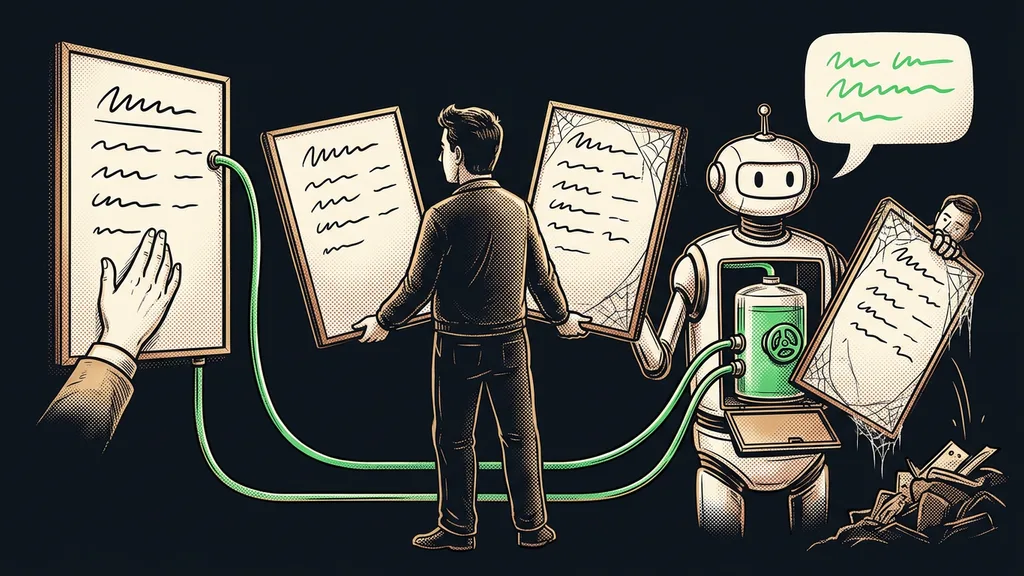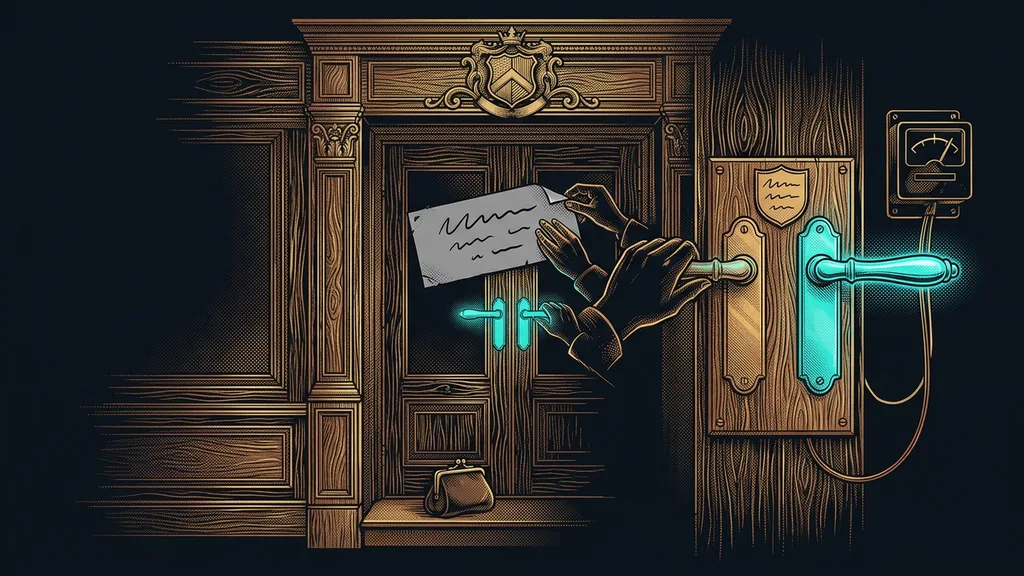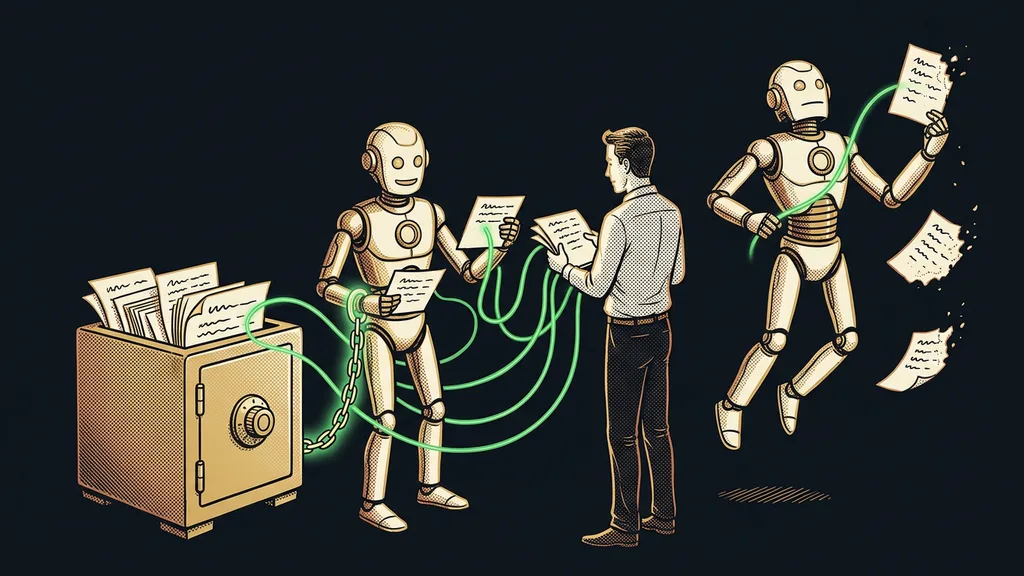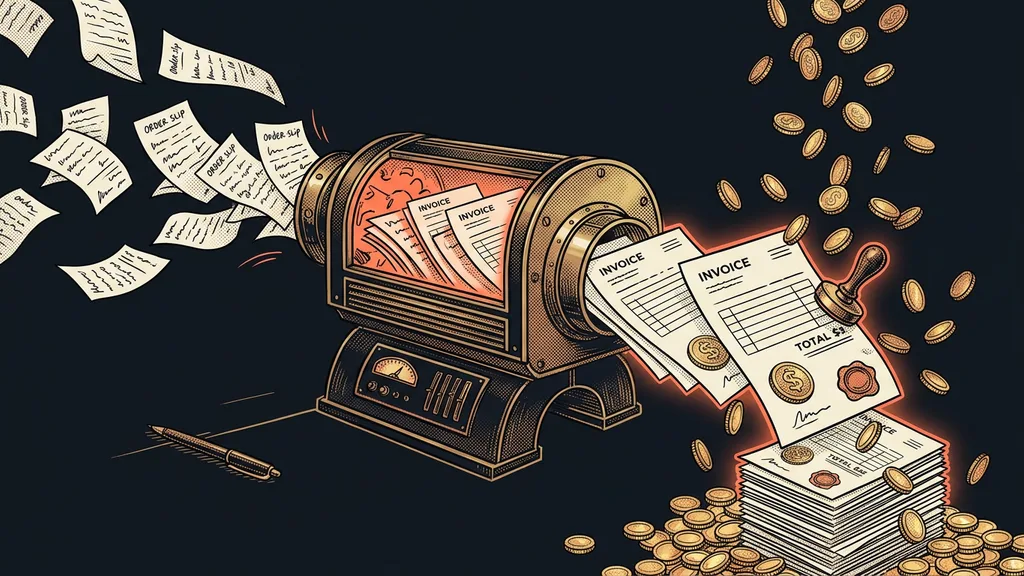
An American platform hands you a receipt where a Czech invoice should be. If you sell a course or a membership through a foreign system, sooner or later you run into a quiet difference between an American and a Czech sales document. What Americans call an invoice is, in the eyes of a Czech accountant, just a nicer-looking receipt. And that difference is where a lot of needless evening work piles up every month.
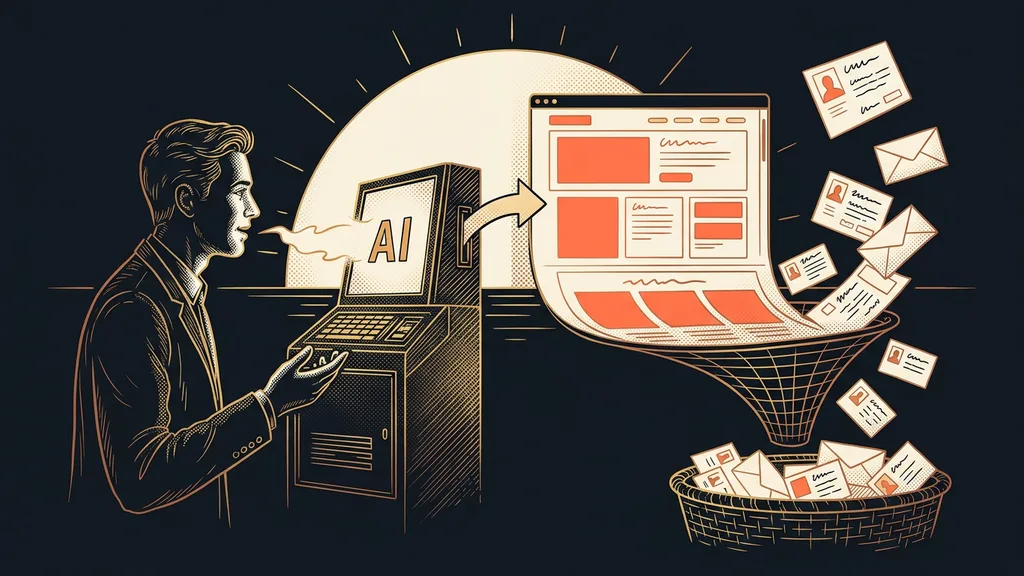
I see it with clients over and over. They’re thrilled by everything CliqSales (the Czech white-label version of GoHighLevel) can do: a sales page, payments, welcome emails that go out on their own. Then the first order comes in, and with it an innocent question: “So how do I turn this into an invoice?” The answer at that moment is not a happy one. By hand.

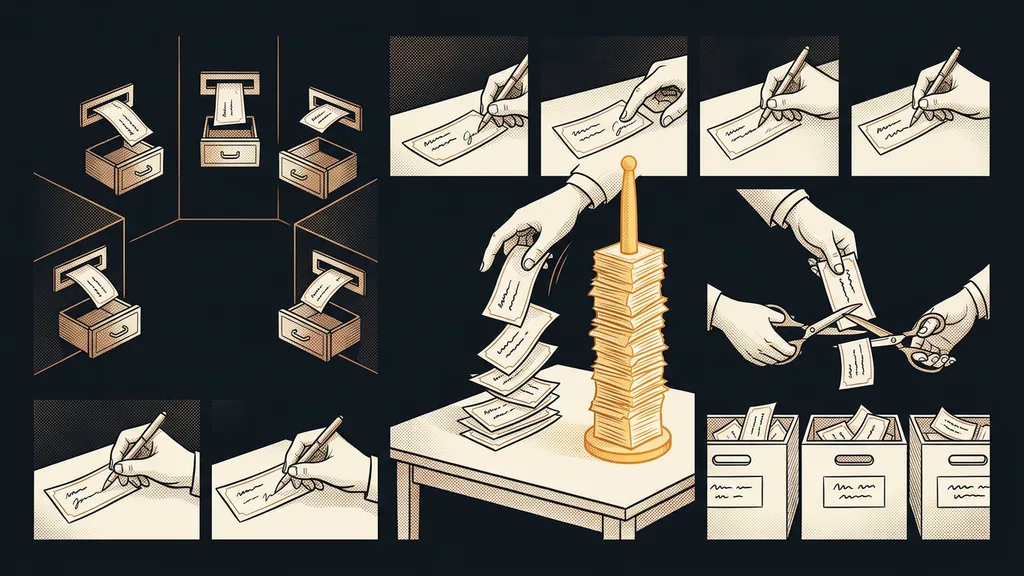
And retyping by hand is a chore that grows with your success. Sales take off, orders pile up, and instead of enjoying the moment, you copy the name, address, company ID, item, amount, and due date. Somewhere around the tenth invoice, it dawns on you that you didn’t start a business to spend your evenings copying data from one screen to another.
Why an American platform only gives you a receipt
It’s missing what Czech accounting requires. GoHighLevel, which CliqSales is built on, is an American platform, and it invoices the American way.
A US invoice versus a Czech invoice
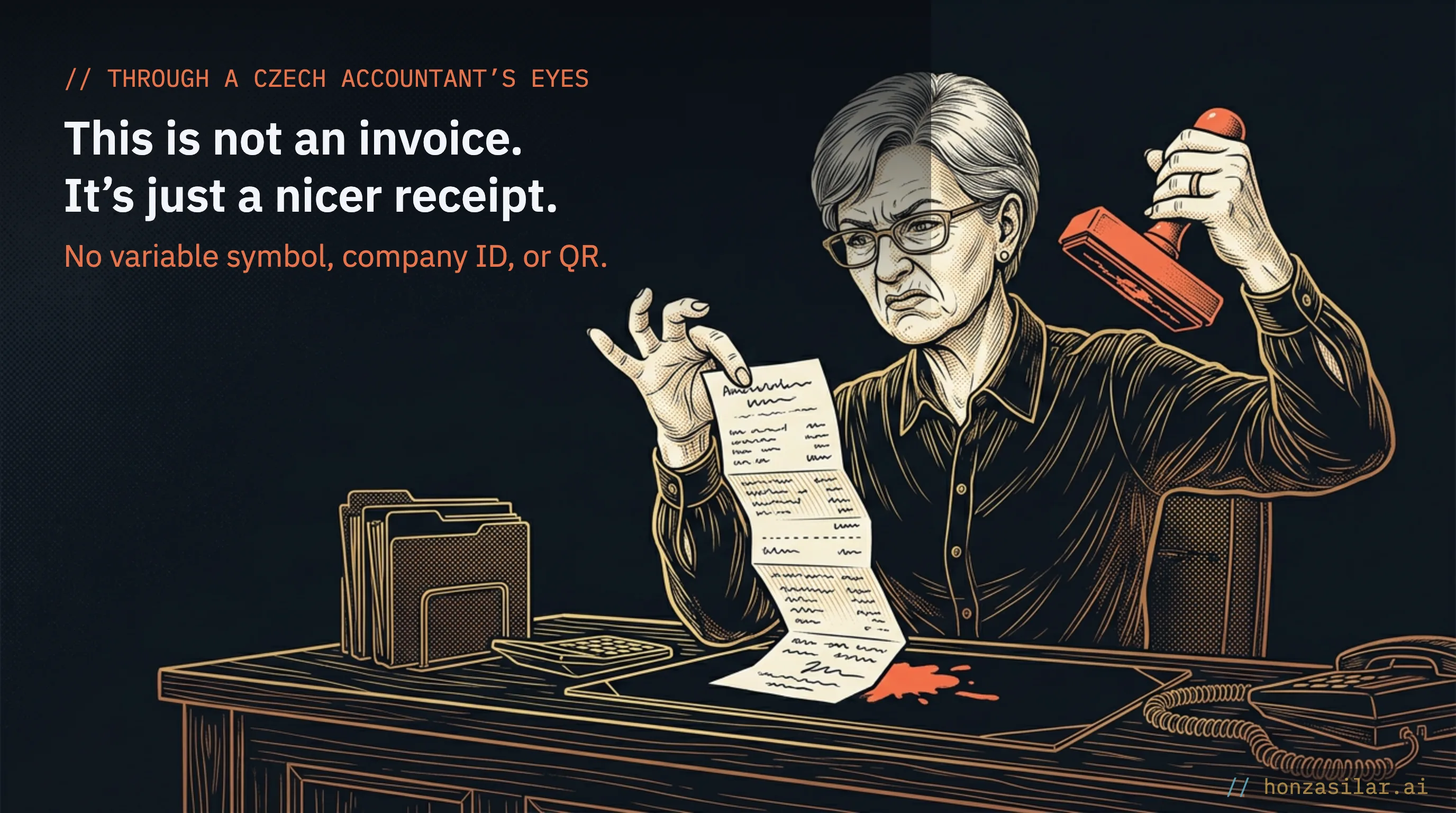
The American invoice is a record of a sale. It looks like a Czech invoice, but it lacks what a Czech tax document has to include: a variable symbol (the reference number Czech bank transfers are matched by), the seller’s company ID (IČO) and VAT number, and a QR code for quick payment. Without them, it’s useless for Czech accounting, even if you change “Invoice” to “Faktura” in the editor.

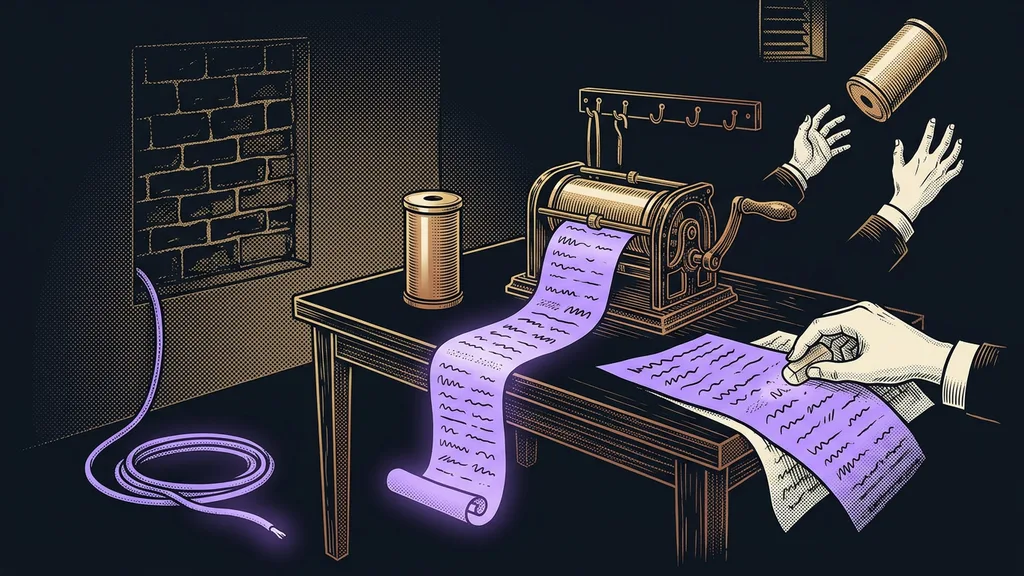
Sure, you can translate the template and put a Czech label on “Bill To,” but that won’t add the missing fields. Nobody is doing this on purpose. It’s simply a different world. Foreign platforms know nothing about Czech invoices, and to them, a variable symbol is as exotic as the Czech VAT control statement. Which creates an odd situation: the system that sells your course in the middle of the night stops at the invoice and waits for you to write it in the morning.
The platform sells my course while I’m asleep. Then I write the invoice for it in the morning.
That’s how a client summed it up after their first bigger campaign. And they were right on both counts.
One-minute self-test
Open the last document a foreign platform issued for you. Can you find a variable symbol, your company ID, and a QR payment code on it? If even one field is missing, you either had to retype that document by hand, or your accountant will send it back.
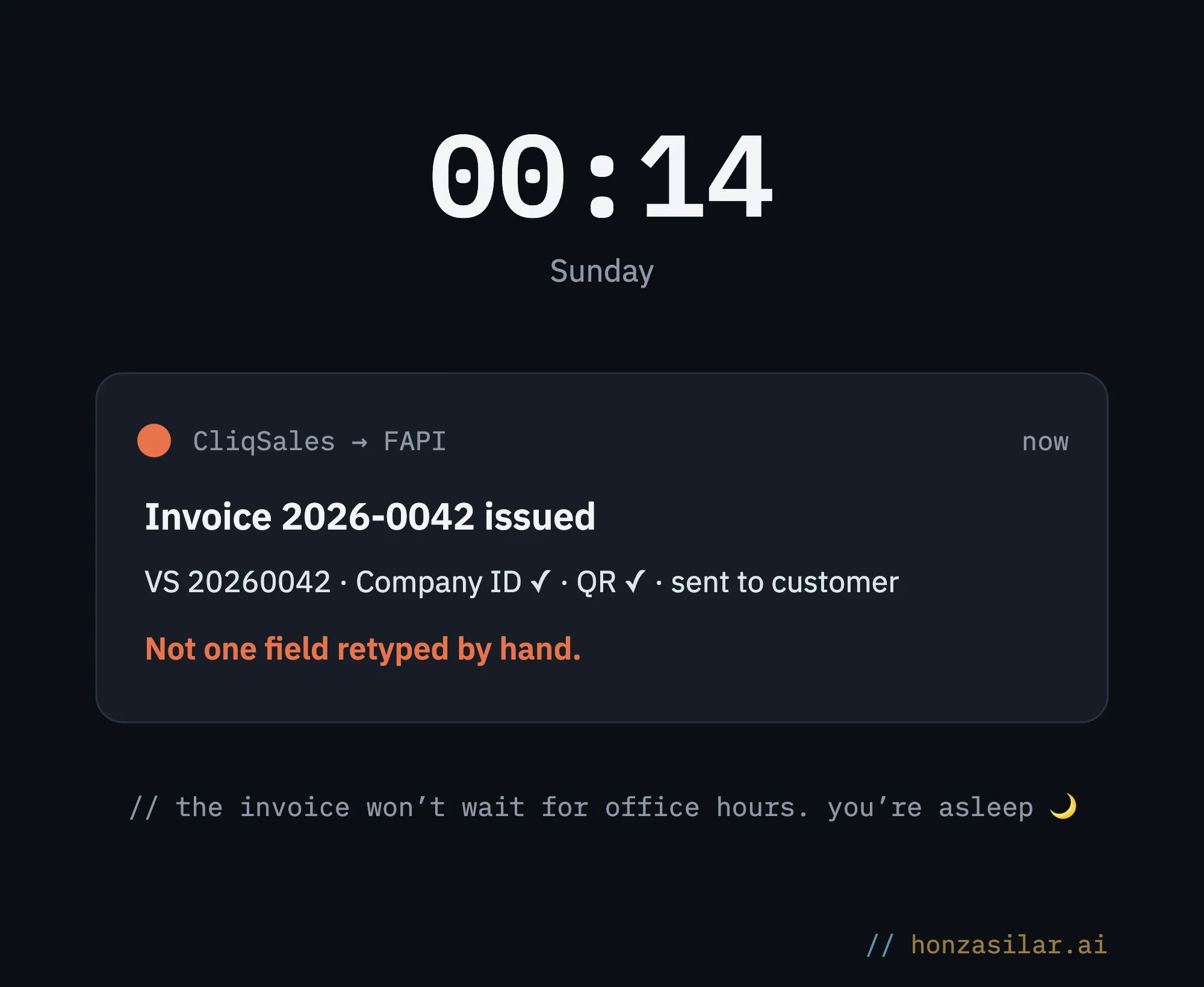
The order comes in, the invoice goes out on its own
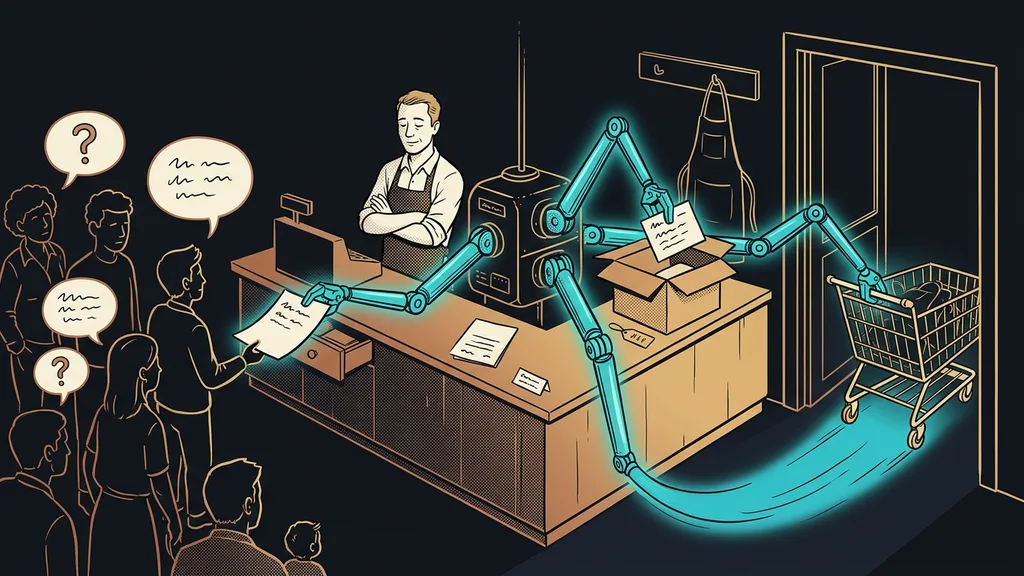
The fix is simple: the invoice should come from a system that knows the Czech requirements, and the platform should only be the trigger. That’s exactly how the CliqSales connection to FAPI works. FAPI is a Czech invoicing system that handles a Czech invoice down to the last detail.
As soon as an order goes through on the platform, a workflow (the platform’s automation engine) catches it and sends the data straight to FAPI. The invoice is created where it belongs. It’s a ready-made custom add-on you won’t find in plain GoHighLevel, and one I used to set up for clients all the time.
After an order: before and now
Before
Now
And the customer doesn’t get two confirmations. Turning off the platform’s English receipts is part of the setup, so no American document arrives alongside the Czech invoice.
Once invoicing runs on its own, you can build on top of it. I hooked up invoicing by voice to mine, and it even keeps an eye on money I’d otherwise lose. But that’s an extra. The foundation is this: the invoice gets created from the order without you.
How the Czech requirements get into the invoice
A FAPI invoice is valid because each field of the order maps to the right field of the invoice. Nothing gets retyped. It just gets remapped from one structure to the other.
When ordering, the customer fills in their name and address, and for a company, the company ID and VAT number too. These details carry over to the invoice header. The variable symbol is derived from the order number, so the incoming payment can be matched. FAPI fills in the VAT rate and the QR payment code on its own, based on your account settings.
What’s more, the connection doesn’t need a middleman like Zapier. The platform calls FAPI directly from the workflow through what’s called a Custom Webhook, the same technique you use to connect the platform to other systems via API.
Custom Webhook
A direct call to an outside service from a workflow. Instead of the data traveling through a middleman, the platform reaches out to FAPI itself and hands it the order to issue the invoice. It’s one of the platform’s paid Premium actions, but a single run costs less than CZK 1 (about €0.04).
Sending one order to invoicing costs roughly CZK 0.25 (about €0.01), and the first 100 runs are free on every account. Now work out what five minutes of your retyping costs you.
Who the connection doesn’t pay off for
If you issue two invoices a month off the top of your head, just open your invoicing software twice. Building a connection for that is like hiring an accountant for two receipts.
Who the FAPI connection pays off for
Worth it
- Orders keep growing, and invoicing grows with sales
- You sell a course or membership through a foreign system
- Every minute saved multiplies with the number of sales
Not worth it
- You issue two invoices a month and handle them off the top of your head
- Sales come only now and then, with no repeat
The connection is one of the local adaptations that are the very reason CliqSales exists, along with the Czech-language setup of the whole GoHighLevel platform and support in Czech.
Three myths about invoicing from the platform
The whole system in a nutshell
- The customer orders on the sales page and fills in their billing details.
- The workflow catches the order and sends it to FAPI via a Custom Webhook.
- From that data, FAPI issues a Czech invoice with a variable symbol, company ID, and QR payment code.
- The platform’s English receipt is switched off, so the customer gets only the right document.
- The invoice is done before you even notice the orders.

A system that sells at midnight but leaves the invoice for the morning is only doing half the job. The FAPI connection takes care of the other half: every order turns into a Czech invoice on its own, correctly, the moment the customer pays. And what’s left of your evening after a campaign is exactly the reason you went into business. The joy of a sale.